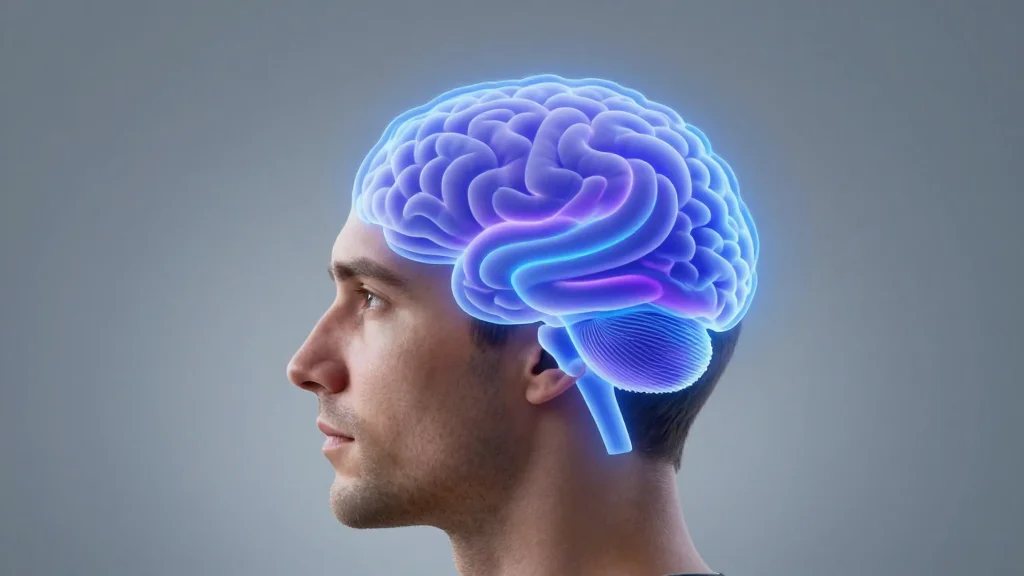
Study Finds Human Perception Peaks Align Across Trials, Revealing Rhythmic Timing

Why It Matters
Understanding that perception operates in rhythmic cycles reshapes foundational theories of cognition and offers a concrete target for interventions. By aligning external stimuli or training protocols with intrinsic perceptual peaks, educators, clinicians, and technologists could improve information uptake, reduce error rates, and accelerate skill acquisition. The findings also suggest a universal temporal architecture that may be leveraged across domains—from optimizing user interfaces to designing rehabilitation programs for neurological patients. Beyond immediate applications, the research challenges the assumption that the brain processes information uniformly over time. Recognizing discrete windows of heightened sensitivity could lead to a new generation of time‑aware technologies, such as adaptive learning platforms that present material when the learner’s brain is most receptive, or wearable devices that cue users to act during optimal perceptual phases.
Key Takeaways
- •Thomas Schoeberl and Stefan Treue identified phase‑aligned perceptual performance peaks across trials.
- •The study links behavioral peaks to neural oscillations like alpha and theta waves.
- •Findings support discrete‑sampling models of perception over continuous‑flow theories.
- •Potential applications include neurofeedback, timed educational content, and clinical rehabilitation.
- •Future work will test rhythm alignment in naturalistic settings and with real‑time EEG.
Pulse Analysis
The revelation of synchronized perceptual rhythms marks a pivot point for the Human Potential sector, where timing has long been an underexplored lever. Historically, cognitive enhancement strategies have focused on content—what is taught or trained—while largely ignoring when it is delivered. Schoeberl and Treue’s work injects a temporal dimension that could recalibrate the entire value chain, from edtech platforms to therapeutic devices. Companies that can embed phase‑aware algorithms into their products may gain a competitive edge, much as adaptive lighting systems capitalized on circadian science.
From a market perspective, the convergence of neuroscience, wearable tech, and AI-driven personalization creates fertile ground for new business models. Imagine a headset that monitors a user’s ongoing oscillatory state and dynamically schedules notifications, learning sessions, or motor training during peak perceptual windows. Such a solution would not only improve efficacy but also differentiate itself in a crowded wellness market. Investors are likely to watch for startups that translate these lab findings into scalable hardware or software, especially as the regulatory landscape for neurotechnology becomes more defined.
Looking ahead, the biggest challenge will be translating laboratory precision into everyday reliability. Real‑world environments are noisy, and individual rhythms can drift with fatigue, stress, or medication. Successful commercialization will hinge on robust algorithms that can detect and adapt to these fluctuations in real time. If the field can overcome these hurdles, the payoff could be a paradigm shift: human performance optimized not just by what we do, but by when we do it.
Study Finds Human Perception Peaks Align Across Trials, Revealing Rhythmic Timing
Comments
Want to join the conversation?
Loading comments...