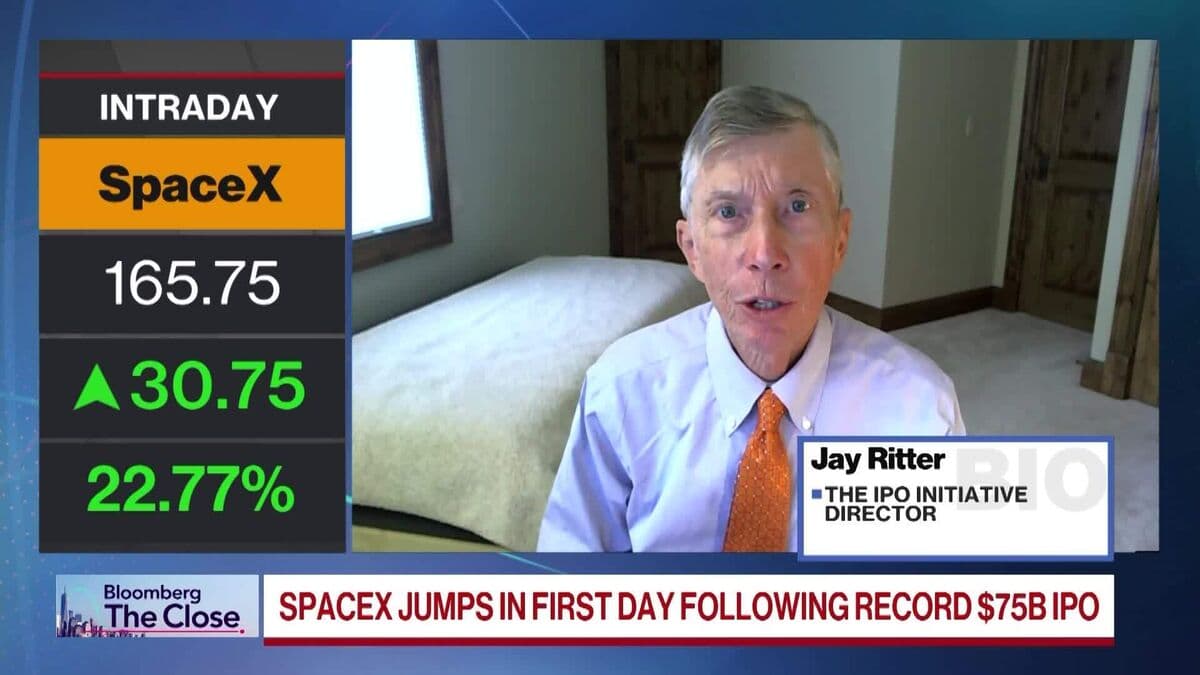
SpaceX IPO Leaves Billions on the Table Amid High Valuation Concerns
Companies Mentioned




Why It Matters
The IPO highlights how fixed‑price strategies and ultra‑high valuations can leave money on the table and reshape expectations for future tech listings, especially for firms with strong retail followings.
Key Takeaways
- •SpaceX set a fixed $135 offer price before roadshow
- •IPO left roughly $20 billion of first‑day gains unclaimed
- •Retail allocation dropped from 30% to about 20% of shares
- •Valuation topped $2 trillion, capping upside compared to Nvidia
- •High‑valuation IPO trend may reshape venture‑backed tech listings
Pulse Analysis
SpaceX’s $75 billion public offering shattered previous records, not only for size but for its unconventional pricing method. By locking in a $135 per‑share price before any investor roadshow, the company sidestepped the typical price‑discovery process that allows underwriters to gauge demand. The result was a dramatic first‑day rally that left an estimated $20 billion of potential profit on the table—more than twice the amount Alibaba left in 2014. Analysts see this as a cautionary tale: while a fixed price can simplify execution, it may also forfeit significant capital when market enthusiasm exceeds expectations.
Beyond pricing, the valuation debate dominates the conversation. At a market cap exceeding $2 trillion, SpaceX entered the public market with a price tag comparable to the world’s most valuable firms. This lofty figure compresses upside potential; even a 100% increase would only bring the company to Nvidia’s current valuation, a modest gain relative to historic IPO trajectories. Investors are therefore weighing the promise of SpaceX’s dominant launch capabilities and future Starship cost reductions against the risk that such a premium leaves little room for price appreciation.
The broader implications touch the entire tech IPO ecosystem. Retail investors, who received a reduced allocation—down from an expected 30% to roughly 20%—may feel sidelined as institutions capture the bulk of shares. Meanwhile, venture‑backed companies in high‑growth niches, from AI to space, are observing SpaceX’s experience as a benchmark for pricing and valuation strategies. The market’s willingness to assign trillion‑dollar valuations suggests confidence in niche dominance, yet the SpaceX case warns that over‑pricing can dampen post‑IPO momentum and limit returns for both new and seasoned investors.
SpaceX IPO Leaves Billions on the Table Amid High Valuation Concerns
Comments
Want to join the conversation?
Loading comments...