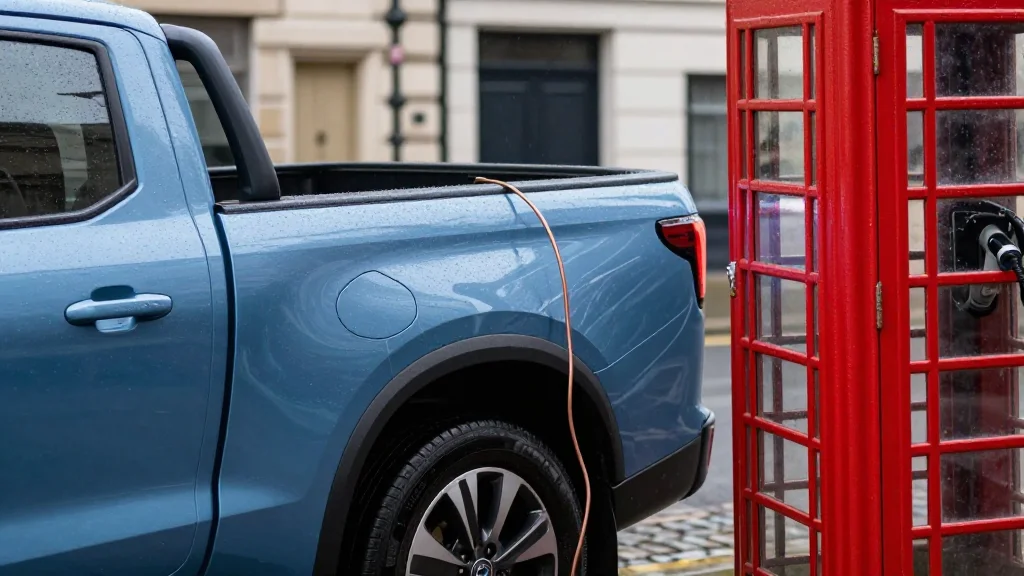
Ford’s 19% Sales Drop Triggers CEO Farley’s EV Turnaround Push

Companies Mentioned
Why It Matters
The leadership decisions announced by Ford illustrate how legacy automakers are confronting two converging pressures: a rapid shift toward electrification and a maturing vehicle fleet that elevates service revenue. By committing to a sub‑$30,000 electric pickup, Ford is attempting to set a price benchmark that could accelerate EV adoption among mainstream buyers, a move that could reshape competitive dynamics with both domestic rivals and fast‑growing Chinese entrants. Simultaneously, the service‑center campaign reflects a strategic pivot to protect profit margins in an environment where new‑car sales are volatile, highlighting the importance of holistic customer retention in automotive leadership. If successful, Ford’s dual‑track approach could restore investor confidence and provide a template for other legacy manufacturers wrestling with similar EV demand slumps. Conversely, failure to deliver on cost targets or to reverse the sales decline could deepen the leadership crisis, potentially accelerating market share erosion to more agile competitors.
Key Takeaways
- •Ford’s UK registrations fell 19% to 6,911 units in May, overtaken by Chinese brand MG.
- •CEO Jim Farley unveiled a turnaround plan centered on a $30,000 midsize electric pickup launching in 2027.
- •CFO Sherry House said the new EV will be “very feature‑rich, very tech‑forward” and priced to compete with gasoline trucks.
- •Ford launched the “Real Parts. Real Pros. Real Easy.” service campaign to boost dealership fixed‑ops revenue.
- •The strategy aims to counter rising competition from Chinese EV makers and a growing fleet age of 12.8 years in the U.S.
Pulse Analysis
Ford’s leadership is betting on price as the primary lever to win the EV battle. Historically, the company has positioned its electric offerings – the Mustang Mach‑E and F‑150 Lightning – at premium price points, limiting mass‑market appeal. By targeting a $30,000 entry price, Farley is attempting to rewrite that playbook, leveraging the UEV platform’s megacasting efficiencies to shave costs. If the cost structure holds, Ford could undercut many Chinese imports that have already captured price‑sensitive segments in Europe and the U.S. However, the gamble is double‑edged: aggressive pricing may erode margins unless volume scales quickly, and the market’s appetite for a midsize electric pickup remains untested.
The service‑center initiative underscores another facet of Farley’s leadership: protecting cash flow through fixed‑ops. With vehicle ages climbing and consumers holding onto cars longer, dealerships become the primary touchpoint for brand loyalty. By re‑branding Ford’s service network, the automaker hopes to lock in repeat buyers before they drift to independent shops – a tactic that could stabilize revenue amid sales volatility. Yet the success of this campaign hinges on shifting consumer perception, a challenge that will require consistent pricing transparency and service quality.
Overall, Farley’s plan reflects a high‑stakes, integrated response to a leadership crisis. The next earnings season will reveal whether the EV pricing gamble and service push can reverse the sales slide or whether Ford will continue to cede ground to nimble Chinese competitors and domestic rivals accelerating their own electric rollouts.
Ford’s 19% Sales Drop Triggers CEO Farley’s EV Turnaround Push
Comments
Want to join the conversation?
Loading comments...