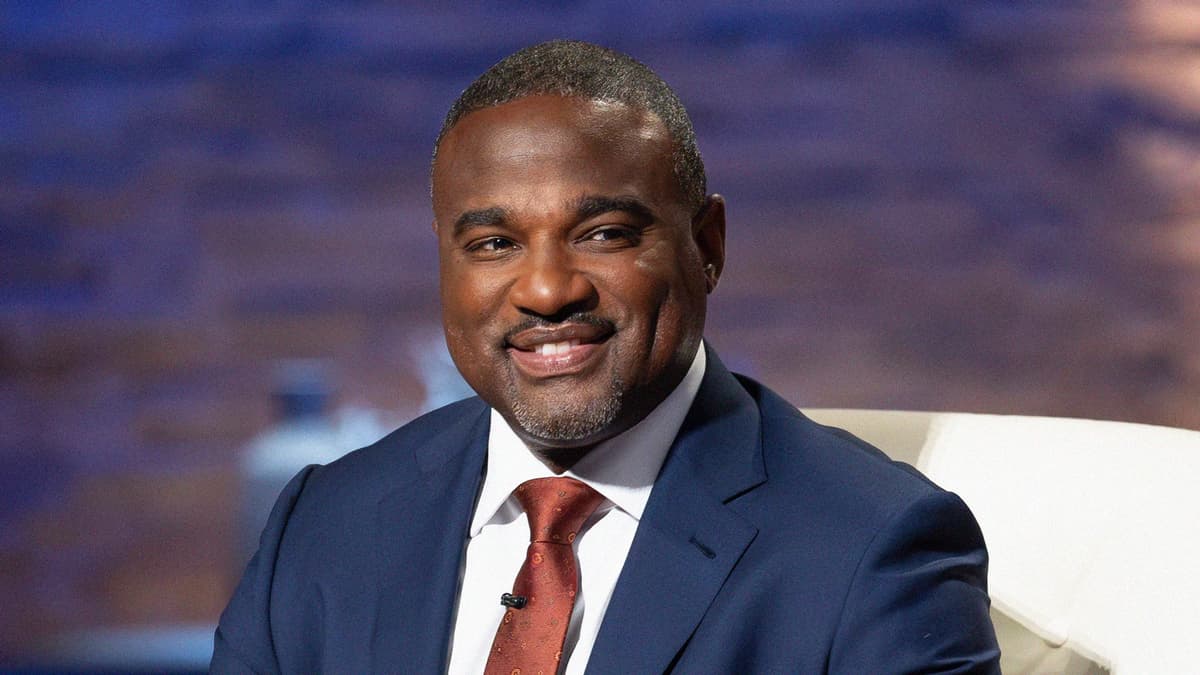
The 1 Question Every Entrepreneur Needs to Ask, According to Shark Tank’s Rashaun Williams
Companies Mentioned
Why It Matters
The distinction guides founders on capital strategy and growth expectations, helping them align with investors who provide "rocket fuel" for hyper‑growth.
Key Takeaways
- •Williams classifies startups as motorcycles (steady) or rockets (hyper‑growth).
- •Rocket‑oriented founders target ten‑fold revenue jumps, e.g., $5M to $50M.
- •Venture capital suits rockets; motorcycles thrive on self‑funding.
- •Analogy warns against mismatched funding, preventing wasted jet fuel.
Pulse Analysis
Rashaun Williams, a regular on Shark Tank and a veteran investor in more than 150 startups, uses a simple metaphor to force founders to confront their growth ambitions: are they a motorcycle or a rocket? The image, first popularized by fellow investor Josh Kopelman, pits a modest, fuel‑efficient bike against a high‑speed jet that burns intensely but can reach the moon. By framing the decision in terms of vehicle type, Williams cuts through vague aspirations and forces entrepreneurs to articulate whether they seek steady, incremental gains or a rapid, market‑disrupting ascent.
The choice has direct capital implications. Rocket‑oriented companies typically need venture‑backed ‘jet fuel’—large infusions of growth capital that can accelerate product development, hiring, and market expansion. In contrast, motorcycle‑style businesses can often rely on bootstrapping, private equity, or modest debt, preserving ownership and avoiding the pressure of hyper‑growth milestones. Williams’ own track record, from backing Robinhood to scaling a $5 million revenue firm to $50 million, illustrates how the right funding match fuels the intended trajectory while mismatched capital can stall or derail a venture.
Investors and accelerators have begun to embed the motorcycle‑rocket framework into due‑diligence checklists, recognizing its predictive power for exit potential and valuation multiples. Founders who misclassify themselves risk over‑dilution or under‑investment, leading to either unsustainable burn rates or missed market windows. The analogy also resonates with broader industry trends, where capital markets increasingly reward hyper‑growth metrics in sectors like fintech, AI, and biotech. For entrepreneurs, the practical takeaway is simple: define the vehicle you want to drive before you step into the funding arena, and seek partners whose fuel aligns with that vision.
The 1 Question Every Entrepreneur Needs to Ask, According to Shark Tank’s Rashaun Williams
Comments
Want to join the conversation?
Loading comments...