Levelling Up the Centre of Excellence
Key Takeaways
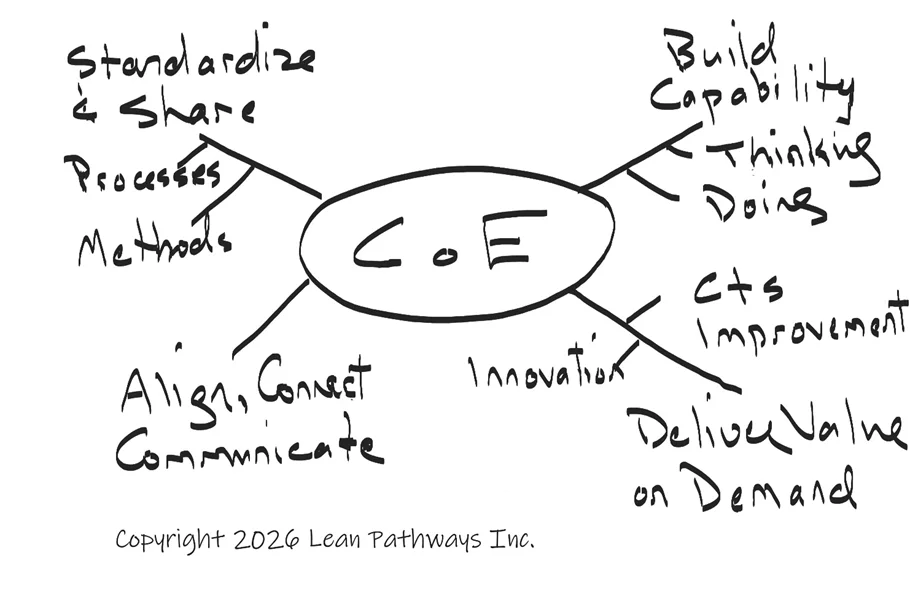
- •CoE core pillars: standards, capability, alignment, support, innovation.
- •Ambidexterity blends Lean/OpEx stability with digital growth.
- •Parallel Lean and digital CoEs risk misalignment and lost credibility.
- •Unified CoE enables seamless transition from process improvement to automation.
- •Building ambidextrous talent requires cross‑functional mindsets and continuous learning.
Pulse Analysis
The Centre of Excellence has long served as the organizational hub for best‑practice dissemination, skill development, and cross‑functional alignment. In mature enterprises, CoEs traditionally focused on Lean, operational excellence, and process standardization, acting as custodians of quality and efficiency. However, the acceleration of cloud, AI, and data‑driven business models has stretched that mandate, forcing CoEs to confront a dual imperative: preserve the core while catalyzing digital growth. This tension mirrors the broader industry shift toward hybrid operating models that must deliver cost discipline and rapid innovation simultaneously.
Many firms attempt to resolve the tension by creating separate Lean and digital CoEs, but this siloed architecture often fragments governance, duplicates effort, and erodes credibility when projects are mis‑aligned with business priorities. A Lean‑heavy initiative may be chosen for a problem better solved by automation, while a flashy AI pilot can waste resources on a process that still needs basic Kaizen improvement. Such missteps dilute the CoE’s value proposition and confuse stakeholders, turning a strategic asset into a bureaucratic bottleneck. The core issue is a lack of ambidextrous capability.
Building an ambidextrous CoE starts with a unified charter that explicitly balances operational stability and growth experimentation. Leadership should embed cross‑functional teams that combine process engineers, data scientists, and change managers, supported by a shared knowledge repository and metrics that track both cost‑savings and new‑revenue impact. Continuous learning programs—train‑the‑trainer, communities of practice, and rapid‑prototype labs—keep skills current and foster a culture of iterative improvement. When executed correctly, an ambidextrous CoE becomes a catalyst for end‑to‑end transformation, delivering measurable efficiency gains while unlocking the digital opportunities that define the next wave of competitive advantage.
Levelling Up the Centre of Excellence
Comments
Want to join the conversation?