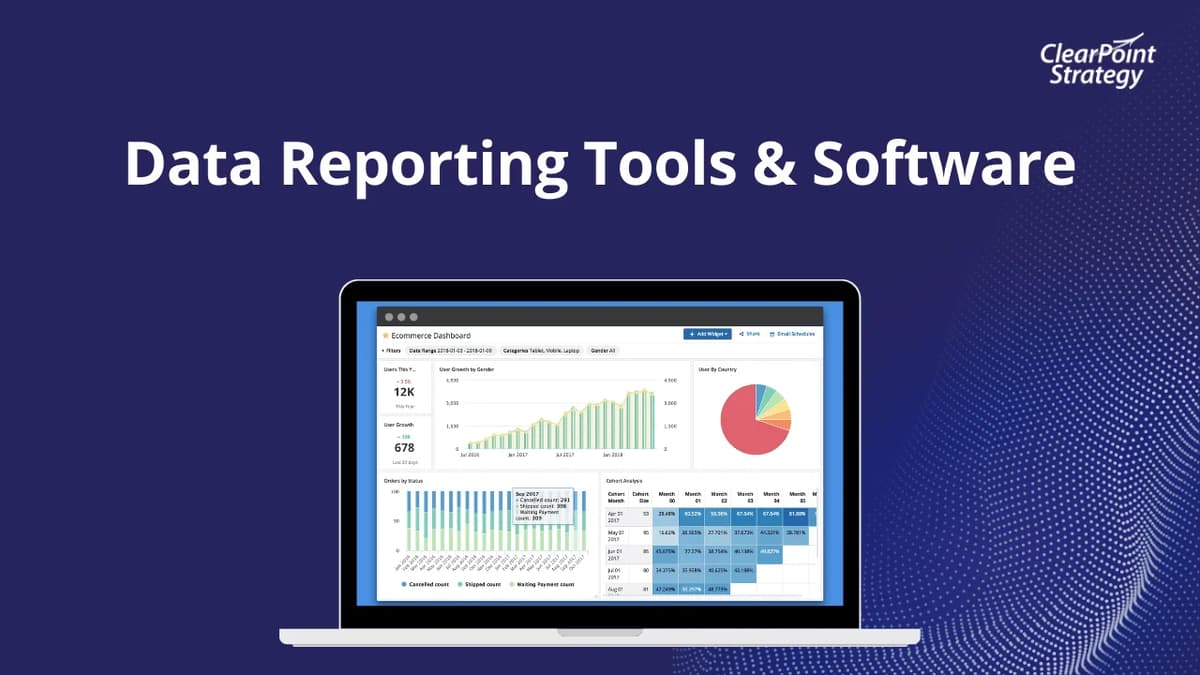
9 Best Data Reporting Tools | ClearPoint | ClearPoint Strategy Blog
Why It Matters
Choosing the right reporting tool cuts labor‑intensive data gathering, accelerates insight delivery, and strengthens strategic alignment across the enterprise.
Key Takeaways
- •Manual data gathering can consume over 40 hours per report
- •Five essential components: structure, reports, integration, customization, support
- •ClearPoint automates data uploads, calculations, and report distribution
- •SAP Crystal Reports, Power BI, IBM Cognos rank among top alternatives
- •Effective reporting tools accelerate decision‑making and reduce manual effort
Pulse Analysis
As data volumes explode, many companies are abandoning spreadsheet‑centric reporting in favor of dedicated business‑intelligence platforms. The shift is driven by the need for real‑time dashboards, cross‑functional visibility, and the ability to blend quantitative and qualitative inputs without manual consolidation. Modern reporting tools also address regulatory pressures, such as ADA compliance and data security, that legacy Excel‑PowerPoint workflows struggle to meet.
Evaluating a reporting solution now hinges on five pillars: structural flexibility to mirror an organization’s hierarchy, robust report generation tailored to varied stakeholder needs, seamless data integration that can slash up to 40 hours of manual effort per cycle, deep customization for branding and unique metrics, and responsive customer support that treats the software as a partnership. When these elements align, firms experience faster decision cycles, reduced error rates, and clearer strategic tracking.
Among the top contenders, ClearPoint stands out for its end‑to‑end automation and granular customization, while SAP Crystal Reports offers deep data‑integration capabilities for complex enterprises. Power BI and IBM Cognos bring AI‑enhanced analytics and broad data‑source compatibility, and Zoho Analytics provides a low‑code, drag‑and‑drop experience for midsize teams. Selecting the optimal tool requires matching these strengths to an organization’s reporting cadence, data architecture, and budget, ensuring the platform scales as strategic priorities evolve.
9 Best Data Reporting Tools | ClearPoint | ClearPoint Strategy Blog
Comments
Want to join the conversation?
Loading comments...