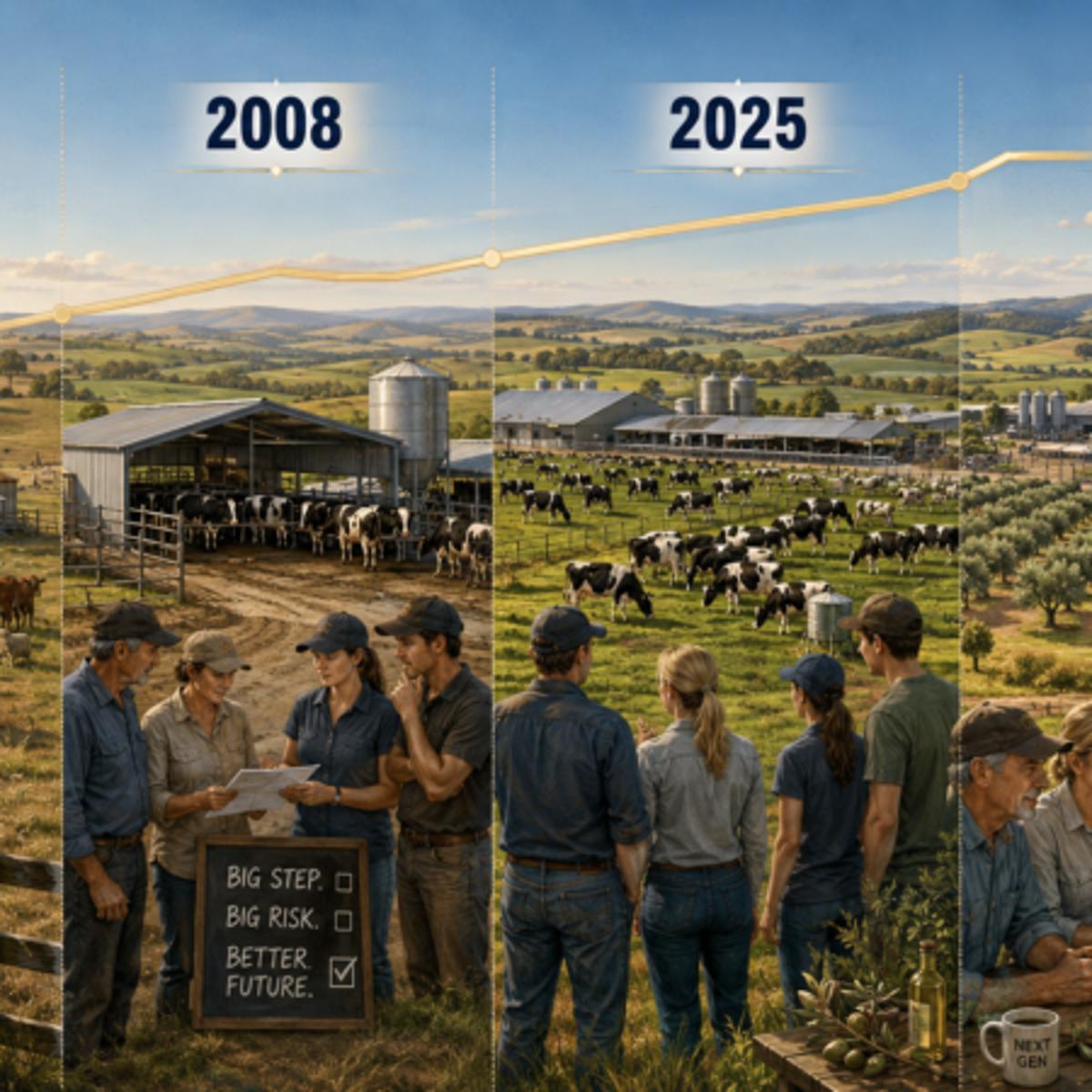
Growing the Family Farm
Key Takeaways
- •Equity grew $8.96 M over 26 years at 5.7% CAGR
- •Pivoted from sheep/beef to dairy in 2008, spurring later growth
- •Used $1.5 M debt to buy land and olive grove
- •Debt strategy created $2‑3 M equity per child for succession
- •Real estate assets boost farm cash flow while minimizing tax in NZ
Pulse Analysis
Family farms across the United States and abroad face a unique blend of operational and generational pressures. While the core business remains rooted in livestock or crops, owners must navigate rapid technology adoption, volatile commodity prices, and the expectations of the next generation. The case of a 26‑year‑old dairy operation illustrates how a modest 5.7 % compound annual growth rate can translate into multi‑million equity when strategic pivots are timed correctly. By shifting from sheep and beef to dairy in 2008, the farm laid the groundwork for later expansion despite a decade of flat growth.
Debt emerged as the primary catalyst for that expansion. In 2026 the owners secured an additional $600,000 loan, pairing it with a $900,000 purchase of a 130‑acre block and a $1.9 million acquisition of a 25‑acre olive grove with processing facilities. The combined $1.5 million financing allowed the farm to diversify into high‑value real estate and value‑added agriculture, creating what the owner calls “lazy equity.” Because New Zealand offers minimal tax on real‑estate gains, the strategy amplified returns while keeping cash flow healthy.
The ultimate goal of this leveraged growth is succession. By converting debt‑financed acquisitions into $2‑3 million equity stakes for each of four children, the family secures a financial platform that encourages the next generation to stay in agriculture rather than seek urban employment. This model challenges the traditional aversion to borrowing that often forces family farms to sell or dissolve. Industry observers see similar patterns emerging as younger farmers recognize that measured leverage, coupled with diversified assets, can sustain profitability and preserve legacy in an increasingly competitive market.
Growing the Family Farm
Comments
Want to join the conversation?