Companies Mentioned
Why It Matters
Embedding senior leadership and robust data into sustainability drives measurable emissions cuts and aligns product innovation with climate goals, setting a benchmark for consumer‑goods firms.
Key Takeaways
- •2023 governance revamp created sustainability executive committee
- •Targets: 50% ops cut, 25% Scope 3 reduction
- •Reached 65% ops cut; 18% Scope 3 reduction achieved
- •Quarterly scorecards track product-level sustainability progress
- •New software consolidates 30 spreadsheets, captures supplier emissions
Pulse Analysis
Corporate sustainability is moving from peripheral reporting to core strategic planning, and Clorox illustrates how governance redesign can accelerate that shift. By forming a sustainability executive committee that meets quarterly and reports to the CEO and board, the company ensures that emissions targets are not merely aspirational but are embedded in business unit objectives. This model mirrors a broader trend among mature consumer‑goods companies, where cross‑functional leadership—spanning legal, supply chain, and finance—provides the authority needed to translate climate ambition into actionable metrics.
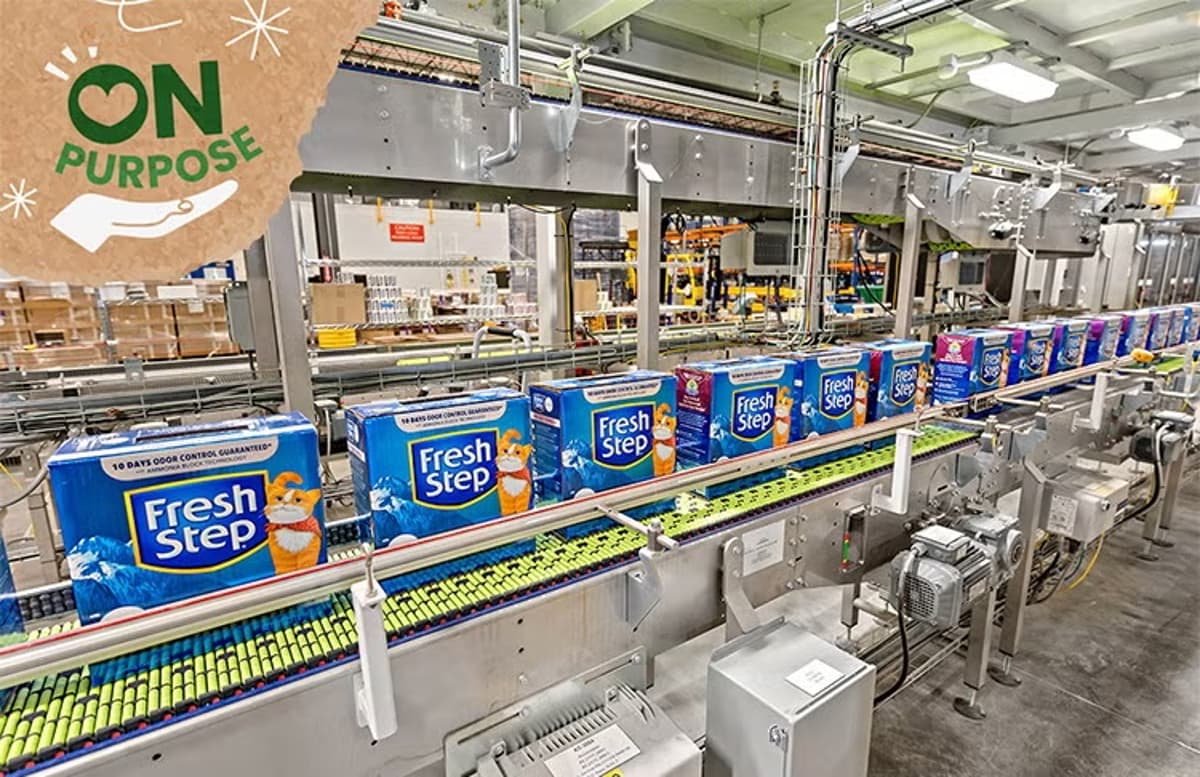
Clorox’s science‑based targets, approved in 2021, call for a 50% reduction in operational emissions and a 25% cut in Scope 3 emissions from purchased goods and sold products. The firm has already outperformed the operational goal, achieving a 65% reduction, while Scope 3 emissions have fallen 18% thanks to localized sourcing and formulation changes such as the revamped Fresh Step cat litter. These gains are underpinned by a new data management system that replaces roughly 30 spreadsheets, delivering real‑time carbon data from suppliers who account for 93% of the company’s emissions. This granular insight enables procurement teams to compare supplier footprints and R&D to model the carbon impact of ingredient swaps.
The rollout of quarterly product‑level scorecards marks the next evolution, turning sustainability into a performance KPI rather than a compliance checkbox. By requiring business units to map roadmaps to 2030 goals and later integrate carbon metrics into purchasing policies, Clorox is building capability across its organization. This approach not only strengthens internal accountability but also signals to investors and regulators that the company’s climate strategy is data‑driven, scalable, and financially material. Other firms can replicate this framework to close the gap between sustainability reporting and tangible emissions reductions.
How Clorox sets sustainability goals
Comments
Want to join the conversation?
Loading comments...