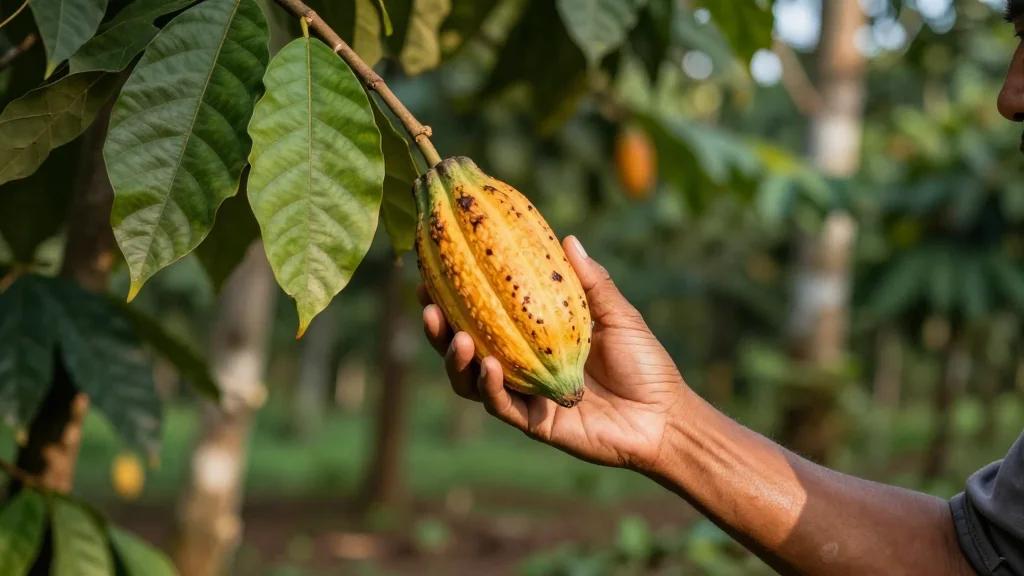
Mars and Ofi Unveil 5‑year Net‑zero Cocoa Program in Ecuador

Companies Mentioned
Why It Matters
The initiative illustrates how supply‑chain managers are moving ESG from a peripheral compliance exercise to a core strategic lever. By tying farmer incentives, procurement contracts and climate‑smart practices together, Mars and ofi are redefining performance measurement across the cocoa value chain. Successful emissions cuts and productivity gains could demonstrate a viable pathway for other food and beverage companies to meet their Scope 3 reduction commitments, reshaping how risk, resilience and profitability are balanced in agricultural sourcing. Moreover, the program’s farmer‑centered financing model challenges the conventional reliance on carbon markets, offering a replicable blueprint for integrating climate finance directly into operational budgets. As investors increasingly scrutinize ESG disclosures, such tangible, data‑driven initiatives provide the transparency and accountability needed to sustain long‑term capital flows into sustainable agriculture.
Key Takeaways
- •Mars and ofi launch a five‑year, 9,000‑hectare regenerative cocoa program in Ecuador
- •960 farmers across six provinces will transition to agroforestry and biochar practices
- •Program aligns with Science Based Targets initiative for 2050 net‑zero goals
- •Targets include Scope 3 emissions cuts, yield gains and resilience for ~4,800 community members
- •Mid‑term impact report slated for 2027, with potential expansion to other Latin American cocoa regions
Pulse Analysis
Mars and ofi’s partnership marks a watershed in supply‑chain management, where climate ambition is embedded directly into the operational playbook. Historically, food giants have relied on downstream carbon offsets to claim progress, but this initiative flips the script by investing upfront in regenerative practices that generate real, on‑farm carbon sequestration. The shift signals a maturation of ESG governance: senior managers now have quantifiable levers—hectares converted, emissions avoided, yield differentials—to report to boards and investors.
From a competitive standpoint, the collaboration could force peers such as Nestlé, Mondelez and Hershey to accelerate their own Scope 3 roadmaps. The program’s emphasis on farmer livelihoods also addresses a longstanding criticism that ESG projects often overlook socioeconomic outcomes. By quantifying benefits for 4,800 community members, Mars and ofi create a narrative that blends climate stewardship with inclusive growth, a combination that resonates with both impact investors and consumer advocacy groups.
Looking forward, the real test will be the robustness of the monitoring framework. If the mid‑term report validates the projected emissions reductions and productivity gains, the model could become a de‑facto standard for commodity‑level decarbonization. Conversely, gaps in data or farmer adoption could expose the limits of top‑down sustainability mandates. Either way, the initiative reshapes the managerial calculus for multinational food firms, turning climate risk management into a source of competitive advantage rather than a compliance cost.
Mars and ofi unveil 5‑year net‑zero cocoa program in Ecuador
Comments
Want to join the conversation?
Loading comments...