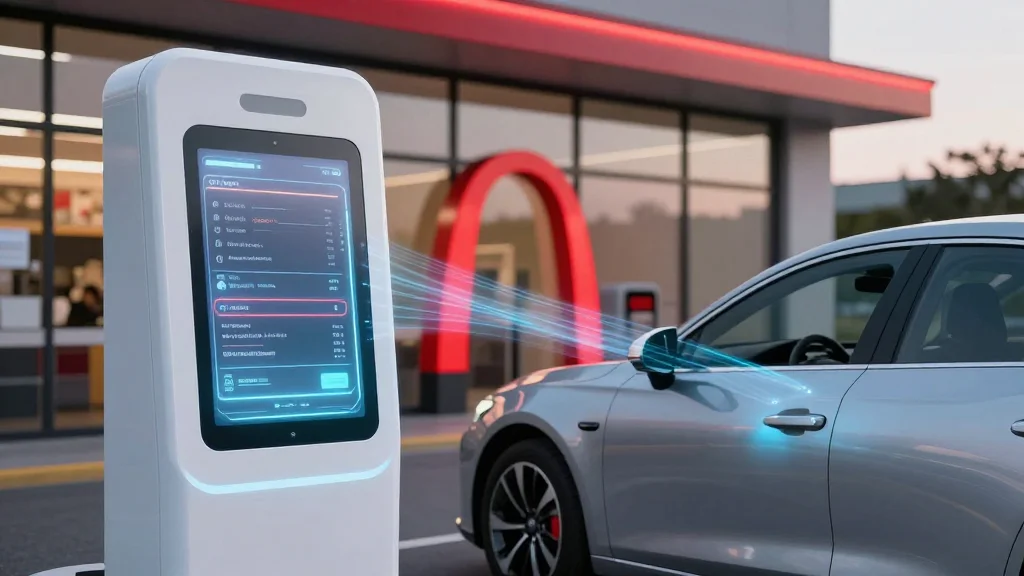
McDonald’s Pilots AI Drive‑Thru System ArchIQ, 90% Orders Handled Without Humans

Companies Mentioned
Why It Matters
The ArchIQ pilot signals a potential turning point for labor management in quick‑service restaurants. By automating the majority of drive‑thru interactions, McDonald’s could lower labor costs, improve order accuracy, and generate granular operational data that informs staffing and inventory decisions. At the same time, the public’s mixed reaction highlights the risk that over‑automation may erode the brand’s hospitality image, a core differentiator in a crowded market. Beyond McDonald’s, the experiment offers a template for other retailers and restaurants considering AI‑driven front‑of‑house solutions. Success could accelerate investment in edge‑computing platforms, reshape vendor relationships (notably with Google), and prompt regulators to examine the implications of AI on employment standards and consumer privacy.
Key Takeaways
- •ArchIQ pilot runs at five U.S. McDonald’s locations
- •Over 1 million drive‑thru transactions processed to date
- •Approximately 90% of orders completed without human escalation
- •System runs on Google Edge Cloud blades, slated for nationwide installation
- •CEO Chris Kempczinski frames the rollout as part of the ‘McDonald’s Next’ strategy
Pulse Analysis
McDonald’s decision to embed AI at the drive‑thru reflects a broader industry push to extract efficiency from high‑volume, low‑margin operations. Historically, fast‑food chains have relied on human crew members to manage both order taking and food preparation, a model that caps speed improvements due to labor constraints. ArchIQ’s early 90% automation rate suggests that AI can now shoulder the bulk of transactional work, freeing staff for higher‑value tasks such as food quality checks and personalized service. This reallocation could compress labor budgets, a critical lever as wages rise and turnover remains high.
However, the technology’s success will depend on more than raw speed. Consumer acceptance is a fragile variable; early social‑media backlash indicates that a segment of diners still values human interaction. McDonald’s must therefore calibrate the AI experience to preserve the brand’s hospitality promise—perhaps by using the system to surface real‑time alerts that enable staff to intervene when a guest appears frustrated. The company’s claim that ArchIQ will act as a “master brain” for managers hints at a future where AI not only takes orders but also orchestrates the entire service flow, a capability that could become a competitive moat if executed well.
From a competitive standpoint, the partnership with Google positions McDonald’s ahead of rivals still experimenting with proprietary or less‑scalable solutions. Google’s Edge Cloud offers low‑latency processing essential for real‑time order handling, and its AI models can be continuously refined across the chain’s massive data set. If the pilot scales, we may see a cascade of AI‑driven initiatives across the quick‑service sector, from predictive staffing to dynamic menu pricing, fundamentally reshaping how these businesses operate.
In the short term, the key question is whether the pilot’s performance metrics translate into consistent, nationwide results. Variables such as regional traffic patterns, crew training, and network reliability could affect outcomes. McDonald’s next public update—likely in the coming quarter—will reveal whether the 90% automation figure holds at scale and how the company plans to address the vocal consumer concerns that have already surfaced.
McDonald’s Pilots AI Drive‑Thru System ArchIQ, 90% Orders Handled Without Humans
Comments
Want to join the conversation?
Loading comments...