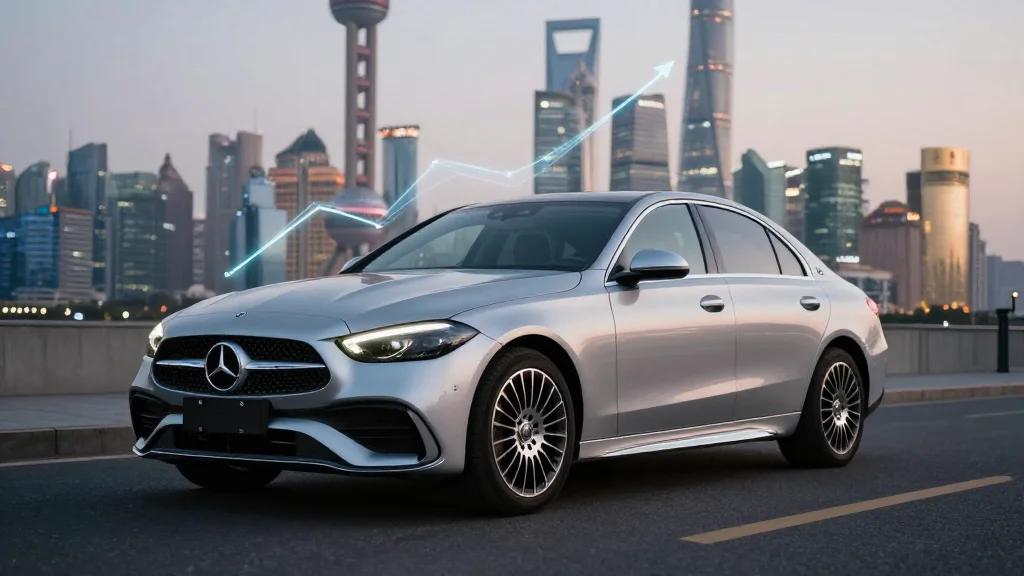
Mercedes‑Benz China Deploys OKR System and Plans to Shut Low‑Efficiency Production Lines

Companies Mentioned
Why It Matters
The introduction of OKRs at Mercedes‑Benz China marks a rare instance of a legacy automaker adopting a Silicon‑valley‑style performance framework in a market where traditional seniority‑based evaluations have prevailed. By tying employee objectives to clear, quantifiable outcomes, the company aims to accelerate innovation in electric‑vehicle technology and improve time‑to‑market for its upcoming models. Concurrently, the rationalisation of production lines addresses a structural cost imbalance that has eroded profitability amid a shrinking Chinese luxury‑car market. If successful, the dual strategy could set a benchmark for other OEMs facing similar margin pressures, demonstrating how performance‑management tools and manufacturing efficiency can be combined to meet aggressive cost‑saving targets. The broader implication is a potential shift in how Chinese subsidiaries of global manufacturers manage talent and assets, moving from broad, incentive‑light systems to data‑driven, results‑oriented models. This could accelerate the adoption of performance‑management best practices across the Chinese automotive sector and beyond.
Key Takeaways
- •Mercedes‑Benz China launches OKR performance system at Shanghai R&D, Beijing to follow.
- •Company targets €25 bn (≈$27 bn) in cost savings by 2025, half of a €50 bn (≈$54 bn) global goal.
- •Yizhuang plant produced >400,000 vehicles in 2024; Shunyi plant <100,000, both under review for line consolidation.
- •Chinese sales fell 6% to 714,000 units in 2024, marking the second consecutive year of decline.
- •Dealer network to be streamlined; product lineup to be trimmed as part of the efficiency drive.
Pulse Analysis
Mercedes‑Benz’s pivot to OKRs reflects a strategic import of agile management practices into a traditionally hierarchical automotive culture. The move is likely driven by the need to accelerate development cycles for electric vehicles, where speed to market can dictate market share. By embedding quarterly key results, the firm forces teams to prioritize deliverables that directly impact the launch of the long‑wheelbase CLA and domestically produced GLE, both critical to recapturing growth in China.
However, the success of OKRs hinges on cultural acceptance. The source notes that the previous bonus system was a “大锅饭” with minimal differentiation, suggesting that employees may be unaccustomed to performance‑based consequences. If the new framework leads to “末位淘汰” (bottom‑ranked employee removal), it could trigger short‑term morale challenges, especially in a market where job security is highly valued. Management will need to balance rigor with support to avoid talent attrition that could undermine the very productivity gains they seek.
On the manufacturing front, the consolidation of low‑efficiency lines is a pragmatic response to under‑utilisation caused by a fragmented product portfolio. The Yizhuang plant’s 400,000‑unit output contrasts sharply with Shunyi’s sub‑100,000 figure, indicating a capacity mismatch. Closing or merging lines can free up capital for investment in flexible, electrified production cells, aligning with the broader industry shift toward modular platforms. Yet, the timing is delicate; any disruption could jeopardize the rollout of the electric CLA, a model that, while technologically advanced, may not align with Chinese consumer preferences. The outcome will test Mercedes‑Benz’s ability to execute large‑scale operational change while maintaining brand equity in a fiercely competitive luxury market.
Mercedes‑Benz China Deploys OKR System and Plans to Shut Low‑Efficiency Production Lines
Comments
Want to join the conversation?
Loading comments...