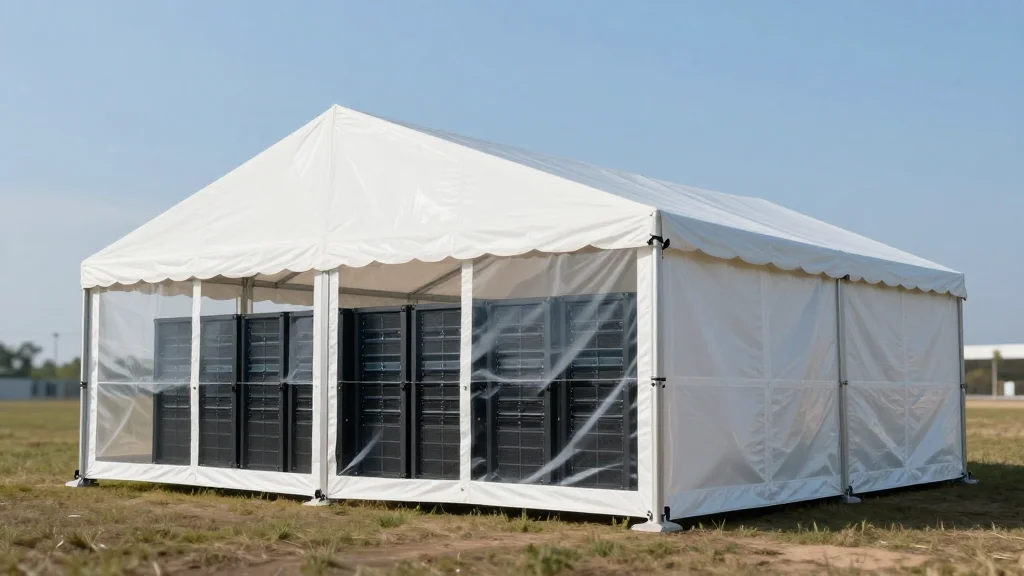
Meta Builds Tent‑Based AI Data Centers in Ohio to Halve Construction Time


Why It Matters
The tent‑based data centers represent a strategic pivot in how large tech firms manage the massive capital outlays required for AI compute. By cutting construction time and potentially lowering real‑estate costs, Meta can accelerate the rollout of new models like Muse Spark, influencing developer adoption and competitive dynamics. Moreover, the approach tests the viability of modular power solutions, a factor that could affect the broader industry’s carbon‑intensity targets. If successful, other companies may adopt similar rapid‑deployment tactics, prompting a shift in supply‑chain demand toward prefabricated structures and portable power units. This could also pressure traditional data‑center builders to offer more flexible, time‑bound contracts, reshaping the economics of AI infrastructure investment.
Key Takeaways
- •Meta erected six 125,000‑sq‑ft tent data centers in Ohio between April and June.
- •Construction time is claimed to be reduced by roughly 50% compared with permanent builds.
- •The sites are powered by a 200‑MW modular gas‑turbine array, mirroring xAI’s approach.
- •Meta’s overall AI‑related capital‑expenditure budget is up to $145 bn.
- •Meta’s stock is down 5% year‑to‑date, intensifying pressure to trim infrastructure costs.
Pulse Analysis
Meta’s tent experiment is a pragmatic response to the twin challenges of speed and cost in AI infrastructure. Historically, data‑center rollouts have been anchored in brick‑and‑mortar construction, a process that can span 12‑18 months and lock in large fixed‑cost commitments. By borrowing tactics from automotive manufacturing and modular power generation, Meta is effectively treating AI compute as a product line that can be iterated quickly, akin to a software release cycle.
The decision also reflects a broader industry trend toward “flexible compute”—the idea that compute capacity can be provisioned, moved, or de‑commissioned with minimal sunk cost. As AI models grow in size and frequency of updates, the ability to reconfigure hardware footprints becomes a competitive advantage. However, the reliance on gas turbines may clash with ESG expectations, especially as investors demand clearer pathways to carbon neutrality. Meta will need to demonstrate that the operational efficiencies offset any environmental penalties, perhaps by integrating renewable‑energy credits or carbon‑offset programs.
Looking ahead, the success of Meta’s tents could trigger a wave of similar deployments across the sector, prompting data‑center vendors to develop standardized modular kits. This could lower entry barriers for smaller AI players, democratizing access to high‑performance compute. Conversely, if performance or reliability issues emerge, the industry may revert to traditional builds, reinforcing the value of long‑term, purpose‑built facilities. Meta’s next steps—performance data, cost‑benefit analysis, and potential replication—will be closely watched as a bellwether for the future of AI infrastructure management.
Meta Builds Tent‑Based AI Data Centers in Ohio to Halve Construction Time
Comments
Want to join the conversation?
Loading comments...