OKR Implementation for Government Roadmap | ClearPoint | ClearPoint Strategy Blog
Why It Matters
By embedding quarterly OKRs into existing budget cycles and political oversight, governments can dramatically improve project delivery rates and data transparency, directly addressing chronic under‑performance.
Key Takeaways
- •Only 20.7% of government projects finish on schedule
- •Hybrid OKR + Balanced Scorecard aligns quarterly goals with budget cycles
- •Executive sponsorship and public dashboards drive owner accountability
- •Pilot two departments, then scale after a 3‑month validation
Pulse Analysis
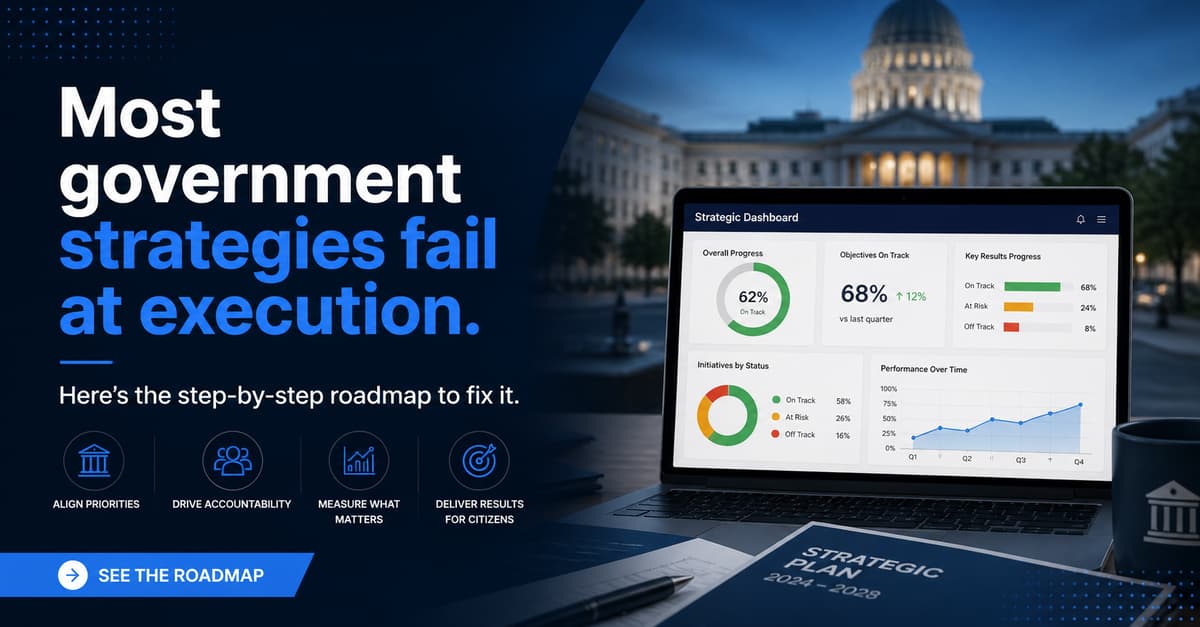
Government agencies are finally catching up to the private sector’s obsession with Objectives and Key Results, but the transition is anything but a copy‑and‑paste exercise. Public entities juggle multi‑year strategic plans, fiscal calendars, and elected‑official scrutiny, which makes the traditional startup‑style OKR model ill‑suited. By marrying OKRs with a Balanced Scorecard, officials can preserve long‑range vision while injecting quarterly, measurable checkpoints that sync with budget approvals and election timelines. This hybrid approach also satisfies the public’s demand for transparency, turning opaque strategy documents into live performance dashboards.
ClearPoint’s platform data underscores the urgency: across more than 26,000 projects, just 20.68% reach completion, and a staggering 81% of owners never refresh their metrics. Those figures translate into billions of dollars of wasted taxpayer resources and eroded public trust. The six‑step roadmap—securing executive sponsorship, selecting a hybrid framework, piloting, training, configuring technology, and establishing review cadences—directly tackles the root causes of these failures. Executive buy‑in ensures political legitimacy, while automated reminders and public dashboards combat the “phantom owner” problem by making data updates visible and accountable.
For agencies ready to act, the path forward is clear. Start with a low‑risk pilot in two willing departments, use ClearPoint’s purpose‑built OKR platform to enforce updates, and align each quarter’s objectives with the upcoming fiscal budget. Within 4‑6 weeks, teams typically see cultural shifts toward accountability; measurable performance gains emerge after two to three quarters. As more jurisdictions publish their OKR progress publicly, the competitive pressure to deliver will only increase, turning OKRs from a novelty into a cornerstone of modern government performance management.
OKR Implementation for Government Roadmap | ClearPoint | ClearPoint Strategy Blog
Comments
Want to join the conversation?
Loading comments...