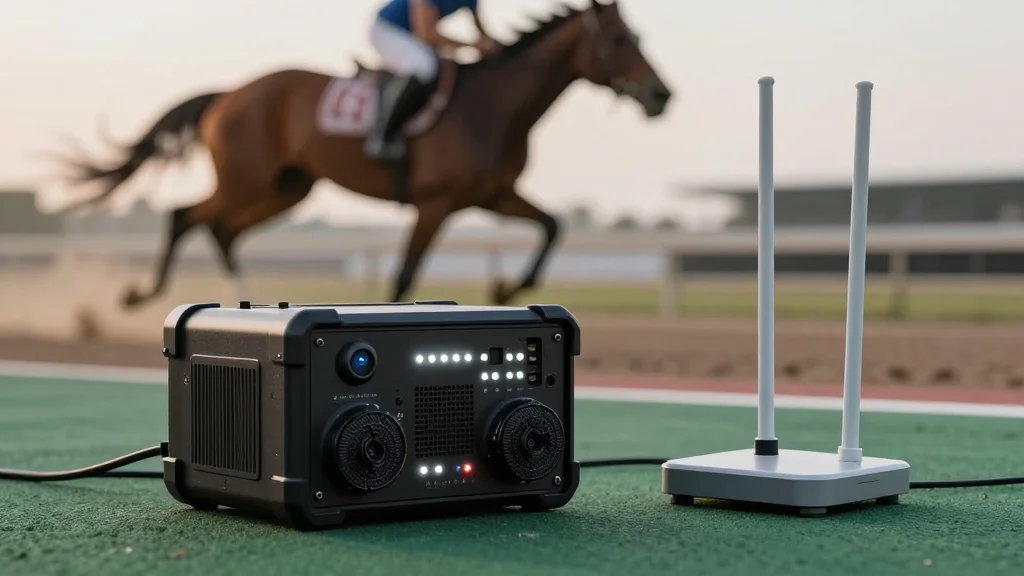
BMC TV Takes Racing by the Bitrate with Open Broadcast Systems’ 5G Flyaway
Why It Matters
The move cuts transmission costs and eliminates the logistical limits of satellite, enabling broadcasters to deliver reliable, low‑latency video from any location. It also showcases 5G as a viable backbone for live sports, accelerating industry adoption.
Key Takeaways
- •5G Flyaway delivers sub‑second latency over cellular networks
- •BMC TV replaces satellite with bonded 5G for remote race tracks
- •Solution supports constant‑bitrate MPEG transport streams for consistent quality
- •Open Broadcast’s kit integrates into BMC’s existing contributor network
- •Hundreds of UK horse races already transmitted via 5G Flyaway
Pulse Analysis
The live‑sports market has long depended on satellite dishes and leased fibre to transport pristine video from venues that sit far from studio hubs. Those infrastructures, while reliable, are expensive to install and can be vulnerable to weather or terrain constraints, especially for events such as horse racing that move between rural tracks across the UK. The rollout of commercial 5G networks offers a compelling alternative, and BMC TV’s recent deployment of Open Broadcast Systems’ 5G Flyaway illustrates how broadcasters are beginning to replace legacy links with high‑capacity cellular bonds.
The 5G Flyaway packs a bonded‑cellular engine that aggregates multiple 5G streams into a single, constant‑bitrate MPEG Transport Stream, guaranteeing picture quality comparable to satellite or fibre. Sub‑second encoding and decoding keep latency below one second, a critical metric for real‑time betting and commentary. Because the unit is rack‑mountable rather than a backpack, it can be installed in trucks or temporary shelters without sacrificing power or heat management. Its open architecture also lets BMC integrate the feed directly into its existing contributor network, simplifying workflow and reducing overhead.
By proving that a portable 5G solution can match or exceed traditional links, BMC TV signals a shift that could lower transmission costs for leagues, rights holders, and independent producers. Faster deployment means broadcasters can add new venues on short notice, expanding coverage of niche sports and regional events. As 5G coverage widens, the technology is likely to spill over into other live‑production workflows, from news gathering to esports, cementing its role as a versatile backbone for the next generation of broadcast infrastructure.
BMC TV takes racing by the bitrate with Open Broadcast Systems’ 5G Flyaway
Comments
Want to join the conversation?
Loading comments...