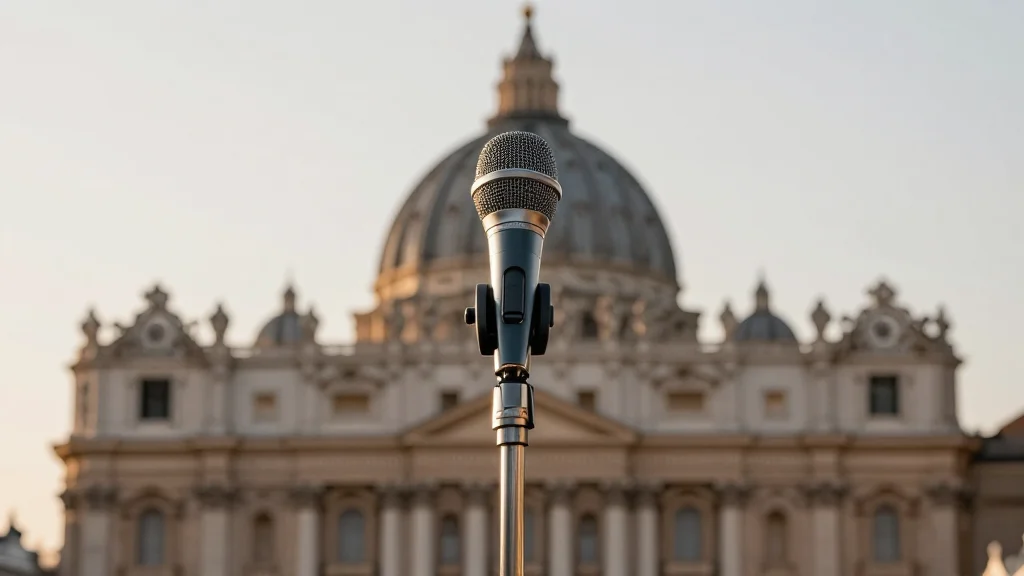
EWTN News President Montse Alvarado Named Vatican Communications Prefect

Companies Mentioned
Why It Matters
Alvarado’s elevation to Prefect underscores the Vatican’s strategic shift toward professional, lay‑led media management, a move that could reshape how the Catholic Church communicates its doctrine and social teachings to a digitally native audience. By placing a seasoned journalist with a proven record in multilingual, AI‑enhanced broadcasting at the helm, the Holy See signals its intent to compete for attention in an increasingly fragmented media ecosystem. The appointment also carries symbolic weight: a woman without religious vows now leads the Vatican’s entire communications apparatus, reflecting Pope Francis’ broader agenda of inclusivity and lay participation. This could inspire similar appointments in other curial departments, potentially accelerating reforms that modernize the Church’s governance and outreach.
Key Takeaways
- •Maria Montserrat Alvarado, EWTN News president, appointed Prefect of Vatican Dicastery for Communication effective Nov. 1, 2026
- •First non‑religious‑vowed woman to lead a Vatican dicastery, continuing Pope Francis’ lay‑leadership trend
- •Alvarado brings 14 years of religious‑freedom advocacy and three years of multilingual digital expansion at EWTN
- •Dicastery oversees Vatican News, Radio, L’Osservatore Romano, Vatican Media, publishing, and press office
- •Alvarado’s digital expertise expected to boost Vatican’s AI‑driven translation, social‑media outreach, and youth engagement
Pulse Analysis
The Vatican’s decision to install Montse Alvarado at the top of its communications machine is less a symbolic gesture than a calculated bet on media professionalism. Over the past decade, the Holy See has struggled to keep pace with the speed and personalization of modern news cycles, often ceding narrative control to secular outlets that frame Church issues through a political lens. Alvarado’s tenure at EWTN demonstrated that a faith‑based network can thrive by embracing data analytics, multilingual AI tools, and cross‑platform distribution, achieving a 15 percent audience lift despite a saturated market. Applying that playbook to the Vatican could tighten message discipline, reduce the lag between papal statements and global dissemination, and provide real‑time feedback on audience sentiment.
Historically, Vatican communications have been dominated by clerical voices, which, while doctrinally consistent, sometimes lack the agility required for crisis management. Alvarado’s background in religious‑freedom litigation equips her to navigate contentious cultural battles—such as debates over abortion legislation in the United States or anti‑religious sentiment in Europe—while maintaining the Church’s moral authority. Her appointment may also signal a willingness to confront misinformation head‑on, leveraging the same AI‑driven verification tools she championed at EWTN to flag false narratives about the Pope or Catholic doctrine.
Looking ahead, the real test will be whether Alvarado can translate her corporate‑style leadership into the Vatican’s unique governance structure, which balances hierarchical authority with a global, decentralized network of local churches. If she succeeds, the Dicastery could become a model for other religious institutions seeking to modernize their outreach, potentially reshaping the broader media landscape where faith‑based content competes for attention alongside secular streaming giants. Conversely, resistance from traditionalist factions could limit her reforms, turning the appointment into a high‑profile but ultimately symbolic milestone. The next six months—marked by staff briefings, strategic plan roll‑outs, and the formal installation ceremony—will reveal how far the Vatican is willing to push the envelope on media innovation.
EWTN News President Montse Alvarado Named Vatican Communications Prefect
Comments
Want to join the conversation?
Loading comments...