Google Expands Limited Ad Serving Policy on Search
Companies Mentioned
Why It Matters
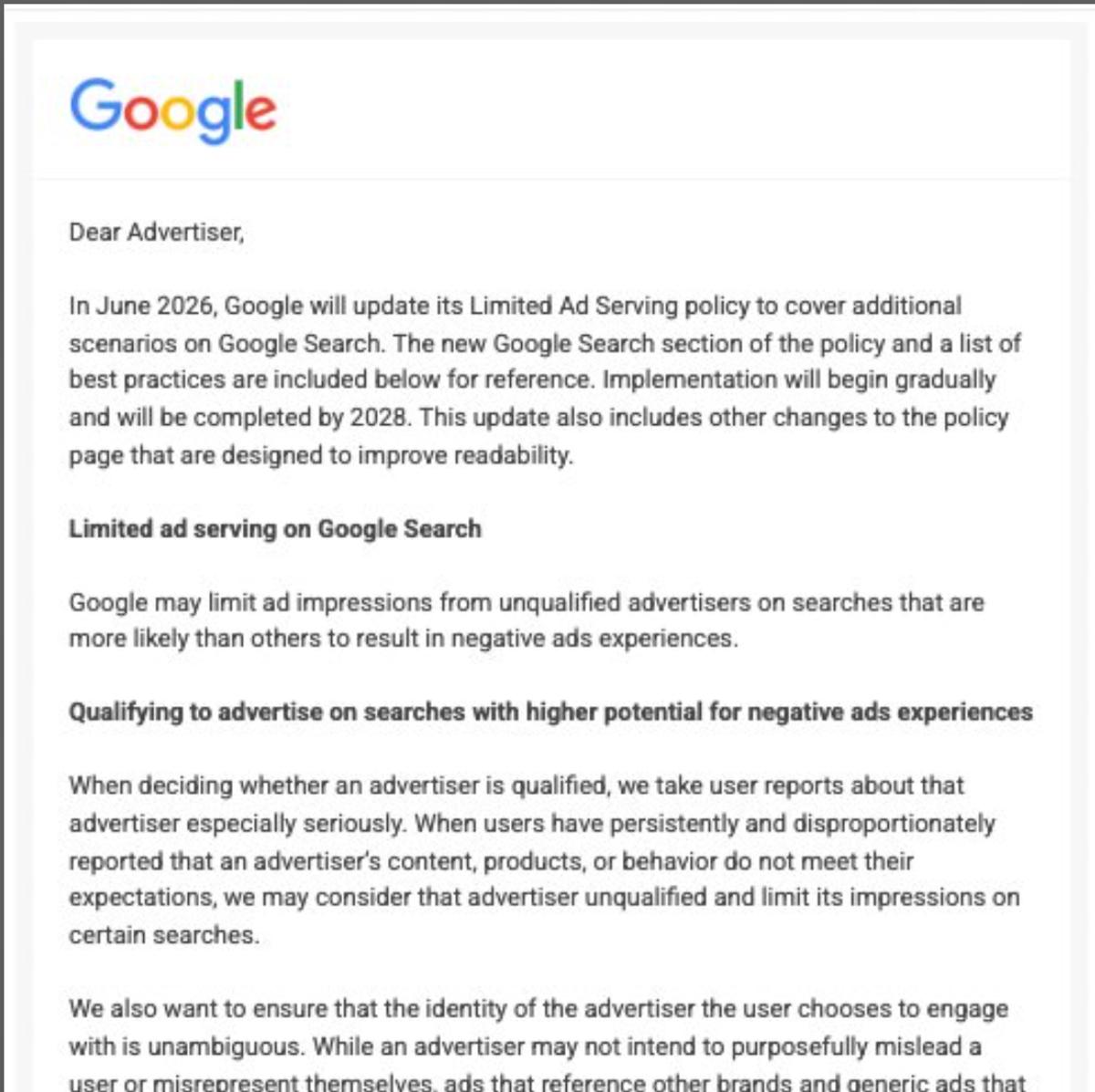
The update forces advertisers to prioritize transparency and brand clarity, directly affecting ad reach and campaign performance on the world’s largest search platform.
Key Takeaways
- •Google now limits ads based on user feedback and brand clarity
- •New policy affects newer advertisers and those with poor reputation
- •Ads with ambiguous identity may see reduced impressions across Search
- •Google will roll out changes gradually through 2028
- •Advertisers urged to highlight brand in first ad headline
Pulse Analysis
Google’s expanded Limited ad serving policy marks a shift from pure policy compliance toward a trust‑centric model for Search advertising. By weighing user‑generated feedback and the clarity of an advertiser’s identity, the search giant can now throttle impressions for ads it deems confusing or misleading. The rollout, which began in June 2026 and will continue through 2028, applies to a broader set of search scenarios, including queries where brand attribution is ambiguous. This move underscores Google’s commitment to protecting the user experience while tightening its control over ad inventory.
For marketers, the updated rules translate into a direct need to audit both creative and landing‑page elements. Generic copy that fails to signal who is behind the product may trigger the new limits, especially for newer entrants or brands with a history of negative feedback. Google recommends placing a clear domain headline in the first position of responsive search ads and ensuring that branding signals are prominent on the landing page. Companies that proactively reinforce brand visibility can preserve reach, while those that ignore the guidance risk losing valuable search traffic.
The policy reflects a broader industry trend where platforms leverage reputation data to shape ad distribution. As advertisers adapt, we can expect a rise in transparency‑focused best practices, such as explicit disclosures and tighter brand guidelines. Analysts predict that similar trust‑based filters could appear on other Google products, including YouTube and the Display Network, further incentivizing clear branding across the digital ecosystem. Early adopters who embed these principles into their campaigns are likely to enjoy a competitive edge as the ecosystem evolves.
Google expands limited ad serving policy on Search
Comments
Want to join the conversation?
Loading comments...