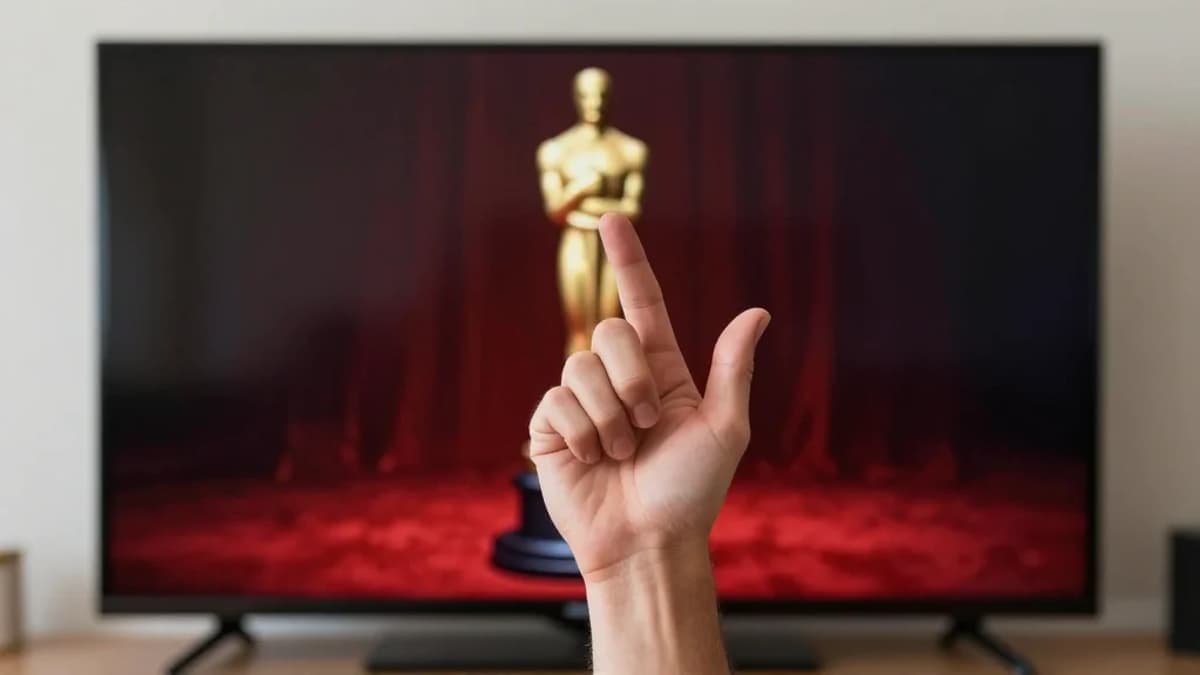
How Every 2026 Best Picture Nominee Will Feature ASL Interpretation Ahead of the Oscars
•February 27, 2026
0
Companies Mentioned


Why It Matters
Providing ASL versions gives Deaf viewers equal access to culturally significant films, expanding a sizable, underserved market and setting a new industry standard for accessibility.
Key Takeaways
- •All 2026 Best Picture nominees receive ASL overlays
- •SignUp Media launches free Chrome extension for ASL
- •Deaf audience size equals 5‑6% of global population
- •Interpretations cost similar to captions, scalable for studios
- •Studios see willingness to pay $5‑$6 monthly
Pulse Analysis
The Oscars Project represents a watershed moment for entertainment accessibility, delivering picture‑in‑picture ASL overlays for every 2026 Best Picture contender. By integrating sign language directly into streaming platforms through a lightweight Chrome extension, SignUp Media eliminates the need for separate viewing channels and ensures Deaf audiences experience the same visual storytelling as hearing viewers. This approach not only respects the linguistic integrity of ASL but also showcases how technology can bridge long‑standing gaps in mainstream media.
From a business perspective, the initiative taps into a demographic that comprises roughly 5‑6% of the global population—hundreds of millions of potential consumers. Recent research indicates willingness to pay $5‑$6 per month for dedicated ASL content, suggesting a viable subscription revenue stream. Moreover, the production costs align closely with those of closed captioning, making the model financially attractive for studios seeking to broaden their audience without substantial overhead. As streaming services race to differentiate themselves, robust accessibility features become a competitive advantage and a compliance safeguard.
Looking ahead, the momentum generated by the Oscars could catalyze broader regulatory and industry shifts. While U.S. theaters are not yet mandated to provide picture‑in‑picture ASL, legislation abroad, such as the U.K.’s New Media Act, is already setting precedents. As advocacy groups push for parity between captions and sign language, studios are likely to adopt ASL overlays as a standard practice, mirroring the evolution of subtitles. Early adopters like SignUp Media are positioning themselves as essential partners in this transition, offering both the technical infrastructure and culturally nuanced interpreter talent needed for scalable implementation.
How Every 2026 Best Picture Nominee Will Feature ASL Interpretation Ahead of the Oscars
0
Comments
Want to join the conversation?
Loading comments...