Just The FACs, Ma'am: ANA Unveils Its Own New Ad Tax
Why It Matters
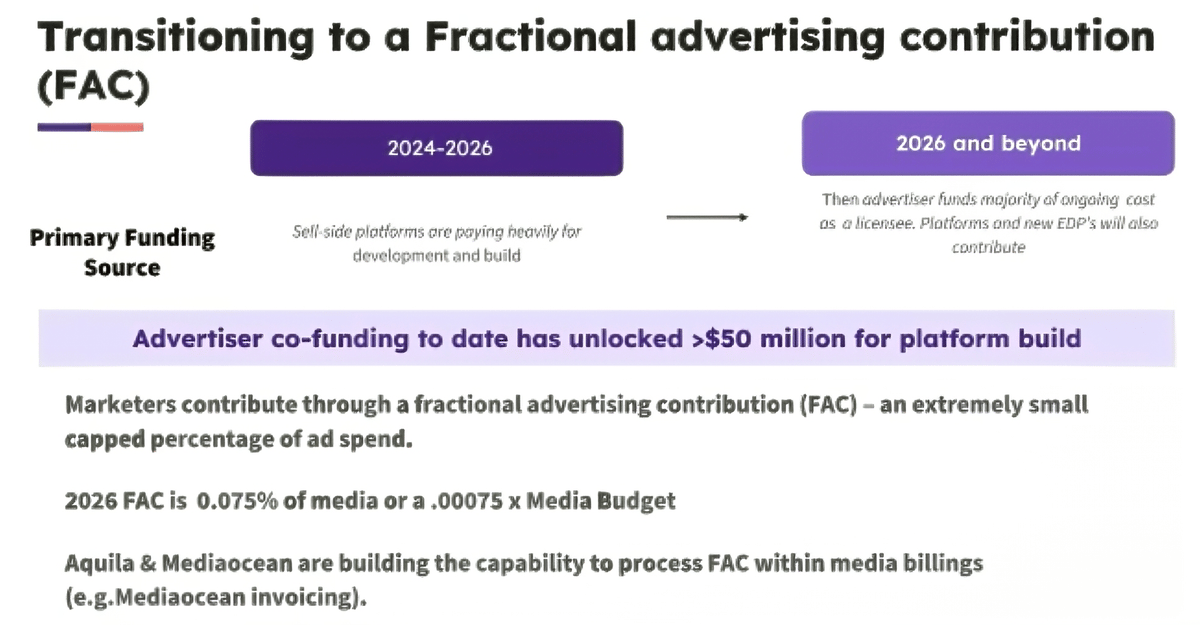
The FAC creates a sustainable revenue stream for Aquila, reducing reliance on partner subsidies while embedding a modest cost into advertisers’ media budgets. It signals a shift toward industry‑run funding models that could reshape how ad‑tech measurement tools are financed.
Key Takeaways
- •ANA launches 0.075% “Fractional Advertising Contribution” fee on media buys.
- •Aquila accounts for 11% of ANA’s assets, funded by tech partners.
- •FAC fee capped at $750,000, limiting cost for billion‑dollar advertisers.
- •Platform integrates with Mediaocean for automated fee collection by 2027.
- •1,600 ANA members could adopt Aquila, reshaping ad‑tech revenue streams.
Pulse Analysis
The ad‑tech ecosystem has long grappled with the so‑called “ad tax,” a set of fees levied by data brokers and technology intermediaries that erode advertisers’ media budgets. In response, the Association of National Advertisers launched Aquila, a cross‑media measurement platform that aggregates proprietary data from Amazon, Google, Meta, iHeartRadio and TikTok to deliver unified reach‑and‑frequency insights. By positioning Aquila as a for‑profit subsidiary, ANA aims to provide a transparent, data‑driven alternative to fragmented measurement solutions while retaining control over the platform’s financial health.
To fund Aquila sustainably, ANA introduced the Fractional Advertising Contribution (FAC), a fee of 0.075% on total media spend with a ceiling of $750,000. This structure ensures that even the world’s largest advertisers pay a predictable, capped amount, while smaller members contribute proportionally. The fee will be collected through a seamless integration with Mediaocean’s end‑to‑end buying system, mirroring the frictionless experience of highway tolls. By 2027, the process is expected to operate automatically, reducing administrative overhead and reinforcing Aquila’s long‑term viability without relying on periodic infusions from partner platforms.
For the broader industry, the FAC represents a potential paradigm shift. By internalizing the cost of measurement within the media budget, ANA reduces dependence on external data‑provider subsidies, potentially prompting other trade groups to adopt similar funding models. With roughly 1,600 member agencies, widespread adoption could generate significant recurring revenue, encouraging further innovation in cross‑media analytics. Advertisers may also benefit from greater transparency and consistency in measurement costs, fostering a more level playing field as the market moves toward standardized, industry‑backed solutions.
Just The FACs, Ma'am: ANA Unveils Its Own New Ad Tax
Comments
Want to join the conversation?
Loading comments...