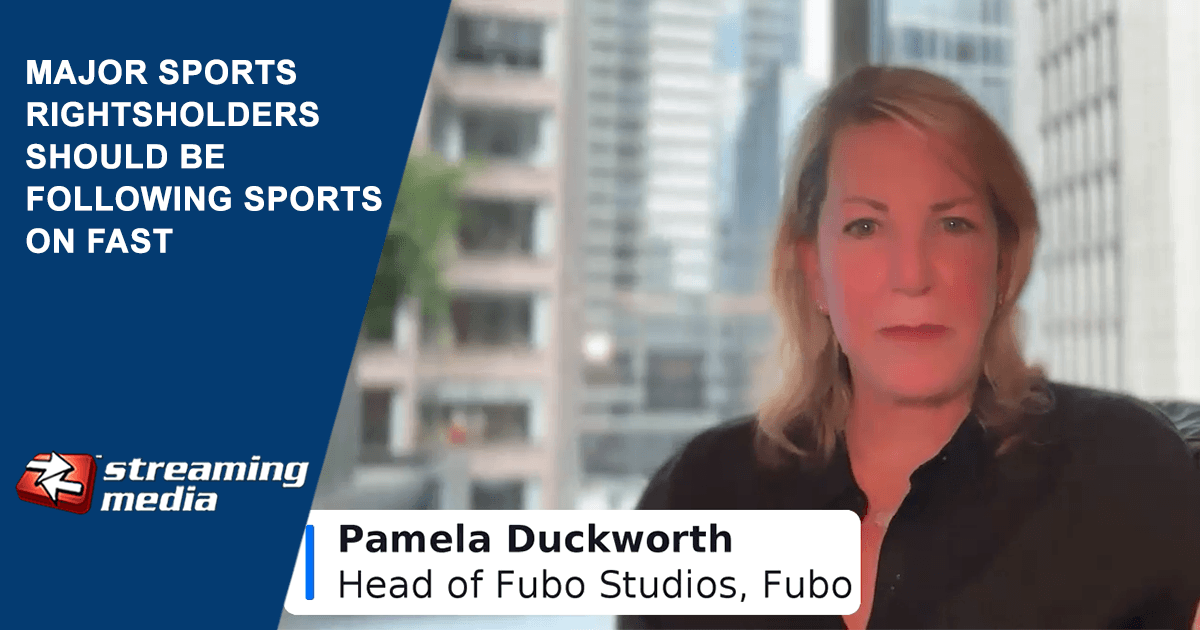
Major Sports Rightsholders Should Be Following Sports on FAST
Companies Mentioned

Why It Matters
As sports rights costs soar, leveraging FAST is essential for broadcasters to maintain audience share and for advertisers to tap the growing, fragmented viewership, reshaping the sports media economics.
Key Takeaways
- •Sports rights spending hits $14 billion this year
- •FAST platforms attract fragmented sports audiences
- •Fubo Studios splits UEFA games via low‑cost PPV
- •Red Bull leverages FAST to become a sports content creator
- •Advertisers must allocate budgets to FAST for ROI
Pulse Analysis
Free‑ad‑supported streaming TV (FAST) is rapidly moving from niche entertainment to a core distribution channel for premium sports. With $14 billion earmarked for sports rights this year—a figure projected to more than double by 2030—rightsholders can no longer rely on traditional cable or a single streaming service. Audiences now scatter across FAST services, YouTube, and social feeds, demanding that rights owners spread their content to meet fans where they watch. This fragmentation forces a strategic rethink: the value of a sports property is increasingly measured by its multi‑platform reach rather than just its linear ratings.
Broadcasters and challengers are experimenting with innovative licensing structures to stay competitive. Fubo Studios, for example, partnered with Fox to acquire UEFA rights and then divided the marquee matches into low‑cost pay‑per‑view streams on its FAST channels, targeting niche soccer fans while limiting financial exposure. Similar tactics are evident in Red Bull’s evolution from a sponsor to a content creator, using FAST to produce and distribute its own extreme‑sports programming. These creative deals allow smaller players to punch above their weight, offering advertisers access to highly engaged, demographically specific audiences without the massive fees demanded by legacy networks.
The ripple effect reaches advertisers, who are recalibrating budgets toward FAST to capture fragmented viewership. As ad‑supported platforms prove capable of delivering measurable ROI, traditional broadcasters risk losing both audience share and ad revenue if they fail to adopt a FAST‑first mindset. Industry analysts predict that by the early 2030s, a significant portion of sports advertising spend will flow through FAST channels, reshaping the economics of sports broadcasting and compelling major rightsholders to negotiate rights with built‑in FAST distribution clauses.
Major Sports Rightsholders Should Be Following Sports on FAST
Comments
Want to join the conversation?
Loading comments...