New Programmatic 'Transparency' Initiative Excludes Advertisers
Why It Matters
Improved transparency can tighten spend efficiency and restore trust across the programmatic supply chain, while the absence of advertisers may limit the relevance of the council’s recommendations for the ultimate buyers of media.
Key Takeaways
- •IAB Tech Lab creates Programmatic Governance Council for $200B market.
- •Council members include agencies, publishers, platforms; advertisers absent.
- •Goal: improve auction transparency, transaction signals, buyer‑seller alignment.
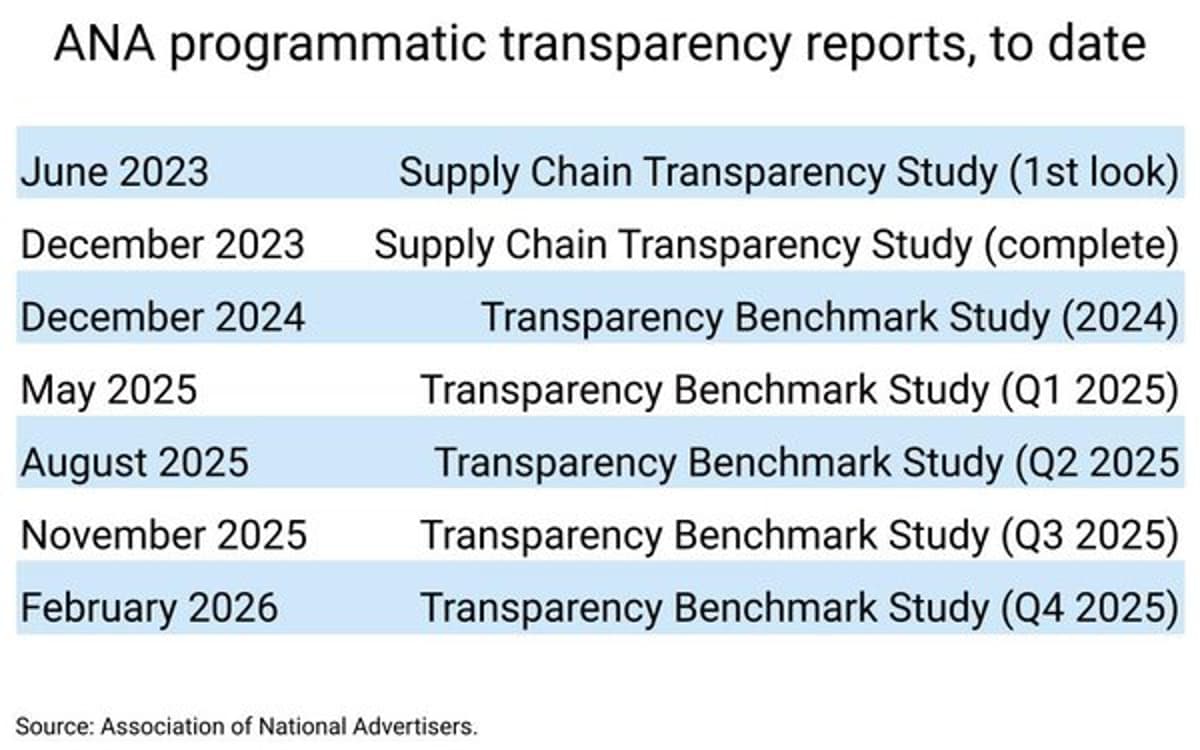
- •ANA previously led transparency; now IAB steps in amid leadership change.
- •5‑12 month timeline to deliver guidance and clearer spend pathways.
Pulse Analysis
Programmatic advertising now accounts for roughly $200 billion of U.S. media spend, yet the ecosystem’s complexity has long hampered clear visibility into where dollars flow. The Association of National Advertisers (ANA) pioneered transparency benchmarks, publishing annual reports that mapped supply‑chain interactions and highlighted fraud hotspots. By launching its own governance council, the IAB Tech Lab signals a shift toward industry‑wide standard‑setting, positioning itself as a neutral convenor that can codify best practices across the fragmented ad‑tech landscape.
The council’s roster reads like a who’s‑who of agencies, publishers and technology platforms—Dentsu, Omnicom Media Group, WPP, Disney, Magnite, PubMatic, Yahoo, Amazon Ads, The Trade Desk, among others. Notably, no direct advertiser voices are present, raising questions about whose interests the transparency framework will ultimately serve. Critics argue that without buyer input, the council may prioritize platform‑centric metrics over the spend‑allocation concerns of brands. Nonetheless, the inclusion of major media buyers suggests a partial buy‑side perspective, especially as Omnicom’s chief media officer emphasized client demand for spend clarity.
Over the next five to twelve months, the council aims to publish guidance on auction transparency, standardize transaction signals and align expectations between buyers, sellers and intermediaries. If successful, these standards could simplify media‑buying decisions, reduce hidden fees and curb fraudulent inventory, ultimately delivering measurable ROI for advertisers. At the same time, regulators are watching the ad‑tech space for antitrust and consumer‑privacy compliance, so a self‑policed transparency regime could pre‑empt stricter oversight. The industry’s next test will be whether the council’s outputs translate into actionable tools that both platforms and advertisers can adopt without compromising competitive advantage.
New Programmatic 'Transparency' Initiative Excludes Advertisers
Comments
Want to join the conversation?
Loading comments...