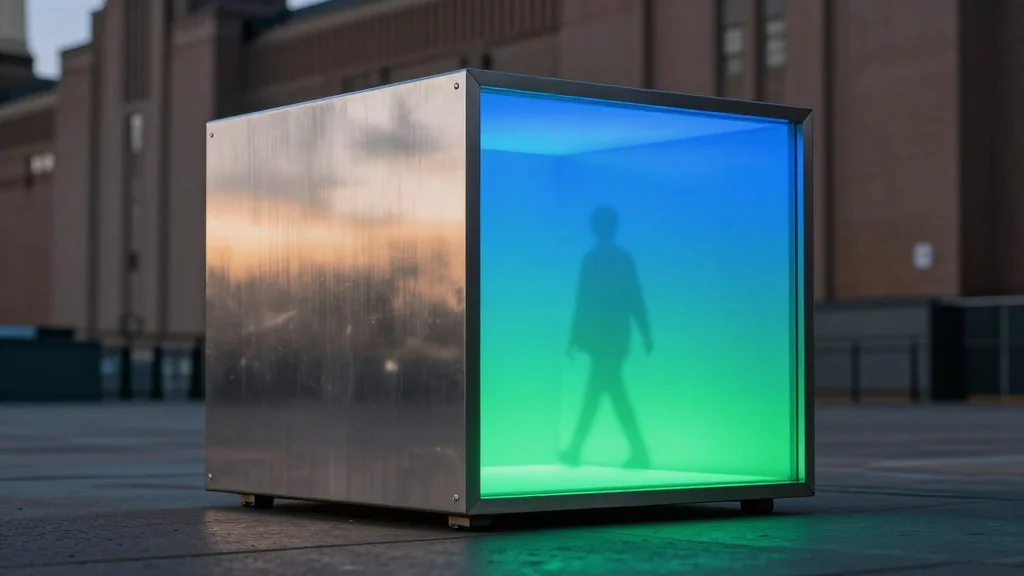
Ocean Outdoor Unveils Ocean Portal, a Walk‑In DOOH Experience at Battersea Power Station

Companies Mentioned
Why It Matters
Ocean Portal signals a shift toward experiential digital out‑of‑home that blurs the line between physical advertising and interactive entertainment. By delivering real‑time, data‑rich engagements, the format equips brands with actionable insights that were previously unavailable in static DOOH, potentially reshaping media buying strategies and budget allocations. Moreover, the portable, modular design allows rapid deployment across diverse venues, giving advertisers a flexible tool to reach audiences in high‑traffic environments without the long lead times of traditional installations. If the platform gains traction, it could accelerate the adoption of sensor‑driven DOOH across the industry, prompting competitors to develop comparable immersive stages or integrate similar motion‑tracking capabilities. This evolution may also influence regulatory discussions around data collection in public spaces, as advertisers balance the value of granular interaction data with privacy considerations.
Key Takeaways
- •Ocean Portal is a 4.5 m × 3 m freestanding half‑cube stage with five HD LED screens, launched at Battersea Power Station.
- •The format uses LiDAR, structured‑light cameras, Unreal Engine and Unity for real‑time mixed‑reality experiences.
- •Brands can book the portal exclusively or share time slots in a curated tour across venues like retail centres and stadiums.
- •Ocean Portal is already available for deployment in the German market, extending its reach beyond the UK.
- •The platform captures gesture data for on‑site analytics and social‑media amplification.
Pulse Analysis
Ocean Outdoor’s Ocean Portal arrives at a moment when advertisers are scrambling for attention in an increasingly fragmented media environment. Traditional DOOH has delivered scale but often lacked the depth of engagement that digital platforms provide. By turning a billboard into a walk‑in stage, Ocean Portal merges the physical presence of out‑of‑home with the interactivity of gaming, creating a hybrid that can command both visual and kinetic attention. This convergence is likely to attract brands that have previously allocated budgets to experiential events, as the portal offers a repeatable, data‑driven alternative that can be measured and optimized.
From a competitive standpoint, the portal’s modularity and mobility give Ocean Outdoor a distinct advantage over static installations that require extensive construction. The ability to relocate the experience quickly means advertisers can align activations with pop‑up events, product launches, or seasonal traffic spikes, maximizing ROI. However, the success of the model hinges on the robustness of its data collection and the industry’s willingness to adopt new measurement standards. If advertisers can demonstrate clear lift in brand metrics tied to portal interactions, we may see a rapid escalation in demand, prompting other DOOH players to develop similar immersive formats.
Looking ahead, the portal’s expansion into Germany suggests a strategic push to establish a pan‑European footprint. Should the rollout prove scalable, Ocean Outdoor could position itself as the go‑to provider for brands seeking immersive, programmable DOOH experiences across major markets. The next critical test will be how the platform integrates with broader omnichannel campaigns and whether the data it harvests can be seamlessly blended with existing analytics stacks. If those challenges are met, Ocean Portal could redefine the economics of out‑of‑home advertising, shifting spend toward interactive, data‑rich environments.
Ocean Outdoor Unveils Ocean Portal, a Walk‑In DOOH Experience at Battersea Power Station
Comments
Want to join the conversation?
Loading comments...