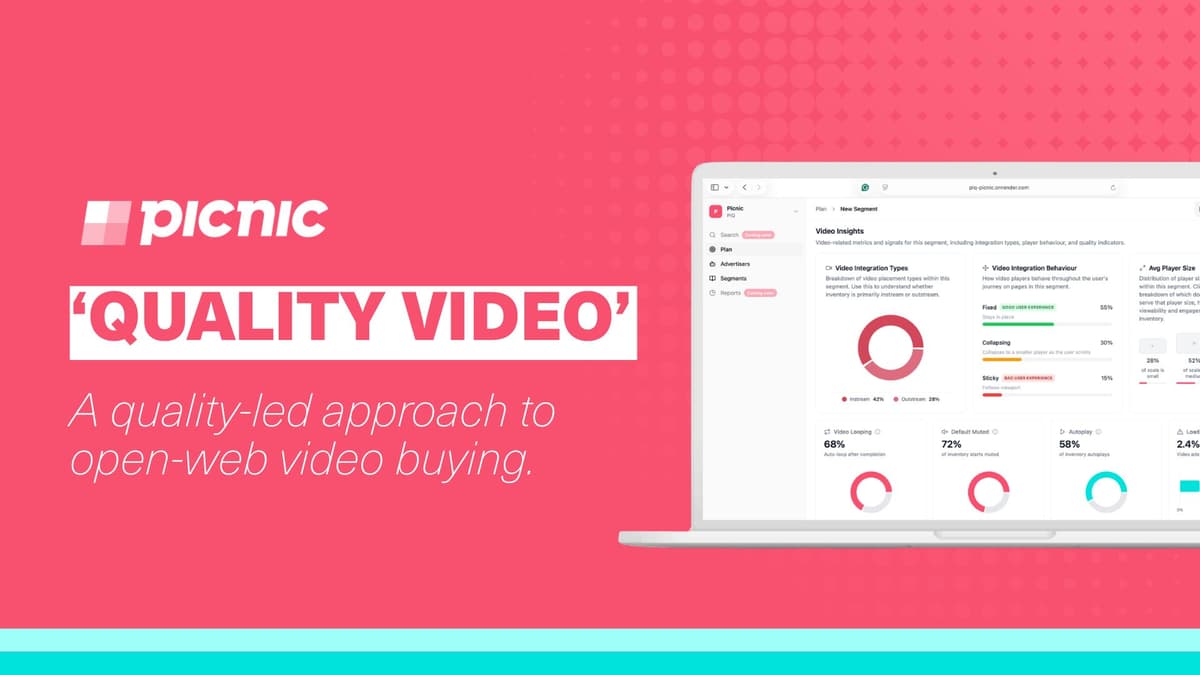
Picnic Launches ‘Quality Video’ to Bring Transparency to Open-Web Video Buying
•March 9, 2026
0
Why It Matters
It gives advertisers actionable transparency, reducing wasted spend and improving campaign ROI in the fragmented open‑web video market.
Key Takeaways
- •30% video players collapse during user session
- •15% continue playing after scroll out
- •Quality Video adds behavior-based signals to inventory
- •Buyers can filter out low‑visibility impressions
- •Available via PMP in US, UK, EMEA
Pulse Analysis
Open‑web video buying has long suffered from opaque inventory metrics, with most demand‑side platforms relying on simple In‑Stream or Out‑Stream tags that describe a player’s initial state but not its lifecycle on the page. This lack of granularity forces advertisers to gamble on CPMs that may not correspond to genuine user exposure, inflating costs and skewing performance data. As programmatic video scales across publisher ecosystems, the industry has called for more nuanced measurement tools that reflect actual viewer interaction.
Picnic’s Quality Video tackles this gap by layering a suite of behavior‑driven signals onto its existing PIQ framework. The model tracks whether videos pause when scrolled out of view, if multiple streams run concurrently, whether playback is auto‑initiated or user‑triggered, and the default audio setting. By aggregating these data points into an enhanced PIQ Score, the platform surfaces inventory that delivers intentional, viewable impressions while flagging units that collapse or play invisibly. Advertisers can now set precise filters, ensuring spend aligns with true brand exposure rather than nominal impressions.
The rollout across the US, UK and broader EMEA markets signals a shift toward transparency as a competitive differentiator in programmatic video. Brands seeking to optimize ROI and protect brand safety will likely prioritize partners that provide verifiable viewability metrics, making Quality Video a timely addition to the ad tech stack. As more publishers adopt behavior‑based standards, the open‑web ecosystem could see reduced waste, higher engagement rates, and a clearer path for scaling video campaigns with confidence.
Picnic Launches ‘Quality Video’ to Bring Transparency to Open-Web Video Buying
0
Comments
Want to join the conversation?
Loading comments...