WARC Revises Global Ad Outlook Upward, With $94B Caveat
Why It Matters
The revision underscores how geopolitical volatility can quickly erode advertising budgets, forcing brands and agencies to reassess spend allocations and risk models. It signals a potential slowdown for sectors most exposed to higher input costs and weaker consumer demand.
Key Takeaways
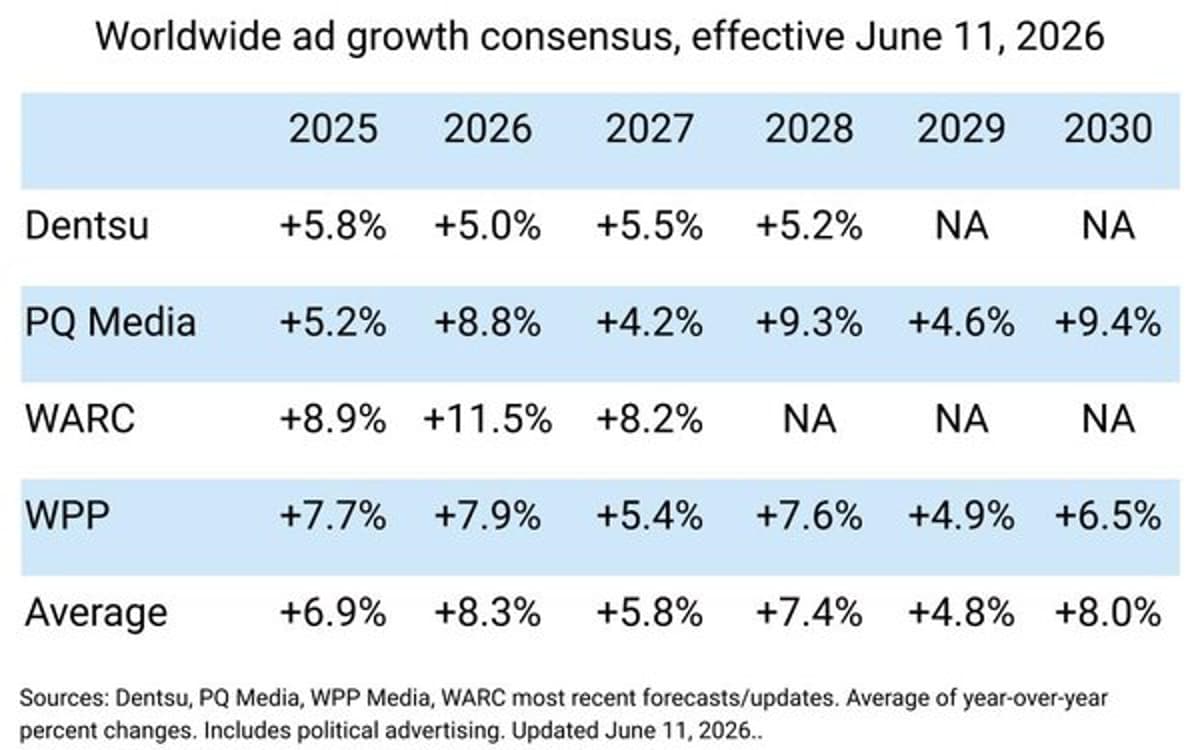
- •WARC lifts 2026 ad growth forecast to +11.5%.
- •$94 billion of ad growth could be lost if Gulf crisis persists.
- •2027 growth revised upward to +8.2% from +7.9%.
- •MediaPost consensus shows 2026 growth at +8.3%, 2027 at +5.8%.
Pulse Analysis
The latest WARC outlook reflects a rare convergence of optimism and caution in the advertising ecosystem. While the +11.5% growth projection for 2026 signals confidence in post‑pandemic recovery, the Gulf Crisis introduces a macro‑economic shock that could act like a hidden tax on consumers. By inflating energy and shipping costs, the blockade of the Strait of Hormuz squeezes disposable income, directly threatening ad spend that hinges on real purchasing power. This dual narrative forces investors and marketers to weigh upside potential against geopolitical risk.
Advertisers in travel, automotive and food sectors are especially vulnerable, as higher production costs and dampened demand threaten margin compression. The $94 billion at‑risk figure translates into a tangible budget shortfall that agencies must navigate through smarter media mix models and performance‑based buying. Brands may shift spend toward digital formats with clearer ROI metrics, while traditional media could see delayed or reduced allocations. The specter of stagflation further complicates planning, prompting a reevaluation of long‑term contracts and a greater emphasis on agility in campaign execution.
Comparatively, other forecasting bodies such as Dentsu and PQ Media remain more conservative, placing 2026 growth near +8% and 2027 around +5‑6%. This divergence highlights the importance of scenario planning for marketers who must reconcile optimistic forecasts with real‑world constraints. Companies that embed geopolitical monitoring into their media strategies will be better positioned to pivot quickly, preserving market share despite external shocks. In an environment where a single regional conflict can ripple through global ad budgets, flexibility and data‑driven decision‑making become essential competitive advantages.
WARC Revises Global Ad Outlook Upward, With $94B Caveat
Comments
Want to join the conversation?
Loading comments...