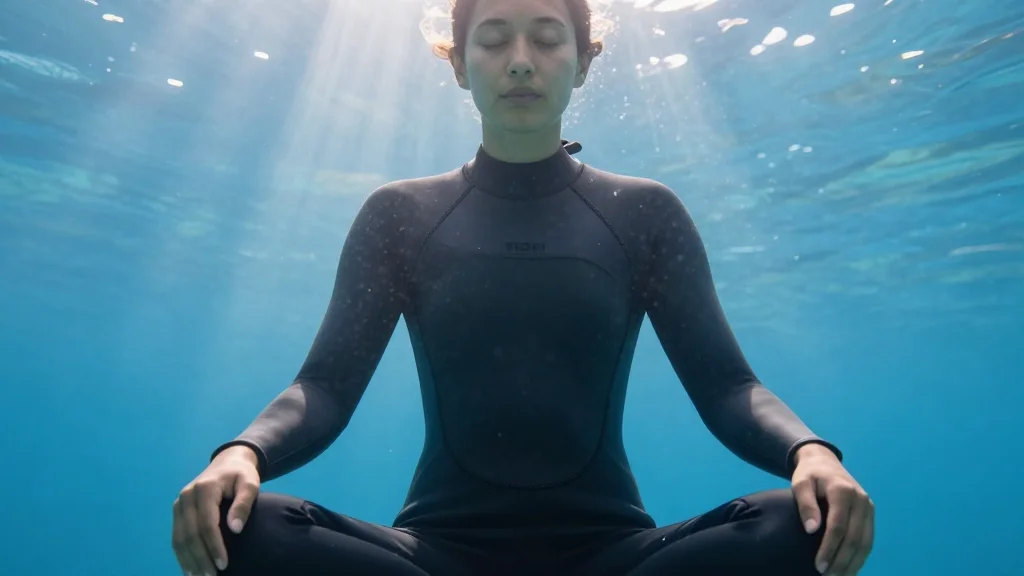
Aquanauts Report ‘Underview Effect’—A Deep-Sea Awe Comparable to Meditation

Why It Matters
The discovery of the “underview effect” bridges two traditionally separate domains: extreme‑environment psychology and mindfulness research. By demonstrating that awe can be evoked in underwater settings, the study opens pathways for new therapeutic modalities that harness natural wonder to deepen meditation practice. Moreover, linking awe to environmental stewardship reinforces the argument that personal well‑being and planetary health are interdependent, potentially influencing policy and funding for ocean conservation initiatives. For the meditation industry, the findings suggest a market for immersive experiences that go beyond traditional breathwork and visualization. As consumers seek deeper, more tangible connections to nature, providers that can authentically integrate oceanic awe into their programs may gain a competitive edge, driving innovation in both hardware (e.g., VR) and content design.
Key Takeaways
- •Study documents the “underview effect,” an awe response among 14 aquanauts comparable to meditation‑induced states.
- •Participants spent up to eight hours daily exploring the seafloor, reporting heightened sense of connectedness.
- •Stanford psychologist Johannes Eichstaedt links awe to weakening self‑boundaries, echoing meditation research.
- •Lead author Kristen Kilgallen emphasizes exploration’s intrinsic reward, regardless of outcome.
- •Researchers propose the effect could inform immersive mindfulness interventions and marine conservation messaging.
Pulse Analysis
The identification of the “underview effect” marks a subtle shift in how the mindfulness sector conceptualizes the sources of awe. Historically, meditation has relied on internal focus—breath, mantra, or body scan—to generate a quieting of the mind. The new research suggests that external, sensory‑rich environments can produce an equally potent dissolution of self‑boundary, potentially offering a shortcut to the meditative state for novices. This aligns with a broader trend where wellness brands are integrating nature‑based experiences, from forest bathing to oceanic soundscapes, into their product lines.
From a market perspective, the deep‑sea narrative provides a compelling story that can be packaged for both consumer and institutional audiences. Venture‑backed meditation platforms are already experimenting with VR environments that simulate spacewalks or mountain climbs; adding a scientifically validated underwater awe experience could differentiate them further. However, the logistical challenges of replicating the pressure, darkness, and bioluminescence of a real dive mean that any commercial offering will likely rely on high‑fidelity simulation rather than actual submersion.
Strategically, the study also offers a persuasive argument for increased funding of ocean research as a public‑health adjunct. If policymakers accept that exposure to marine awe can improve mental health and foster pro‑environmental behavior, budgets may shift to support more underwater habitats and public outreach programs. In the short term, we can expect collaborations between marine institutes and mindfulness developers, pilot studies measuring physiological markers like heart‑rate variability during simulated dives, and a wave of content marketing that frames the ocean as the next frontier for inner‑peace.
Aquanauts Report ‘Underview Effect’—A Deep-Sea Awe Comparable to Meditation
Comments
Want to join the conversation?
Loading comments...