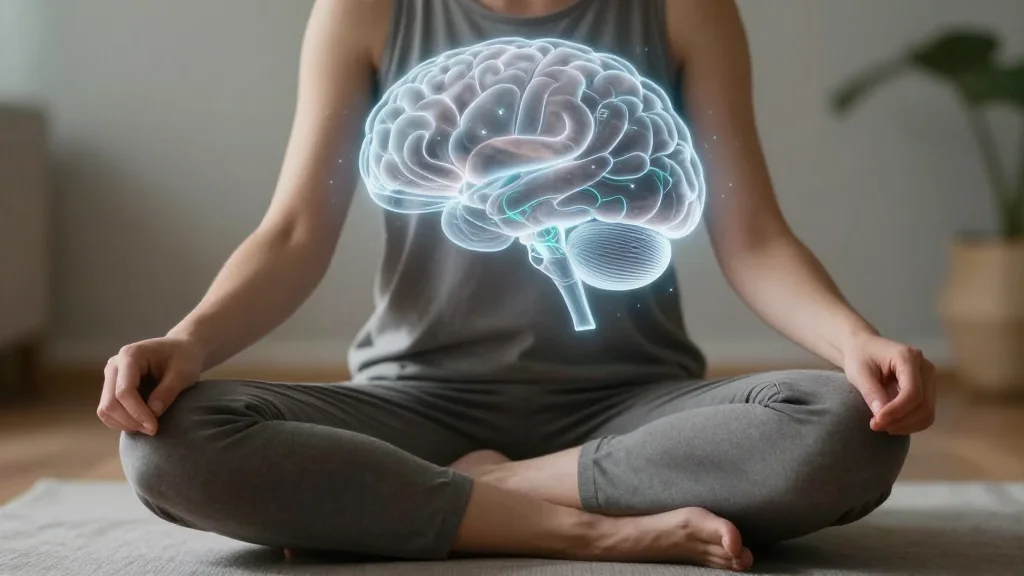
Baylor Study Finds Brain Processes Language Under Anesthesia, Shaking Consciousness Theory

Why It Matters
The discovery that the brain can process language and predict upcoming words without conscious awareness reframes a central debate in neuroscience: whether consciousness is a cause or a byproduct of complex cognition. For the meditation community, it suggests that the benefits of mindfulness may stem from training neural pathways that operate below the threshold of awareness, potentially enhancing learning and emotional regulation even when the mind feels "quiet." By linking unconscious neural dynamics to predictive coding, the study also provides a biological bridge to AI models that mimic human language. This convergence could accelerate the development of neuro‑prosthetic devices that restore communication for patients who cannot speak, while offering meditation researchers a new framework to explore how deep meditative states modulate hidden learning processes.
Key Takeaways
- •Baylor researchers recorded hippocampal neurons during general anesthesia using Neuropixels probes
- •Study published in *Nature* shows language processing and predictive coding persist without consciousness
- •Dr. Sameer Sheth stated the brain is "far more active and capable during unconsciousness"
- •Dr. Benjamin Hayden highlighted unexpected predictive coding in an unconscious state
- •Findings could reshape meditation research, brain‑computer interfaces, and anesthesia monitoring
Pulse Analysis
The Baylor findings arrive at a moment when both neuroscience and mindfulness industries are racing to quantify the hidden benefits of meditation. Historically, the dominant model linked conscious attention to the brain's ability to form predictions and encode language. By demonstrating that these functions survive the loss of awareness, the study forces a reevaluation of that model and suggests that meditation may be harnessing a pre‑conscious substrate that has been largely invisible to standard EEG or fMRI metrics.
From a market perspective, the overlap with AI is especially compelling. Large language models rely on predictive coding architectures that the brain appears to replicate even under anesthesia. Companies developing neural‑interface hardware can now argue that their devices might tap into a richer set of signals than previously thought, potentially expanding the market for speech prosthetics beyond patients with overt motor deficits to those in minimally conscious states.
Looking ahead, the key question for investors and researchers alike is whether these unconscious processes can be deliberately modulated. If meditation techniques can amplify or synchronize the same hippocampal patterns observed under anesthesia, we could see a new class of neuro‑enhancement products that claim to boost learning and emotional resilience without the need for overt focus. The Baylor study provides the first empirical foothold for that speculation, and the next wave of research will determine whether the promise translates into measurable outcomes for both clinical and consumer applications.
Baylor Study Finds Brain Processes Language Under Anesthesia, Shaking Consciousness Theory
Comments
Want to join the conversation?
Loading comments...