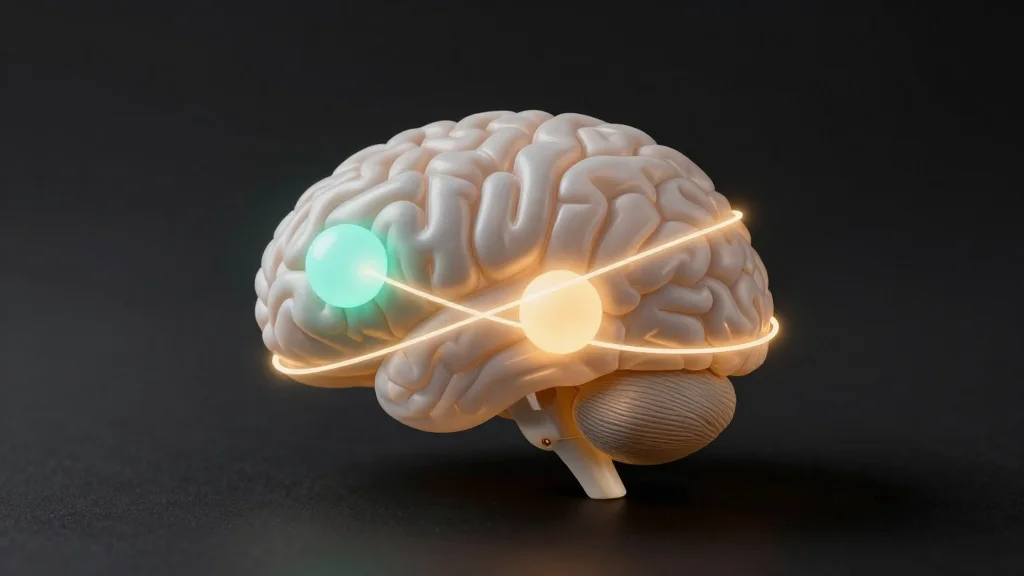
Scientists Map the Neural “Entrapment” Patterns that Keep the Depressed Brain Stuck
Why It Matters
By revealing depression as a disorder of brain dynamics rather than static regional activity, the findings open pathways for precision interventions that lower the energy barrier between maladaptive and healthy brain states.
Key Takeaways
- •Depressed brains repeatedly cycle between two high‑energy states.
- •State 3 (sensory) appears more often but for shorter durations.
- •Energy landscape analysis shows higher transition costs despite easy structural pathways.
- •Findings suggest neuromodulation could target specific state transitions.
- •Study limited by small sample size and model assumptions.
Pulse Analysis
The new study bridges neuroimaging and mathematical modeling to portray depression as a problem of brain‑state dynamics. Using functional MRI to capture spontaneous activity and diffusion tractography to map white‑matter wiring, the team applied network control theory to calculate the energetic cost of moving between four identified whole‑brain configurations. This energy‑landscape framework treats the brain like a ball rolling across a terrain, where valleys represent low‑energy states and hills require extra input. By quantifying how the depressed brain navigates this terrain, researchers uncovered a pattern of repeated loops that are energetically expensive despite existing structural pathways that could facilitate easier transitions.
Key findings highlight that individuals with major depressive disorder spend disproportionate time toggling between State 3, characterized by heightened external attention and sensory processing, and State 2, dominated by default‑mode activity linked to rumination. The rapid, high‑cost switching correlates with anhedonia and cognitive rigidity, suggesting that the subjective sense of being "trapped" mirrors measurable alterations in the brain's dynamical system. Unlike prior studies that focused on static hyper‑ or hypo‑activity in isolated regions, this work demonstrates that the difficulty lies in the brain's inability to escape deep basins of the energy landscape, effectively locking patients into maladaptive loops.
Clinically, the energy‑landscape model offers a quantitative target for emerging therapies. Neuromodulation techniques such as transcranial magnetic stimulation could be calibrated to supply the precise amount of energy needed to nudge the brain out of entrenched states, while pharmacologic agents like ketamine or psychedelics may flatten the landscape, reducing barriers between configurations. Although the sample size is modest and the models abstract biological energy consumption, the approach paves the way for personalized treatment planning and could be extended to other psychiatric conditions. Future research will need larger cohorts and longitudinal data to validate whether reshaping the energy landscape translates into sustained symptom relief.
Scientists map the neural “entrapment” patterns that keep the depressed brain stuck
Comments
Want to join the conversation?
Loading comments...