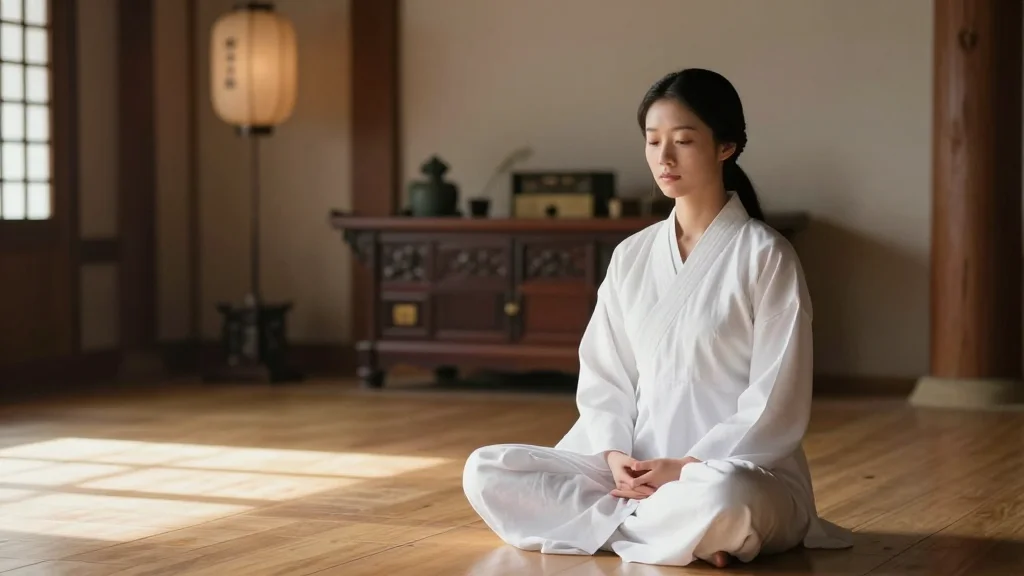
South Korea’s Temple‑Stay Programs Attract Over 1.2 Million Depression Patients

Why It Matters
The surge in temple‑stay participation highlights a critical intersection between cultural tradition and contemporary mental‑health needs. As South Korea grapples with one of the world’s highest rates of depression, low‑cost, community‑based interventions like meditation retreats could alleviate pressure on an overstretched clinical system. Moreover, the model offers a template for other societies where religious or cultural spaces can be repurposed for wellness, potentially reshaping public‑health policy globally. Beyond immediate therapeutic benefits, the movement underscores a broader societal shift toward preventive mental‑health care. By normalizing meditation and quiet reflection as everyday practices, the trend may reduce stigma, encourage early self‑intervention, and foster a more resilient population.
Key Takeaways
- •Over 1.2 million South Koreans with depression are exploring temple‑stay programs.
- •Gilsangsa Temple and Hongdae Seonwon offer guided meditation, incense rituals and tea‑time reflection.
- •Participants include office workers, homemakers and university students seeking stress relief.
- •The rise reflects gaps in conventional mental‑health services and a growing sensory‑wellness trend.
- •Local governments are considering subsidies to expand temple‑based meditation capacity.
Pulse Analysis
South Korea’s temple‑stay boom is more than a cultural curiosity; it represents a pragmatic response to a strained mental‑health ecosystem. Historically, Buddhist temples have served as sanctuaries for contemplation, but the pandemic accelerated their role as informal care centers. By packaging meditation into structured retreats, temples have tapped into a market traditionally dominated by private clinics and wellness apps.
From a market perspective, the model offers a low‑overhead, high‑impact solution. Existing temple infrastructure requires minimal additional investment, and the programs can be scaled quickly across the country’s dense urban centers. This contrasts sharply with the high costs of expanding psychiatric services, which involve lengthy training pipelines and substantial government funding. Investors and policymakers may view temple‑stay programs as a cost‑effective complement to formal care, especially for mild to moderate cases.
Looking ahead, the sustainability of this trend hinges on rigorous outcome measurement. If longitudinal studies confirm measurable reductions in depressive symptoms, temple‑based meditation could secure formal recognition within Korea’s health insurance framework, unlocking new revenue streams and encouraging further institutional support. Conversely, without empirical validation, the movement risks being dismissed as a niche fad. Either way, the convergence of tradition and modern wellness is reshaping how societies address mental health, and South Korea is at the forefront of that evolution.
South Korea’s Temple‑Stay Programs Attract Over 1.2 Million Depression Patients
Comments
Want to join the conversation?
Loading comments...