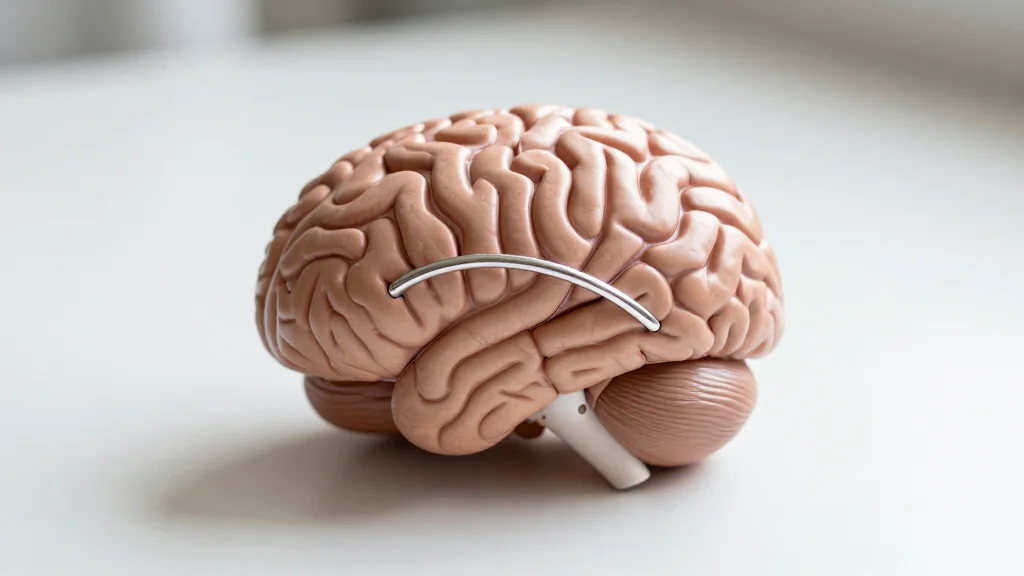
Study Finds Rostral Prefrontal Cortex Bridges Mind‑Wandering and Executive Control

Why It Matters
Identifying a concrete neural hub that mediates between spontaneous thought and executive control offers a tangible target for interventions aimed at enhancing creativity, mental flexibility, and emotional resilience. For the meditation community, the study provides a mechanistic explanation of why sustained mindfulness practice can lead to clearer thinking and novel insights, bridging the gap between subjective experience and measurable brain changes. Beyond meditation, the discovery has clinical relevance for neurodegenerative conditions like frontotemporal dementia, where disrupted network balance contributes to cognitive decline. Therapies that restore or compensate for the rostral prefrontal cortex’s bridging function could mitigate symptom progression and improve quality of life for patients and caregivers alike.
Key Takeaways
- •Rostral prefrontal cortex identified as bridge between DMN and ECN
- •Functional distance between networks predicts creative ability
- •Study used 27 bvFTD patients and 29 controls with gradient analysis
- •Findings align with meditation research showing DMN suppression and ECN strengthening
- •Future work will test whether mindfulness training expands the DMN‑ECN gradient
Pulse Analysis
The discovery of a measurable gradient linking the default mode and executive networks reframes how we think about the brain’s creative engine. Historically, the DMN was cast as a passive, wandering system, while the ECN was seen as the active, goal‑oriented counterpart. This binary view ignored the nuanced handoff that the rostral prefrontal cortex appears to manage. By quantifying that handoff, the study provides a concrete metric that can be tracked across interventions, from pharmacological trials to mindfulness programs.
From a market perspective, the result could accelerate investment in neurotechnology platforms that monitor network gradients in real time. Companies developing EEG‑based meditation headsets or fMRI‑guided cognitive training may now have a clearer endpoint to aim for, potentially unlocking new revenue streams tied to performance enhancement and mental‑health outcomes. Moreover, the clinical angle—linking gradient loss to frontotemporal dementia—opens a pathway for biotech firms to explore disease‑modifying therapies that target network integration rather than isolated regions.
Looking ahead, the key question is whether the gradient is malleable through non‑invasive means. If longitudinal meditation studies confirm that sustained practice can widen the DMN‑ECN distance, we could witness a paradigm shift where mental‑training regimens are prescribed alongside traditional therapies. Such a shift would not only validate centuries‑old contemplative practices but also embed them within evidence‑based treatment protocols, reshaping both the wellness industry and neuropsychiatric care.
Study Finds Rostral Prefrontal Cortex Bridges Mind‑Wandering and Executive Control
Comments
Want to join the conversation?
Loading comments...