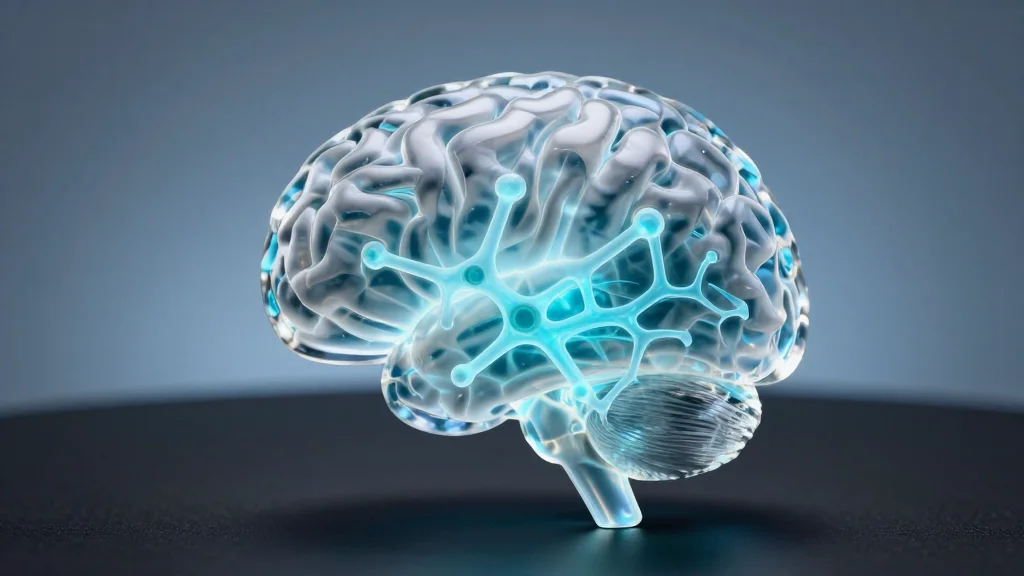
Study Maps Consciousness to Hidden Hyperbolic Network, Offering New Lens for Meditation

Why It Matters
Understanding consciousness through a hidden hyperbolic network could provide a common language for neuroscientists and meditation practitioners, linking subjective inner experience with measurable brain architecture. If the model holds, it would offer a mechanistic explanation for why certain meditation techniques produce lasting changes in attention, emotion regulation, and self‑perception, potentially accelerating the development of evidence‑based mindfulness interventions. Beyond the meditation community, the study challenges prevailing notions of brain mapping by suggesting that spatial layout alone is insufficient. A geometry‑based view could reshape research on neurological disorders, artificial intelligence, and even philosophy of mind, positioning meditation research at the forefront of a broader scientific shift.
Key Takeaways
- •Eötvös Loránd University researchers posted a February 2026 preprint linking consciousness to a hyperbolic neural network.
- •The study used the fruit‑fly (139,000 neurons) connectome to reveal a hidden geometry invisible in standard 3D brain maps.
- •Major neural hubs cluster at the center of the hyperbolic space, while specialized neurons drift toward the edges.
- •Authors propose the geometry may scale to the human brain’s 86 billion neurons, offering a universal model of consciousness.
- •Potential applications include neurofeedback for meditation and new metrics for long‑term mindfulness practice.
Pulse Analysis
The hyperbolic‑network hypothesis arrives at a moment when meditation research is seeking hard‑wired explanations for its psychological benefits. Traditional neuroimaging has identified region‑specific activations—such as increased prefrontal cortex activity during focused attention—but has struggled to explain how distributed patterns coalesce into a unified sense of self. By framing consciousness as an emergent property of a hidden geometry, the study offers a parsimonious bridge between localized activity and global experience.
Historically, attempts to model consciousness have oscillated between purely physiological accounts and more abstract, phenomenological frameworks. The hyperbolic approach revives the latter with a quantitative backbone, echoing earlier work on small‑world networks but extending it into a curved space that better captures hierarchical organization. If subsequent animal and human studies confirm the model, it could catalyze a new subfield—hyperbolic neuroinformatics—where meditation researchers collaborate with mathematicians to map personal practice onto network topology.
Looking ahead, the biggest hurdle will be translating a theoretical geometry into actionable biomarkers for mindfulness. Successful validation could enable personalized meditation protocols that target specific hub‑centric patterns, turning centuries‑old contemplative techniques into precision‑medicine tools. Conversely, failure to scale the model would reinforce the view that consciousness remains a multi‑layered phenomenon resistant to reductionist mapping. Either outcome will push the meditation field beyond anecdote toward a rigorously testable science of inner experience.
Study Maps Consciousness to Hidden Hyperbolic Network, Offering New Lens for Meditation
Comments
Want to join the conversation?
Loading comments...