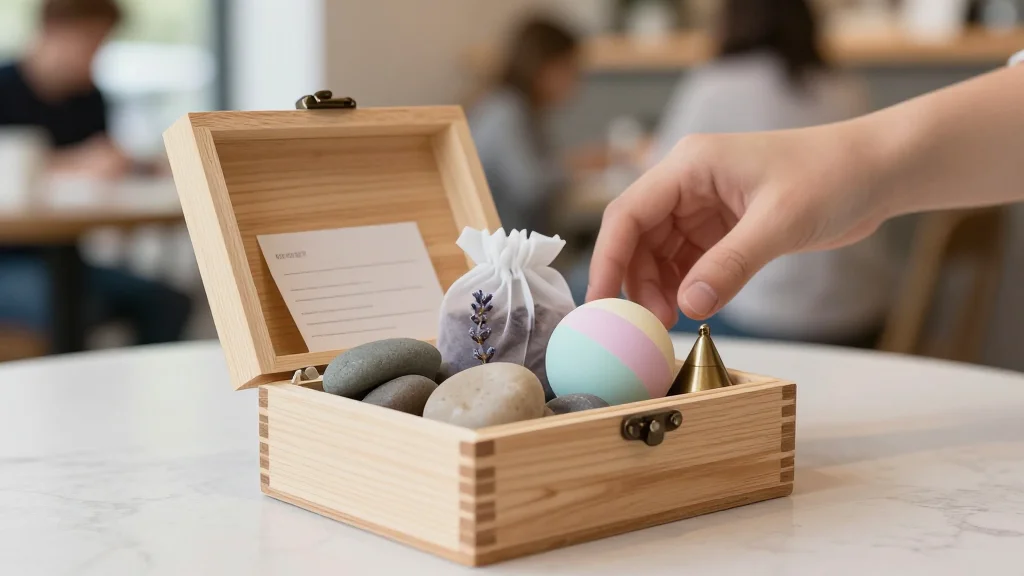
Teenagers Turn to Mini 'Comfort Boxes' To Tame Anxiety in Public Spaces

Why It Matters
The comfort‑box phenomenon underscores a tangible shift in how young people address mental‑health challenges, moving from purely digital solutions to embodied, sensory strategies. By normalizing the presence of grounding tools in public, the trend reduces stigma around anxiety and encourages peer‑to‑peer sharing of coping mechanisms. If embraced by educators and health systems, these kits could become low‑cost, scalable interventions that complement formal therapy, especially in regions where mental‑health services are scarce. Their popularity also signals a market opportunity for wellness brands to innovate responsibly, balancing commercial interests with evidence‑based benefits.
Key Takeaways
- •Teenagers across Indian metros are creating portable 'comfort boxes' to manage anxiety in public spaces.
- •Items include earbud sticks, stress balls, gravel, scented oils, handkerchiefs and books, used as grounding anchors.
- •Consultant psychiatrist Dr Pretty Duggar Gupta cites growing evidence that sensory modulation aids emotional regulation.
- •Wellness startups report a 40 % rise in orders for curated calm kits, priced around $6‑$15.
- •Experts warn kits are complementary tools and should not replace professional mental‑health care.
Pulse Analysis
The comfort‑box trend reflects a broader democratization of mental‑health tools, where low‑tech, sensory objects compete with high‑tech meditation apps for users’ attention. Historically, mindfulness practices have relied on breath and posture; today, tactile and olfactory cues are being re‑integrated as quick, discreet interventions that fit into the fragmented attention spans of Gen‑Z. This hybridization could reshape the wellness market, prompting established meditation platforms to incorporate physical accessories into their ecosystems.
From a competitive standpoint, the surge creates a niche for micro‑brands that can rapidly prototype and test new sensory items. However, the lack of standardized efficacy data poses a risk: without rigorous studies, claims of calming effects may remain anecdotal, potentially inviting regulatory scrutiny. Companies that partner with academic institutions to validate their products could gain a credibility edge and attract institutional buyers such as schools or corporate wellness programs.
Looking ahead, the convergence of wearable biosensors with comfort‑box contents could usher in a new class of adaptive kits that respond to real‑time stress markers. If successful, this could bridge the gap between passive grounding objects and active, data‑driven interventions, offering a scalable model for mental‑health support that is both personal and measurable.
Teenagers Turn to Mini 'Comfort Boxes' to Tame Anxiety in Public Spaces
Comments
Want to join the conversation?
Loading comments...