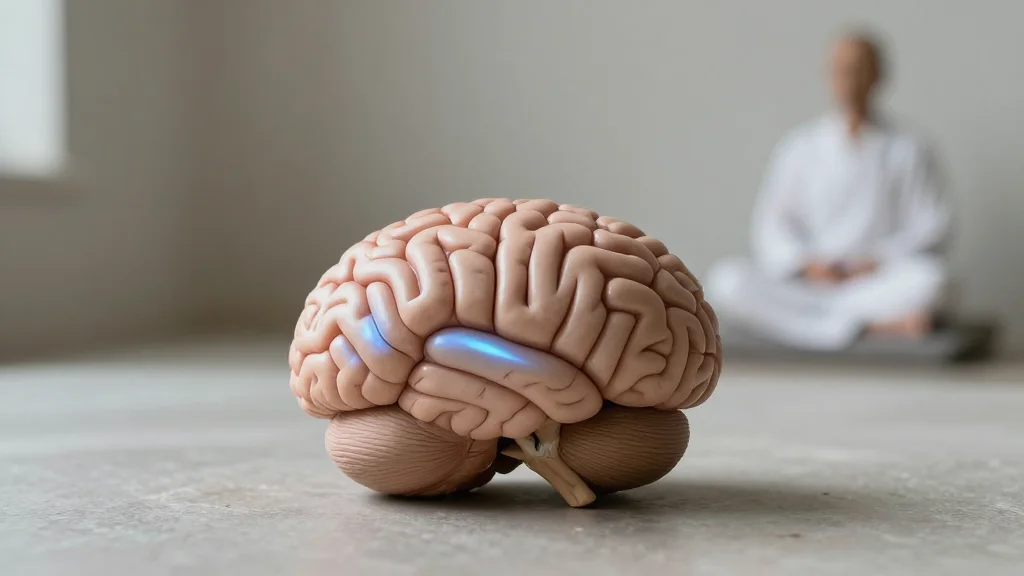
UC Davis Study Finds 8% Choline Deficit in Brains of Anxiety Patients

Why It Matters
Understanding a concrete neurochemical deficit gives clinicians a measurable target beyond the broad neurotransmitter models that dominate current anxiety treatments. If choline levels can be safely raised through diet or supplementation, the approach could complement existing pharmacotherapies and non‑pharmacologic options such as meditation, offering a multi‑modal pathway for patients who do not respond to first‑line drugs. Moreover, the study validates advanced imaging techniques like 1H‑MRS as tools for psychiatric research, potentially accelerating the discovery of other metabolic signatures linked to mental health conditions. For the meditation community, the research provides a scientific foothold to argue that mindfulness practices may have biochemical underpinnings. Should future trials confirm that meditation can influence choline metabolism, practitioners could position mindfulness as a neuro‑nutritional adjunct, attracting individuals seeking holistic, evidence‑backed anxiety relief. This convergence of neuroscience, nutrition, and contemplative practice could reshape treatment guidelines and insurance coverage for mental‑health care.
Key Takeaways
- •UC Davis meta‑analysis of 712 brain scans links anxiety disorders to an 8% lower choline level in the prefrontal cortex.
- •Study pooled 25 prior investigations, comparing 370 anxiety patients with 342 healthy controls using 1H‑MRS.
- •Only choline and, to a lesser extent, N‑acetylaspartate showed consistent abnormalities across three anxiety diagnoses.
- •Researchers warn against self‑medication; a pilot trial will test choline supplementation combined with mindfulness‑based stress reduction.
- •Findings may bridge nutritional science and meditation, offering a new multi‑modal strategy for treatment‑resistant anxiety.
Pulse Analysis
The UC Davis discovery arrives at a crossroads where psychiatry, nutrition, and contemplative science intersect. Historically, anxiety treatment has hinged on serotonin‑focused drugs and cognitive‑behavioral therapy, both of which address symptomology rather than underlying metabolic states. By pinpointing a specific nutrient shortfall, the study invites a paradigm shift toward precision nutrition—an approach that could be especially appealing to patients wary of medication side effects.
From a market perspective, the result could catalyze a wave of supplement manufacturers seeking clinical validation for choline‑based products aimed at mental‑health consumers. However, the cautionary tone from the authors—emphasizing that the data are correlational—should temper any hype. Companies that prematurely market choline supplements without rigorous trials risk regulatory scrutiny and consumer backlash, as seen in past nutraceutical controversies.
For the meditation industry, the findings provide a rare neurochemical anchor for a practice often critiqued for lacking hard‑science metrics. If subsequent trials demonstrate that mindfulness training can normalize choline levels or mitigate the deficit’s impact, meditation programs could be reimbursed by insurers as adjunctive therapy, expanding their reach beyond wellness circles into mainstream clinical care. The upcoming UC Davis pilot will be a litmus test: positive outcomes could usher in integrated treatment protocols that blend dietary guidance, targeted supplementation, and structured meditation, reshaping the therapeutic landscape for anxiety disorders.
UC Davis Study Finds 8% Choline Deficit in Brains of Anxiety Patients
Comments
Want to join the conversation?
Loading comments...