
News•Mar 1, 2026
3 Luxury Purchases You May End Up Regretting
The article warns that splurging on luxury items such as high‑end cars, oversized homes, and exclusive club memberships can quickly erode savings and hinder long‑term financial goals. It outlines how each purchase brings hidden costs—depreciation, maintenance, insurance, taxes, and lack of resale value—making them poor investments for most consumers. The piece encourages readers to consider smaller, more efficient alternatives that free up capital for experiences like travel. By focusing on total cost of ownership, individuals can avoid regret and preserve wealth for retirement and other priorities.
By Money.com

News•Mar 1, 2026
‘Why You Should Mix Bitcoin and Gold’
The piece advocates pairing Bitcoin with gold through the Bold index, a risk‑weighted, monthly‑rebalanced strategy that exploits their low correlation. Bitcoin is currently deeply oversold while gold enjoys strong bullish momentum, creating a diversification opportunity. Bold is offered as the...
By MoneyWeek – All

News•Feb 28, 2026
Why Getting a Digital Wallet Is a Smart Financial Move
Digital wallets have shifted payments from physical cards to smartphones, with services like Apple Pay and Google Pay gaining mainstream traction. By leveraging tokenization and encryption, they protect card data better than traditional chip cards. Consumers can store multiple credit,...
By Money.com

News•Feb 28, 2026
Everything You Need to Know About Roth IRAs in 2026
Roth IRAs let individuals contribute after‑tax dollars and withdraw earnings tax‑free in retirement. For 2026 the contribution cap is $7,500 ($8,600 for those 50+) and eligibility phases out between $153,000‑$168,000 for single filers and $242,000‑$252,000 for married couples. Unlike traditional...
By Money.com

News•Feb 27, 2026
Lifehacker Deals Live Blog: The Best Tech Sales, All in One Place
Lifehacker has launched a live‑blog that aggregates the best daily tech deals in a single, continuously updated page. The platform uses price‑tracking tools to differentiate genuine discounts from hype, ensuring readers see real savings. All affiliate links are disclosed, maintaining...
By Lifehacker – Two Cents (Money)

News•Feb 27, 2026
Do You Have to Report Inheritance on Your Taxes? Rules for Beneficiaries
Beneficiaries generally do not report an inheritance as income on their federal tax return, but any income the inherited assets generate—such as interest, dividends, rent, or distributions—must be reported. Cash, stocks, bonds, real estate, and retirement accounts each have distinct...
By SmartAsset – Blog

News•Feb 27, 2026
Tax Implications of Adding a Spouse to a Deed: Rules and Tips
Adding a spouse to a property deed is a common estate‑planning move that changes legal ownership without necessarily triggering immediate federal income tax. The transfer is generally treated as a gift, but the unlimited marital deduction shields U.S. citizen spouses...
By SmartAsset – Blog

News•Feb 27, 2026
5 Investments That Can Add Income After You Retire
The article outlines five key investments—dividend‑paying stocks, bonds, annuities, Treasury‑linked instruments, and income‑focused funds—that can generate reliable cash flow for retirees. It recommends a balanced allocation of roughly 35‑45% fixed income, 30‑40% equities, 10‑15% cash, and 5‑15% alternatives to manage...
By SmartAsset – Blog
News•Feb 27, 2026
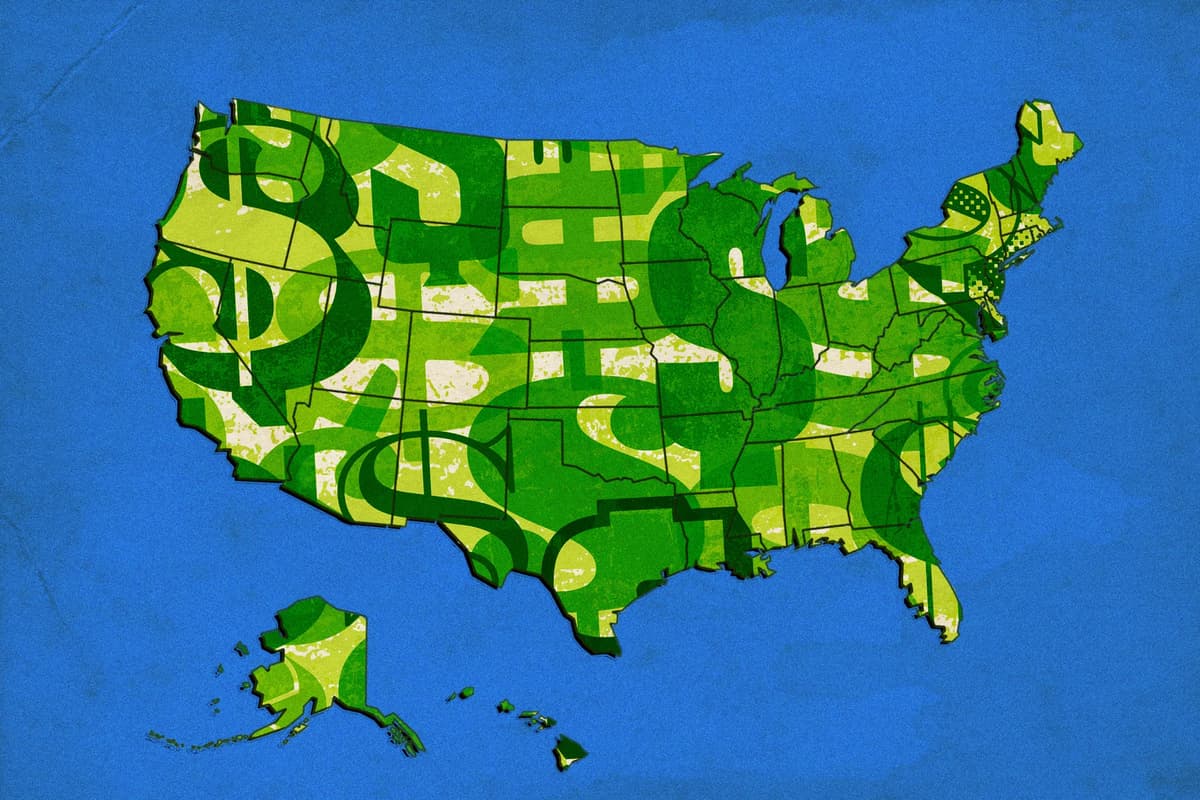
Why States With No Income Tax Aren’t as Affordable as They Seem
Nine U.S. states—Alaska, Florida, Nevada, New Hampshire, South Dakota, Tennessee, Texas, Washington and Wyoming—lack a personal income tax, but they often offset that loss with higher property, sales, and insurance costs. Homeowners in Florida face the nation’s most expensive insurance...
By Money.com

News•Feb 27, 2026
High-Return Investments: Opportunities and Risks
High-return investments promise above‑average gains but come with heightened risk. The article outlines common vehicles such as growth stocks, real estate, private equity, and high‑yield bonds, emphasizing that returns can exceed 10‑20% while volatility and illiquidity rise. It stresses the...
By SmartAsset – Blog

News•Feb 27, 2026
Nearly 1 in 5 Eligible Filers Miss This 'Valuable' Tax Credit, IRS Says — How It Can Boost Refunds
The IRS reports that roughly 20% of eligible taxpayers fail to claim the Earned Income Tax Credit (EITC), a refundable credit that averaged $2,916 per filer in 2024. For the 2025 tax year, the maximum credit rises to $8,046 for...
By CNBC – Personal Finance

News•Feb 26, 2026
Taxpayer Got No Relief From Court After CRA Penalties on Late Filing of Foreign Holdings
A British Columbia taxpayer who filed Form T1135 late for 2021 and 2022 was hit with CRA penalties and interest, then sought judicial relief. The Federal Court examined the taxpayer’s claims of technical difficulties and financial hardship but found the...
By Financial Post — Personal Finance

News•Feb 26, 2026
Trying to Get Out of Debt? Here Are 6 Tips to Pay It Off Faster
Americans are feeling heightened financial stress as consumer borrowing climbs and interest rates stay high, prompting many to prioritize debt elimination. The article outlines six practical tactics—paying above the minimum, crafting a structured payment plan, targeting high‑interest balances first, tightening...
By Money.com

News•Feb 26, 2026
High-Yield Account or CD: Which Is the Better Option Right Now for Your Down Payment Savings?
Prospective homebuyers need to maximize returns on down‑payment savings while preserving liquidity. High‑yield savings accounts (HYSA) currently offer 3.3‑4.5% APY, whereas six‑month certificates of deposit (CD) provide slightly higher fixed rates around 4.0‑4.1%. The choice hinges on the buyer’s timeline:...
By Realtor.com News

News•Feb 26, 2026
Five Ways Unscrupulous Home Sellers Can Trick You
Unscrupulous home sellers often employ deceptive tactics to boost a property’s price, ranging from hiding appliance ages to faking high‑end brand badges. They may obscure serial numbers, apply stainless‑steel decals, or swap hardware to make old units appear newer. Isolated...
By Lifehacker – Two Cents (Money)