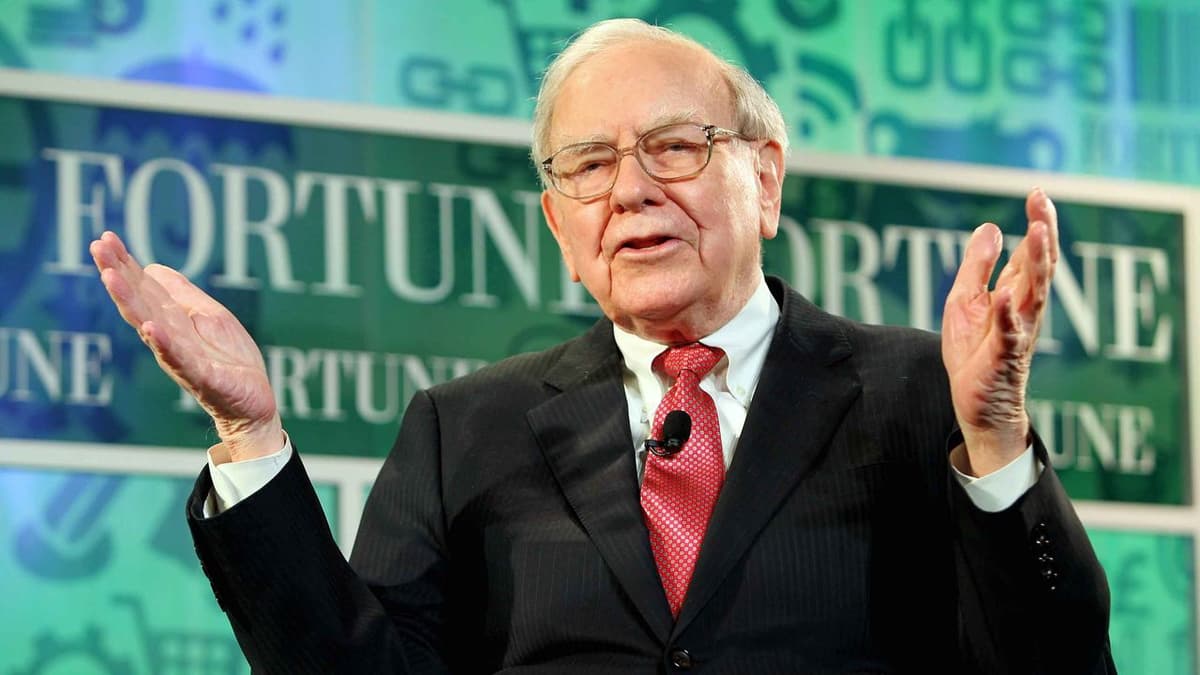
As You Near Retirement, Think Like Warren Buffett: Stop Risking What You Need for What You Don't
Companies Mentioned

Why It Matters
Retirees who over‑expose themselves to market volatility risk depleting the assets needed for a secure lifestyle, making disciplined risk control essential for long‑term financial stability.
Key Takeaways
- •Forward P/E ~23 predicts 10‑year equity returns near ±2%
- •Buffett advises never risk what you need for what you don’t
- •50/50 stock‑bond split balances growth and capital preservation
- •Assess lifestyle needs before deciding equity exposure
- •Use range of returns, not just expected rate, to manage risk
Pulse Analysis
Retirement planning today faces a paradox: abundant investment options coexist with heightened market volatility. While financial firms churn out yearly market forecasts, the reality for retirees is that predicting short‑term moves is nearly impossible. Warren Buffett’s timeless advice—"Never risk what you have and need for what you don’t have and don’t need"—serves as a practical compass, steering investors away from speculative bets and toward preserving capital. By focusing on personal cash flow, desired lifestyle, and existing assets, retirees can construct a self‑made economic framework that reduces reliance on uncertain market outcomes.
A key metric shaping this framework is the forward price‑to‑earnings (P/E) ratio. At roughly 23, the S&P 500’s forward P/E signals that the next decade’s equity returns are likely to hover around a flat to modest range, historically between –2 % and +2 %. This contrasts sharply with the long‑run 10 % nominal return often cited in promotional material. The implication is clear: allocating a large portion of retirement savings to equities under these valuation conditions offers limited upside while exposing investors to unnecessary downside risk. Adjusting equity exposure to reflect valuation realities helps align expected returns with the retiree’s risk capacity.
Practically, a 50/50 split between stocks and bonds provides a baseline balance, offering growth potential without jeopardizing principal. Advisors like Benjamin Graham suggest a flexible band—25 % to 75 % equities—allowing investors to tighten or loosen exposure as market conditions evolve. More importantly, retirees should shift focus from a single expected return figure to a range of possible outcomes, integrating tax‑efficient strategies and cash‑flow planning. By anchoring decisions in lifestyle needs rather than market hype, retirees can achieve a predictable, stress‑free financial horizon.
As You Near Retirement, Think Like Warren Buffett: Stop Risking What You Need for What You Don't
Comments
Want to join the conversation?
Loading comments...