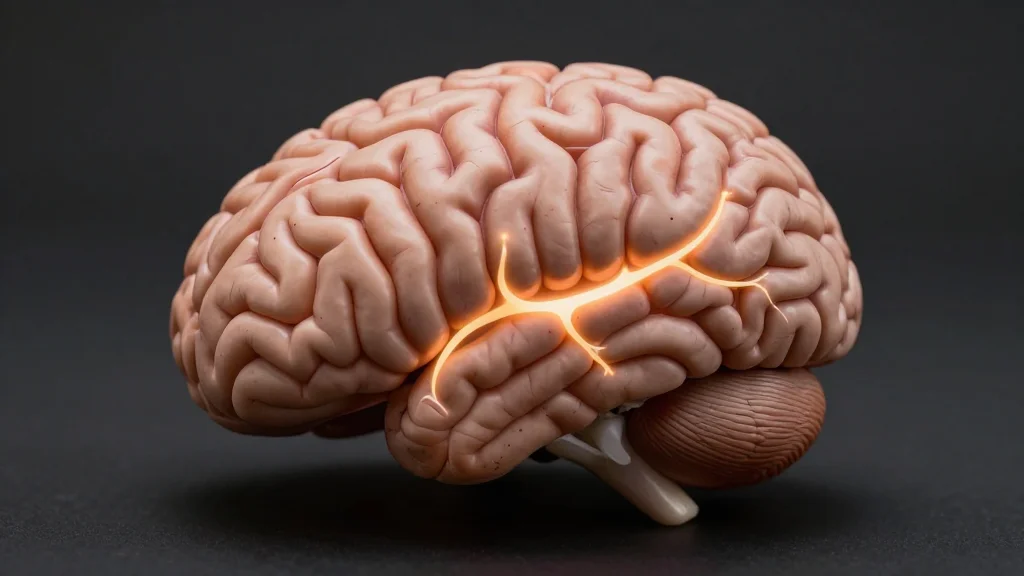
Georgetown Study Shows Intensive Training Rewires Brain to Enable True Multitasking

Why It Matters
The study reshapes the conversation around multitasking, moving it from a psychological myth to a trainable neural capability. For the personal‑growth market, this opens a frontier for evidence‑based programs that promise to expand mental capacity through systematic practice. Moreover, the research bridges neuroscience and artificial intelligence, suggesting that machines could emulate the brain’s ability to automate learned tasks, potentially accelerating AI’s capacity for transfer learning. Beyond individual productivity, the findings have societal implications. If training can reliably reallocate cognitive load, educational curricula and professional certification processes might incorporate intensive, task‑specific drills to accelerate skill acquisition. Conversely, the work raises ethical questions about the pressure to “train” brains for higher output, underscoring the need for balanced approaches that respect mental health.
Key Takeaways
- •Georgetown scientists conducted a longitudinal study with >30,000 training trials per participant.
- •Brain scans showed task processing moved from the prefrontal cortex to the temporal cortex after training.
- •The shift enables true multitasking for the trained task, challenging the long‑held myth of a single‑task brain.
- •Quotes from senior author Maximilian Riesenhuber and first author Patrick Cox underscore the novelty of the findings.
- •Future research will explore whether similar rewiring can occur for other cognitive skills.
Pulse Analysis
The Georgetown discovery arrives at a moment when the personal‑development industry is saturated with productivity hacks that often lack scientific grounding. By providing a concrete neural mechanism—temporal‑cortex takeover of a task—this study offers a rare empirical anchor for claims that intensive practice can expand mental bandwidth. Historically, the brain’s prefrontal cortex has been portrayed as the bottleneck for multitasking; this work suggests that the bottleneck is not immutable but can be bypassed through automation.
From a market perspective, the implication is twofold. First, tech firms could develop adaptive training apps that monitor neural markers and adjust difficulty to accelerate cortical migration, creating a new class of neuro‑enhancement products. Second, corporate training programs may begin to incorporate evidence‑based repetition schedules, shifting from generic time‑management seminars to skill‑specific drills that promise measurable brain changes. However, the study’s narrow focus on visual categorization warns against overgeneralization. Scaling the effect to complex, abstract tasks will require further validation, and premature commercialization could lead to hype cycles reminiscent of past “brain‑training” fads.
Looking ahead, the intersection of neuroscience and AI highlighted by the researchers could catalyze a feedback loop: as AI models learn to emulate the brain’s hierarchical learning—first mastering a task, then automating it—human training protocols might borrow from machine learning curricula. This cross‑pollination could redefine how we think about expertise, moving from static mastery to dynamic, continuously restructured cognition. The next wave of personal‑growth solutions will likely hinge on whether the brain’s plasticity can be reliably harnessed at scale, a question that this Georgetown study has brought sharply into focus.
Georgetown Study Shows Intensive Training Rewires Brain to Enable True Multitasking
Comments
Want to join the conversation?
Loading comments...