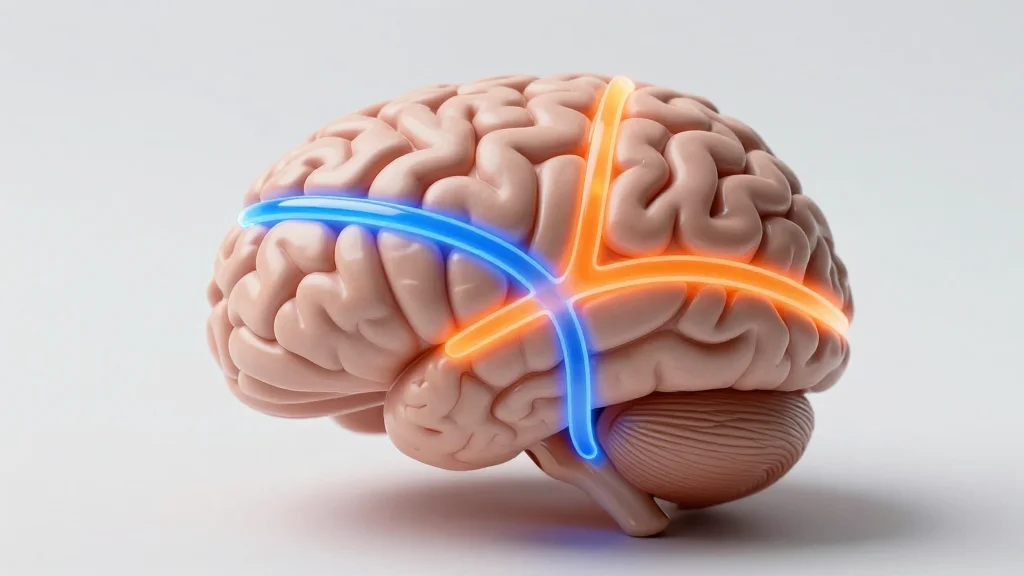
Oxford Study Shows Brain Circuit Competition Fuels Intelligent Decision‑Making

Why It Matters
Understanding that competition, not just cooperation, drives brain efficiency reframes how we think about personal development. It suggests that cultivating healthy mental rivalry—prioritizing tasks, embracing focused attention, and allowing less‑relevant thoughts to recede—can enhance decision quality and productivity. Moreover, the prospect of individualized brain simulations offers a new frontier for precision self‑care, where interventions are tailored to a person's unique neural profile rather than generic advice. For the broader personal‑growth industry, the study provides a scientific foundation for next‑generation coaching apps, neurofeedback devices, and AI assistants that mimic the brain's competitive architecture. By aligning technology with the brain's natural resource‑allocation strategy, these tools could deliver more effective habit formation, learning acceleration, and stress resilience.
Key Takeaways
- •Study links long‑range competition between brain circuits to intelligent behavior.
- •Models incorporating competition outperform purely cooperative ones in replicating attention and memory.
- •Digital twin concept can reproduce an individual's unique brain activity patterns.
- •Competitive‑cooperative architecture boosts computational capacity in neuromorphic AI.
- •Findings could inform personalized self‑optimization tools and brain‑based productivity apps.
Pulse Analysis
The Oxford‑Cambridge discovery marks a shift from the long‑standing view that brain regions primarily cooperate. By quantifying competition as a stabilizing force, the research aligns with emerging theories in cognitive psychology that emphasize selective attention as a skill that can be trained. Historically, personal‑growth methodologies have focused on increasing harmony—meditation, mindfulness, and flow states. This new evidence suggests that deliberate, structured competition within one's mental agenda may be equally vital.
From a market perspective, the digital twin promise could catalyze a wave of niche startups targeting hyper‑personalized neuro‑feedback. Companies that can integrate whole‑brain modeling with wearable data will likely gain a competitive edge, especially if they can demonstrate measurable improvements in productivity or mental health outcomes. Simultaneously, AI developers may adopt competitive network designs to improve multitasking capabilities, narrowing the gap between human and machine decision‑making.
Looking ahead, the biggest challenge will be translating complex neurocomputational models into user‑friendly applications without oversimplifying the underlying science. Regulatory scrutiny around digital brain replicas will also shape how quickly these tools reach consumers. Nonetheless, the study provides a concrete, empirically backed mechanism that personal‑growth practitioners can begin to incorporate—designing routines that intentionally create mental competition to sharpen focus and drive smarter choices.
Oxford Study Shows Brain Circuit Competition Fuels Intelligent Decision‑Making
Comments
Want to join the conversation?
Loading comments...