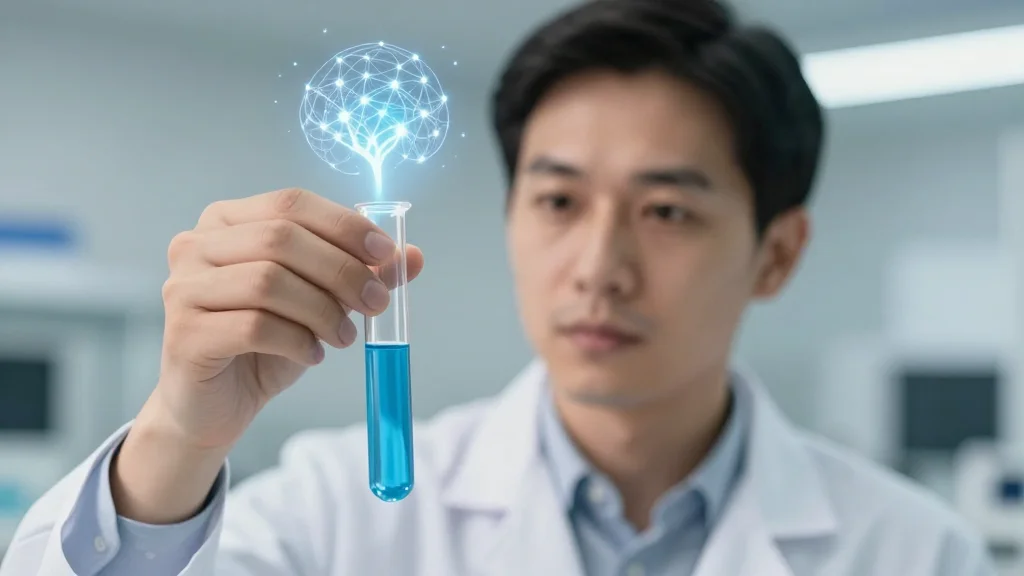
Connected by Design: How AI and Automation Are Transforming Drug Discovery at BMS
Key Takeaways
- •BMS targets a fully integrated AI ecosystem for drug discovery
- •Shared data backbone eliminates silos and speeds hypothesis testing
- •AI co‑scientists automate literature synthesis and experimental analysis
- •Lab‑in‑the‑loop model could reduce candidate timelines by up to 50%
- •Current challenge: insufficient functional data to train next‑gen models
Pulse Analysis
Artificial intelligence is reshaping biopharma, but most companies still rely on fragmented tools that address single tasks. Bristol Myers Squibb is attempting a paradigm shift by building an end‑to‑end learning ecosystem that unifies data, models, and automation. The strategy hinges on a unified, AI‑ready data architecture that spans early research to clinical development, allowing scientists to query and update insights in real time. By embedding AI co‑scientists—software agents that curate literature, synthesize experimental results, and generate hypotheses—BMS aims to free researchers from manual data wrangling and focus on high‑impact decision making.
The practical payoff of this vision is illustrated through BMS's TYK2 inhibitor program. Historically, moving from target identification to a clinical candidate required five to seven years of iterative experiments. Leveraging AI‑guided design‑make‑test‑analyze cycles, coupled with an automated lab‑in‑the‑loop workflow, the company projects a timeline compression to roughly 3.5 years—a 30‑50 % reduction. Similar gains have been reported in their fetal hemoglobin project for sickle‑cell disease, where machine‑learning models compressed months of chemistry work into weeks. These efficiencies not only lower R&D spend but also increase the probability of delivering truly meaningful therapies.
Despite the promising early results, BMS acknowledges significant hurdles. Robust AI models demand extensive functional phenotype data, which remains scarce for many proteins. Building the feedback loop that continuously feeds clinical outcomes back into discovery models requires both technical integration and cultural adoption across the organization. Over the next two to three years, BMS plans to expand its shared data backbone, scale the AI agent layer, and close the bench‑to‑bedside loop. If successful, this integrated approach could set a new industry benchmark for speed, precision, and ultimately, patient impact.
Connected by Design: How AI and Automation are Transforming Drug Discovery at BMS
Comments
Want to join the conversation?