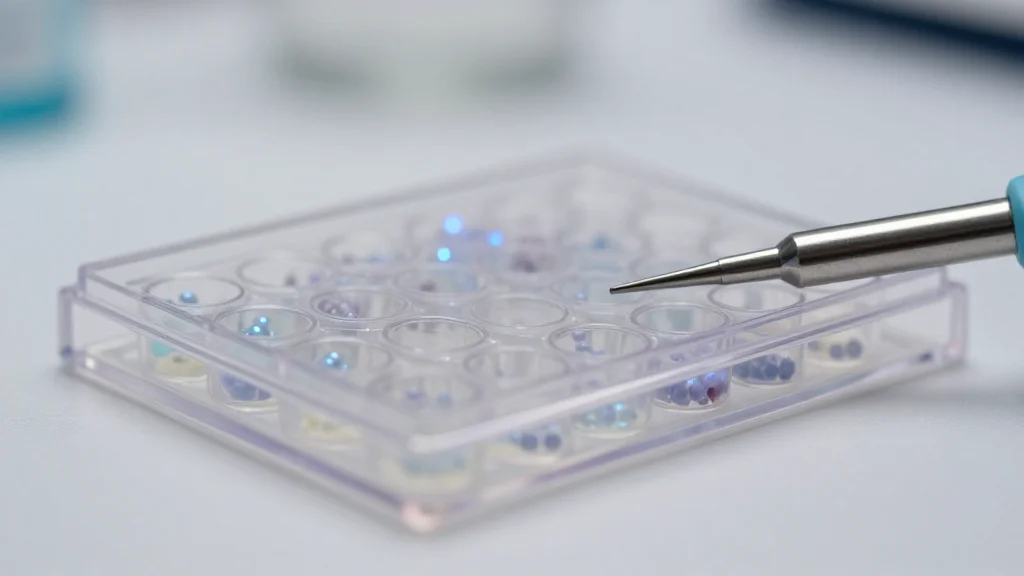
Creative Bioarray Launches PDO-Based Drug‑screening Platform to Speed Oncology Research

Why It Matters
The Creative Bioarray platform tackles a persistent bottleneck in oncology drug development: the lack of pre‑clinical models that faithfully recapitulate patient tumor heterogeneity. By offering a scalable, high‑throughput PDO service, the company provides a bridge between early‑stage discovery and clinical testing, potentially lowering the attrition rate that drives up R&D costs. If successful, the technology could reshape how pharma allocates resources, favoring candidates with demonstrable efficacy in human‑derived models. Beyond oncology, the platform’s adaptability to other disease areas hints at a broader shift toward organoid‑based screening across the biopharma landscape. This could accelerate therapeutic discovery for infectious diseases, neurodegeneration, and metabolic disorders, expanding the impact of organoid technology from a niche research tool to a mainstream component of drug pipelines.
Key Takeaways
- •Creative Bioarray’s PDO platform covers >20 solid‑tumor types, including colorectal, pancreatic, breast, lung, and gastric cancers.
- •Service compatible with 96‑, 384‑ and 1536‑well plates for high‑throughput screening.
- •Automated workflows enable rapid construction of patient‑derived organoid models and large‑scale compound testing.
- •Platform aims to reduce oncology drug‑development failure rates by providing more predictive pre‑clinical data.
- •Future expansion planned into infectious disease and chronic‑condition research.
Pulse Analysis
The launch of Creative Bioarray’s PDO‑based screening service reflects a broader industry pivot toward patient‑derived models as a hedge against the historically high failure rates of oncology drugs. Historically, the reliance on 2D cell lines and murine xenografts has produced translational gaps, prompting a surge in organoid investments. Creative Bioarray differentiates itself by marrying extensive tumor coverage with high‑throughput compatibility, a combination that few competitors currently offer at scale.
From a market perspective, the service arrives at a time when big pharma is reallocating budgets toward more predictive early‑stage tools. Companies such as AstraZeneca and Roche have already earmarked multi‑million‑dollar contracts with organoid vendors, suggesting that Creative Bioarray could capture a slice of this growing spend. However, the platform’s success will hinge on data quality, reproducibility, and the ability to integrate seamlessly with existing discovery workflows. Early adopters will likely scrutinize assay robustness and the statistical power of the generated readouts.
Looking ahead, the platform’s potential extension into infectious disease and chronic conditions could open new revenue streams and position Creative Bioarray as a versatile organoid service provider. If the company can demonstrate tangible reductions in time‑to‑candidate and cost‑per‑project, it may set a new benchmark for pre‑clinical screening, prompting further consolidation in the organoid space and accelerating the overall pace of therapeutic innovation.
Creative Bioarray launches PDO-based drug‑screening platform to speed oncology research
Comments
Want to join the conversation?
Loading comments...