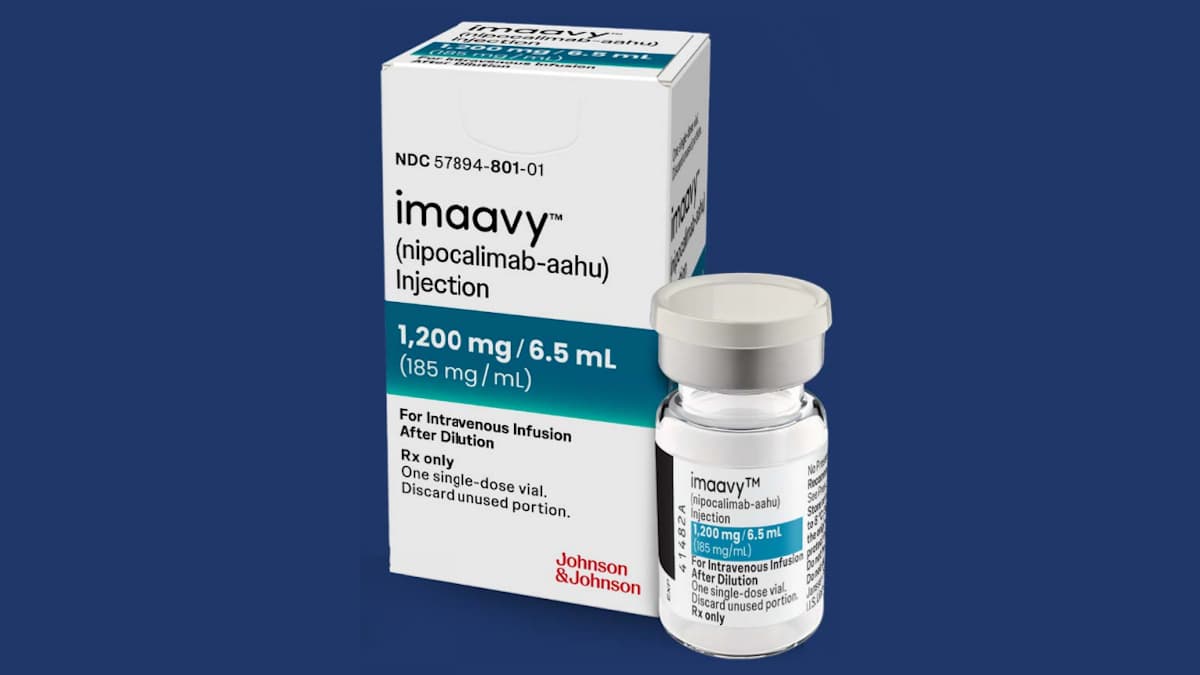
J&J Adds Rare Disease wAIHA to Imaavy's Potential Uses
Why It Matters
Imaavy could become the first approved therapy for wAIHA, addressing a critical unmet need and unlocking a potential $5 billion annual market for Johnson & Johnson.
Key Takeaways
- •Imaavy achieved three‑fold higher hemoglobin response vs placebo at 24 weeks.
- •Mean hemoglobin rose ≥1 g/dL by week 1 in treated patients.
- •Nearly 66% reached ≥10 g/dL hemoglobin, a 2 g/dL increase.
- •wAIHA has no FDA‑approved drugs; Imaavy could fill unmet need.
- •Potential $5 B annual sales despite prior rheumatoid arthritis failure.
Pulse Analysis
Warm autoimmune hemolytic anemia (wAIHA) is a rare, life‑threatening disorder in which autoantibodies destroy red blood cells, leading to fatigue, dyspnea and anemia. Because the FDA has yet to approve a dedicated therapy, clinicians rely on corticosteroids, broad immunosuppressants and off‑label rituximab, each with limited durability and safety concerns. FcRn inhibitors such as Johnson & Johnson’s nipocalimab (branded Imaavy) work by lowering circulating IgG, thereby reducing pathogenic auto‑antibodies. The drug already commands approval for generalized myasthenia gravis, positioning it as a versatile platform for antibody‑mediated diseases.
The phase 2/3 ENERGY trial delivered a compelling signal: a 30 mg/kg dose of Imaavy produced a three‑fold higher rate of hemoglobin response versus placebo at 24 weeks, with mean increases of at least 1 g/dL observable by week 1. Nearly two‑thirds of participants achieved hemoglobin levels of 10 g/dL or more, representing a 2 g/dL rise from baseline. These rapid, durable improvements address the core clinical challenge of fatigue and may enable patients to avoid prolonged steroid exposure, a key differentiator for regulators and payers.
If the data survive confirmatory testing, Imaavy could become a $5 billion‑a‑year franchise, expanding J&J’s FcRn pipeline beyond myasthenia gravis into lupus, Sjögren’s and now wAIHA. The announcement also intensifies competition, with Hutchmed’s oral Syk inhibitor sovleplenib, Sanofi’s BTK inhibitor rilzabrutinib, and Zenas BioPharma’s bispecific obexelimab all in early development. For J&J, success would not only fill a glaring therapeutic gap but also validate the FcRn‑targeted approach, potentially accelerating future indications and reinforcing the company’s position in the high‑margin biologics market.
J&J adds rare disease wAIHA to Imaavy's potential uses
Comments
Want to join the conversation?
Loading comments...