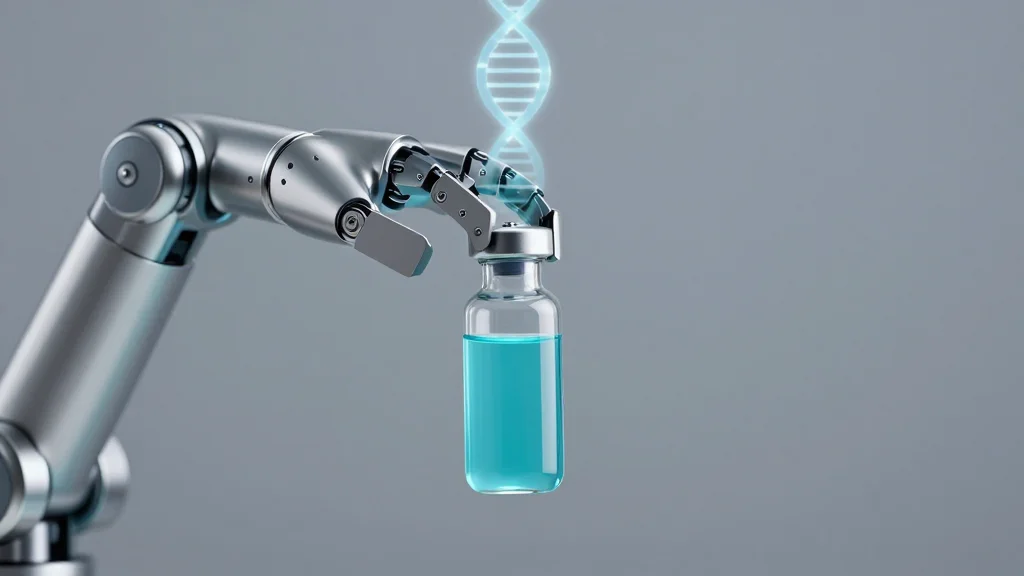
Podcast: Autonomous Labs Redefine the Role of Biopharma Researchers
Companies Mentioned

Ginkgo Bioworks Holdings Inc.
Why It Matters
By accelerating discovery cycles and cutting expenses, autonomous labs could reshape biopharma's competitive landscape, while freeing researchers to tackle more complex scientific questions.
Key Takeaways
- •Autonomous labs combine robotics, AI for end‑to‑end drug discovery
- •Ginkgo Bioworks' CEO says AI scientists augment, not replace, researchers
- •Labs promise faster timelines and lower R&D costs for biopharma
- •Human scientists will focus on strategic hypothesis generation and oversight
Pulse Analysis
The rise of autonomous laboratories marks a convergence of advanced robotics, machine learning, and cloud‑based data orchestration that has been percolating in biotech for several years. Unlike traditional wet‑lab setups that rely on manual pipetting and intermittent data capture, these smart facilities operate continuously, executing protocols, adjusting parameters in real time, and feeding results into predictive models. Companies such as Ginkgo Bioworks, Benchling, and Labcyte have invested heavily in modular platforms that can be reprogrammed for diverse therapeutic targets, turning the lab into a scalable, software‑defined environment.
From a business perspective, the operational efficiencies are compelling. Early pilots report up to a 40 % reduction in cycle time for hit‑to‑lead screening and a comparable dip in consumable waste, translating into multi‑million‑dollar savings for large‑scale programs. The ability to run thousands of parallel experiments under identical conditions also improves statistical confidence, accelerating decision‑making for go‑no‑go milestones. As a result, biopharma firms can compress the traditionally decade‑long development timeline, potentially bringing therapies to market faster and at lower cost, a critical advantage in an increasingly competitive pipeline landscape.
The workforce impact is equally profound. Researchers are expected to transition from routine bench work to roles that emphasize experimental design, algorithmic interpretation, and cross‑functional collaboration with data scientists. This shift mirrors broader trends in digital transformation, where human expertise adds value through creativity and strategic insight rather than repetitive tasks. Training programs and university curricula are already adapting, offering courses in lab automation and AI‑driven biology. As autonomous labs become mainstream, firms that invest in upskilling their talent will likely capture the greatest share of the productivity gains.
Podcast: Autonomous labs redefine the role of biopharma researchers
Comments
Want to join the conversation?
Loading comments...