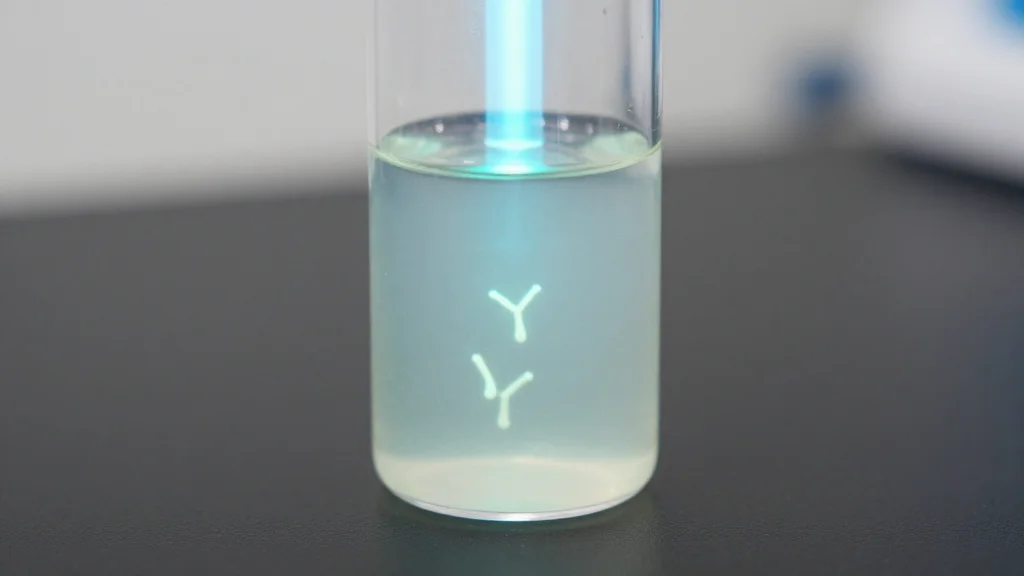
Prolific Machines Sets Monoclonal Antibody (mAb) Manufacturing Record with Light-Controlled Platform
Why It Matters
Dynamic light control can boost antibody yields while reducing process variability, giving manufacturers a competitive edge in a crowded biologics market.
Key Takeaways
- •21 g/L mAb titer achieved in 15‑day fed‑batch
- •Platform uses reversible light‑driven gene regulation
- •Optogenetics replaces always‑on genetic constructs
- •Real‑time control may cut production costs
- •Record exceeds standard industry antibody titers
Pulse Analysis
Biopharmaceutical manufacturers have long relied on Chinese hamster ovary (CHO) cells for monoclonal antibody production, but typical fed‑batch processes plateau around 5‑10 g/L after two weeks. Achieving 21 g/L in just 15 days represents a dramatic leap, suggesting that the bottlenecks of nutrient depletion and metabolic stress can be mitigated with smarter control strategies. Prolific Machines’ photomolecular platform introduces an optogenetic layer that modulates transcription on demand, turning genes on or off with precise light pulses rather than static promoters. This real‑time adjustability aligns cellular metabolism with process phases, unlocking higher productivities without extensive media reformulation.
The core of the technology is a light‑responsive genetic circuit that integrates optogenetic switches directly into the CHO genome. By delivering specific wavelengths, operators can increase expression of growth‑supporting genes early in the run, then shift to high‑yield antibody production later, all while monitoring cell health. Because the signal is reversible, any overshoot can be corrected instantly, reducing the risk of cell death or product degradation. Moreover, the system eliminates the need for chemical inducers, simplifying downstream purification and lowering raw material costs. Early pilot data indicate that the platform scales smoothly, maintaining consistent titers across bioreactor volumes.
If the industry adopts this level of dynamic control, the economic impact could be substantial. Higher titers translate to fewer batches per million‑dollar product, shrinking facility footprints and energy consumption. Regulatory bodies are also showing interest in technologies that enhance process robustness, potentially accelerating approval timelines. Beyond antibodies, the same light‑driven framework could be extended to other biologics, such as recombinant proteins and viral vectors, positioning Prolific Machines at the forefront of next‑generation biomanufacturing. Companies that integrate optogenetic platforms may gain a decisive advantage in speed, cost, and product quality.
Prolific Machines Sets Monoclonal Antibody (mAb) Manufacturing Record with Light-Controlled Platform
Comments
Want to join the conversation?
Loading comments...