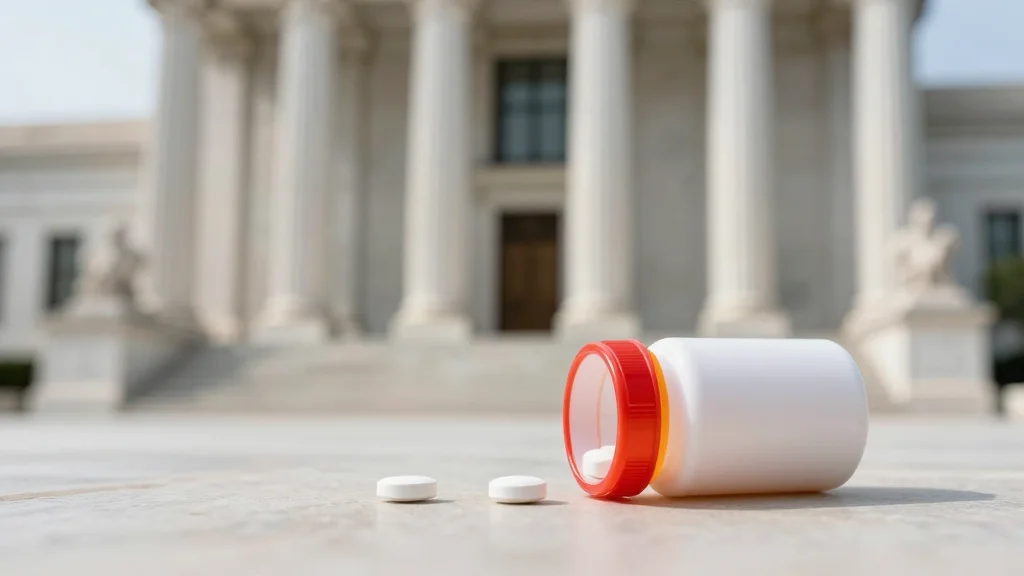
Supreme Court Faces Emergency Request to Restore Mail‑Order Access to Abortion Pill

Why It Matters
The battle over mifepristone sits at the intersection of reproductive rights, federal regulatory authority, and the evolving role of telemedicine in drug delivery. A Supreme Court decision either restoring mail‑order access or upholding the Fifth Circuit’s stay will set a precedent for how the FDA’s REMS framework can be challenged by states, potentially opening the door for similar lawsuits targeting other high‑risk medications. Beyond the legal arena, the ruling will directly affect millions of patients who rely on mailed abortion pills to avoid travel, clinic protests, and delayed care. Rural and low‑income women, particularly in states without robust clinic networks, could face longer wait times and increased health risks if in‑person dispensing becomes mandatory nationwide.
Key Takeaways
- •Fifth Circuit unanimously stayed the FDA’s 2023 rule allowing mail‑order mifepristone.
- •Judge Kyle Duncan warned the rule enables roughly 1,000 illegal abortions per month in Louisiana.
- •Danco Laboratories and GenBioPro petitioned the Supreme Court for an emergency pause.
- •Governor Gavin Newsom warned the decision threatens abortion access for rural Californians.
- •The case could reshape the FDA’s REMS framework and set precedent for telemedicine drug regulation.
Pulse Analysis
The mifepristone dispute illustrates how regulatory policy can become a flashpoint in the broader culture war, with the FDA caught between scientific risk assessment and politically driven litigation. Historically, the agency’s REMS program has been used sparingly, primarily for drugs with narrow therapeutic windows. By extending REMS to a widely used reproductive health medication, the FDA entered uncharted territory, inviting challenges that test the limits of administrative law. The Fifth Circuit’s reliance on standing arguments—particularly the notion of “sovereign injury”—signals a willingness to entertain state‑level claims that could erode federal agency discretion.
If the Supreme Court grants a stay, it would effectively reinstate the Biden administration’s vision of a more accessible, telehealth‑friendly abortion pill market, reinforcing a trend toward digital health that has accelerated during the pandemic. Conversely, a denial would reaffirm the power of state attorneys general to shape drug policy through the courts, potentially prompting the FDA to tighten REMS requirements for other contentious drugs, from opioid antagonists to emerging gene‑therapy products. Market participants—pharmaceutical manufacturers, telehealth platforms, and pharmacy chains—will be watching closely, as the ruling could dictate investment strategies and product pipelines for years to come.
Strategically, the litigation also underscores the importance of the Supreme Court’s shadow docket as a venue for rapid, high‑stakes decisions. By filing emergency petitions, Danco and GenBioPro are leveraging the Court’s ability to issue interim orders that can preserve the status quo while the full case unfolds. This tactic mirrors recent high‑profile interventions in voting‑rights and environmental cases, suggesting that future pharmaceutical disputes may increasingly seek swift judicial relief to avoid market disruption. Stakeholders should prepare for a protracted legal battle that will likely influence not only abortion access but also the broader regulatory landscape for telemedicine‑enabled drug delivery.
Supreme Court Faces Emergency Request to Restore Mail‑Order Access to Abortion Pill
Comments
Want to join the conversation?
Loading comments...