
Hackers Don’t Need Your Passwords. They Just Need Your HVAC Contractor.
Building automation systems (BAS) have shifted from isolated controllers to cloud‑connected ecosystems, expanding a $124 billion market to an estimated $204 billion by 2030 and creating a massive attack surface. Legacy protocols like BACnet and Modbus lack encryption, while remote‑access paths for HVAC contractors remain poorly segmented, enabling breaches such as the 2013 Target incident. Recent ransomware attacks on schools and utilities show that operational disruption is now a primary attacker motive. Industry groups and vendors are launching security‑by‑design solutions, but facility managers must now own cybersecurity as a core responsibility.
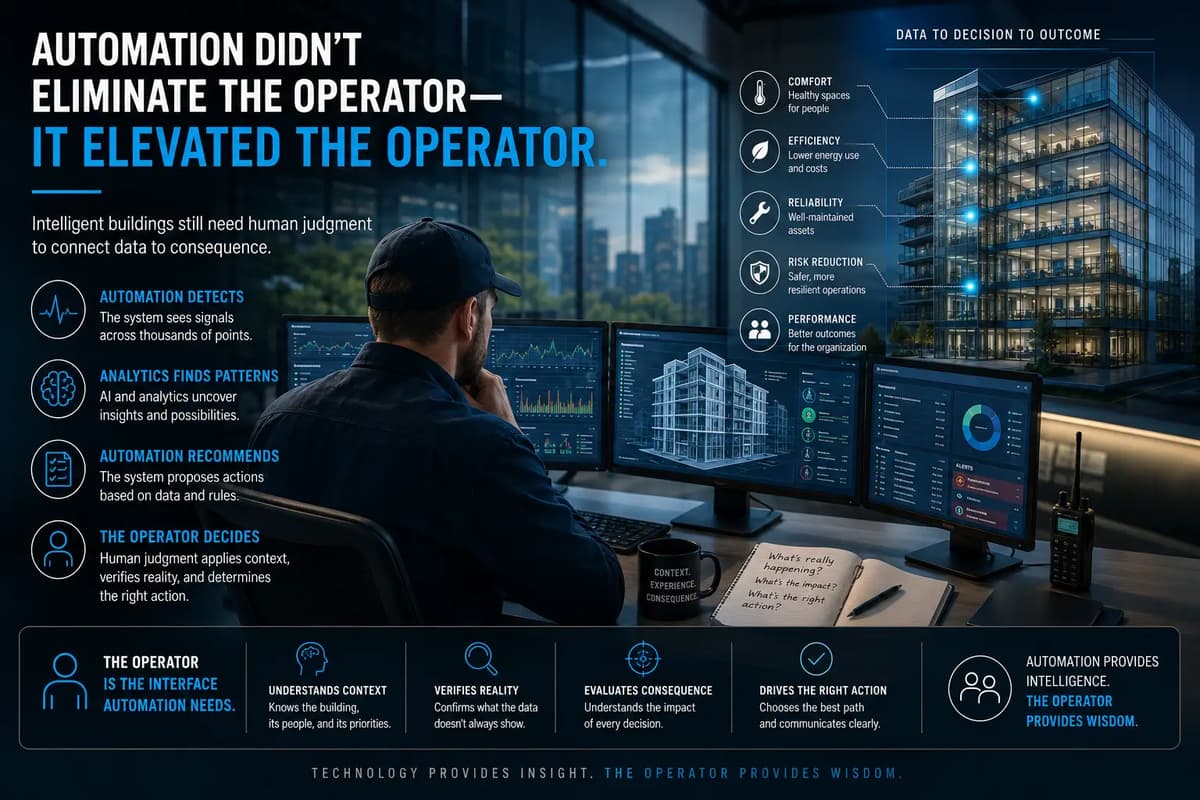
Automation Didn’t Eliminate the Operator — It Elevated the Operator
Automation in commercial buildings is not displacing operators; it is elevating them to strategic system architects. While sensors, AI, and dashboards generate massive data, only human operators can interpret context, occupant needs, and business consequences. This shift moves operators from...
Five Global Trends Reshaping Building Automation: Occupant Well-Being Is Mission-Critical
Building automation systems are evolving from static, efficiency‑focused tools into intelligent, occupant‑centric platforms. A new Johnson Controls white paper highlights five global trends, with occupant well‑being identified as the most critical driver. AI‑powered BAS now monitor air quality, temperature, lighting...

The New Basics: What Smart Buildings Must Become Before AI Can Do Anything With Them
Smart building leaders are redefining the fundamentals required before AI can add value. The industry is shifting from simple system connectivity to true interoperability, data‑by‑default, built‑in AI assistance, embedded governance, and outcome‑centric design. Standards such as BACnet’s semantic extensions and...

Five Global Trends Reshaping Building Automation: Why Futureproofing the Workforce Can’t Wait
Building automation systems are entering a new era driven by AI, cloud connectivity, and digitalization. A Johnson Controls white paper outlines five global trends, emphasizing the urgent need to future‑proof the aging facility‑operations workforce. As experienced staff retire, modern BAS...

Buildings Are Becoming Intelligent Before They Are Admissible
Intelligent buildings are now infused with AI for automation, fault detection, and digital twins, but the technology can act on incomplete environmental data. The industry proposes an Admissible Execution Architecture (AEA) as a governance layer that validates preserved reality before...

What Is an API, and Why Is It Essential in Building Automation?
An application programming interface (API) acts as a translator that lets disparate building systems—HVAC, lighting, security, and more—communicate in real time. By exposing standardized endpoints, APIs provide interoperability, centralized monitoring, and the ability to automate decisions such as temperature adjustments...
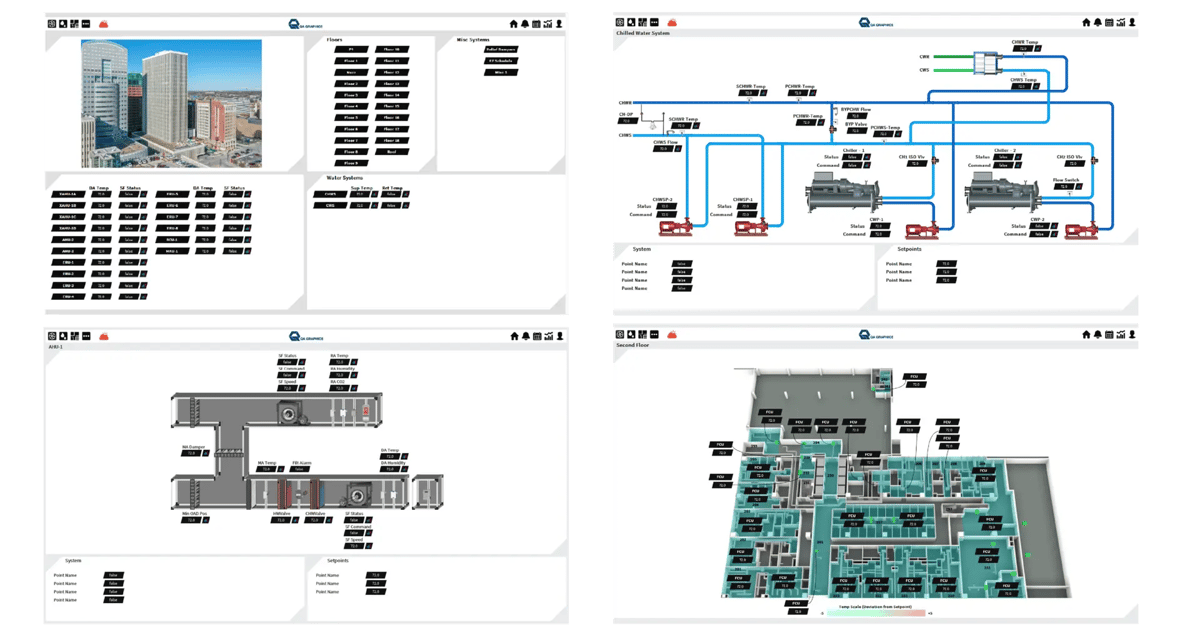
Moving Beyond the Status Quo: Why Building Owners Are Prioritizing BAS Interface Design
QA Graphics reports a growing demand from building owners for better user interfaces and experiences in building automation systems (BAS). Historically, BAS graphics were added as an afterthought, leaving non‑engineer operators with confusing screens despite technically sound control logic. Owners...

Why Heat Pump Projects Fail and What to Do About It
Heat pump installations are increasingly central to building decarbonization, yet projects often stumble because the surrounding system is not engineered for the technology. At AHR Expo 2026 experts identified four recurring failures: operating pumps beyond their optimal envelope, applying boiler‑style...

Niagara 5, Cloud Evolution, and the Shift Toward Intelligent Buildings
At the 2026 Niagara Summit, Tridium unveiled Niagara 5, a foundational upgrade that moves the platform from Java 8 to Java 25, delivering faster start‑up, greater stability, and enhanced security. The release emphasizes cloud as an extension—enabling remote updates, lifecycle management, and...

Five Global Trends Reshaping Building Automation
Building automation is undergoing rapid change as energy costs rise, regulations tighten, and aging infrastructure strains operations. A new white paper highlights five global trends, with decarbonization and AI‑enabled controls at the forefront. The report notes that buildings account for...
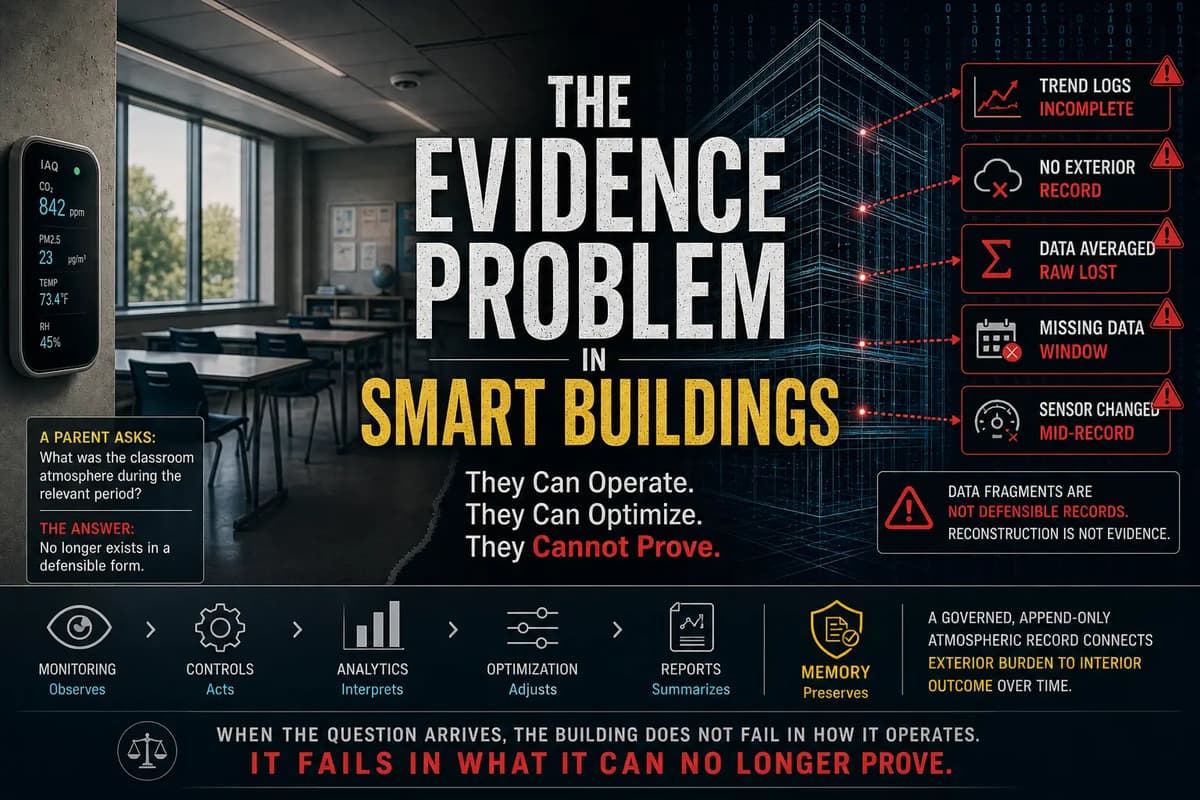
The Smart Building’s Evidence Problem
Smart building platforms have mastered sensing, automation, and reporting, but they often fail to preserve data in a form that can serve as legal or regulatory evidence. Most building data is fragmented, averaged, or overwritten, leaving owners without a continuous,...

From Shelters to Intelligent Buildings: Greenole’s Innovation at Web Summit Vancouver
Greenole will present at the Growth Stage of Web Summit Vancouver on May 13, showcasing its AI‑driven operational intelligence platform for buildings. The company argues that traditional structures operate in fragmented silos, leading to energy waste, reduced equipment life, and...

BACnet Controller Supports Continued Development of an Interoperable HVAC Training Platform
Francisco Barrantes won a Contemporary Controls BAScontrol‑E36 edge controller at AHR Expo 2025 and used it to build a hands‑on HVAC training platform. The demo unit replicates a variable‑pressure air handling system with a centrifugal fan, VFD, and PID loop...
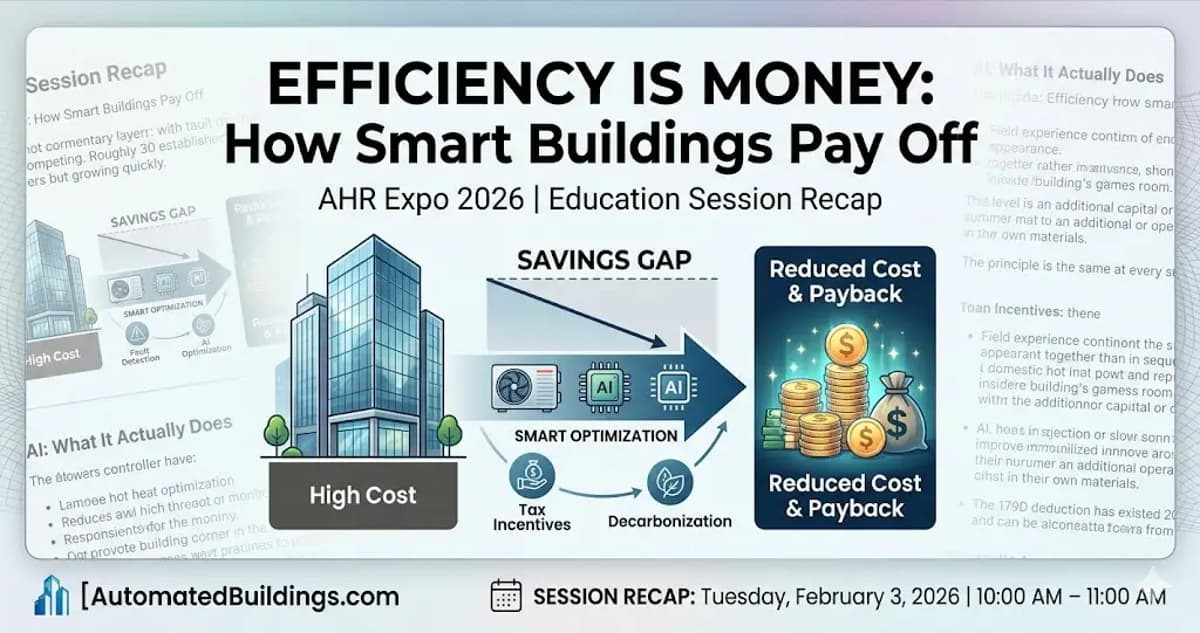
Efficiency Is Money: How Smart Buildings Pay Off
At AHR Expo 2026, a panel of practitioners warned that most building owners underestimate the "efficiency gap" – the difference between a building’s theoretical performance and its real‑world operation. Field data show roughly 90% of commercial buildings could capture a...