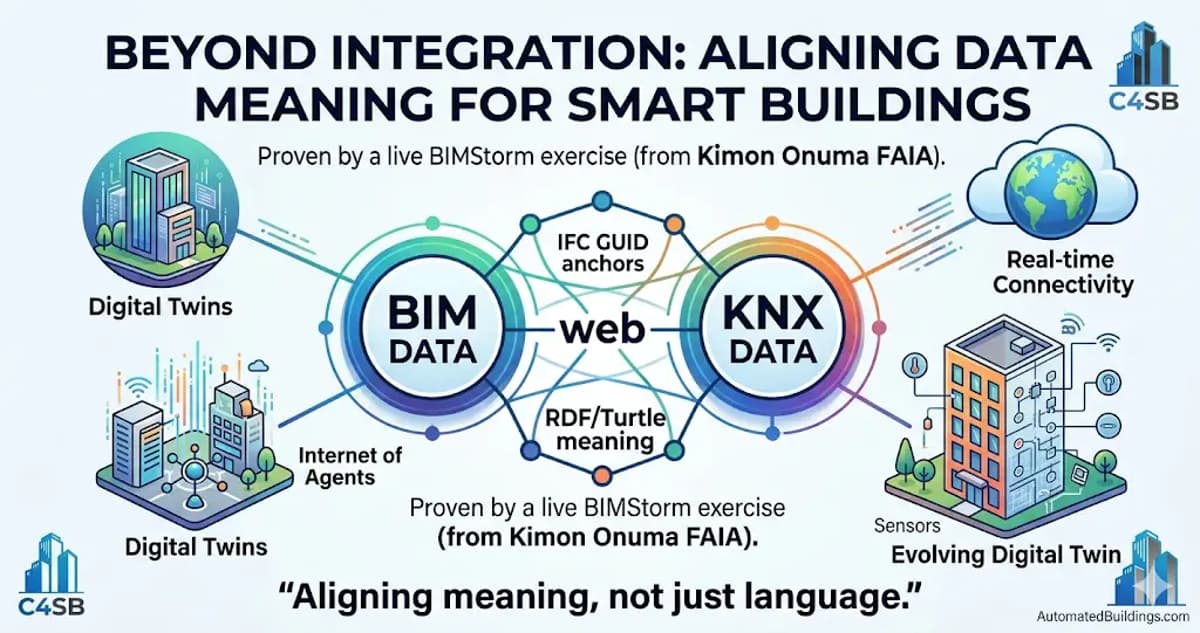
Identity Over Integration
Ken Sinclair reports that a live BIMStorm exercise demonstrated rapid integration of BIM and KNX data using IFC GUID anchors and RDF/Turtle semantics. The teams linked building information models and automation protocols in hours without prior schema alignment or shared tools. This "identity over integration" approach creates evolving digital twins that communicate in real time. The breakthrough suggests a shift from forcing a single platform toward aligning data meaning across standards.
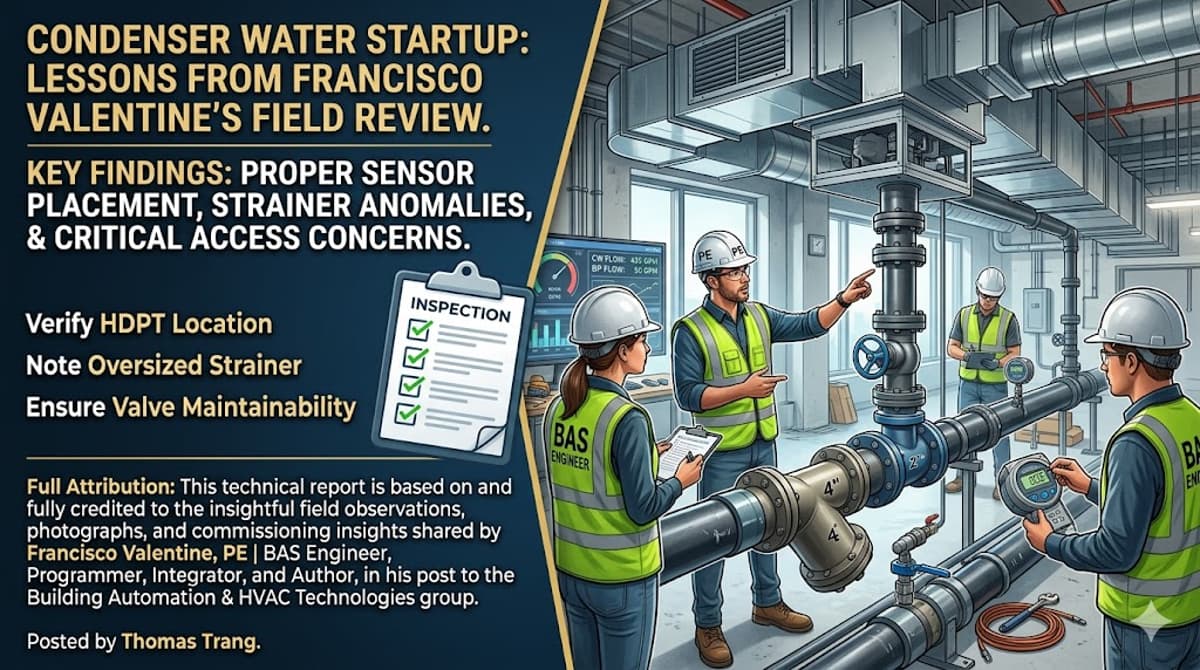
Condenser Water Startup Lessons From Francisco Valentine’s Field Review
An updated white paper incorporates feedback from BAS engineer Francisco Valentine, PE, refining key startup lessons for condenser‑water systems. He clarifies that the hydronic differential‑pressure transmitter should be placed to provide a representative demand signal, not necessarily at the critical...
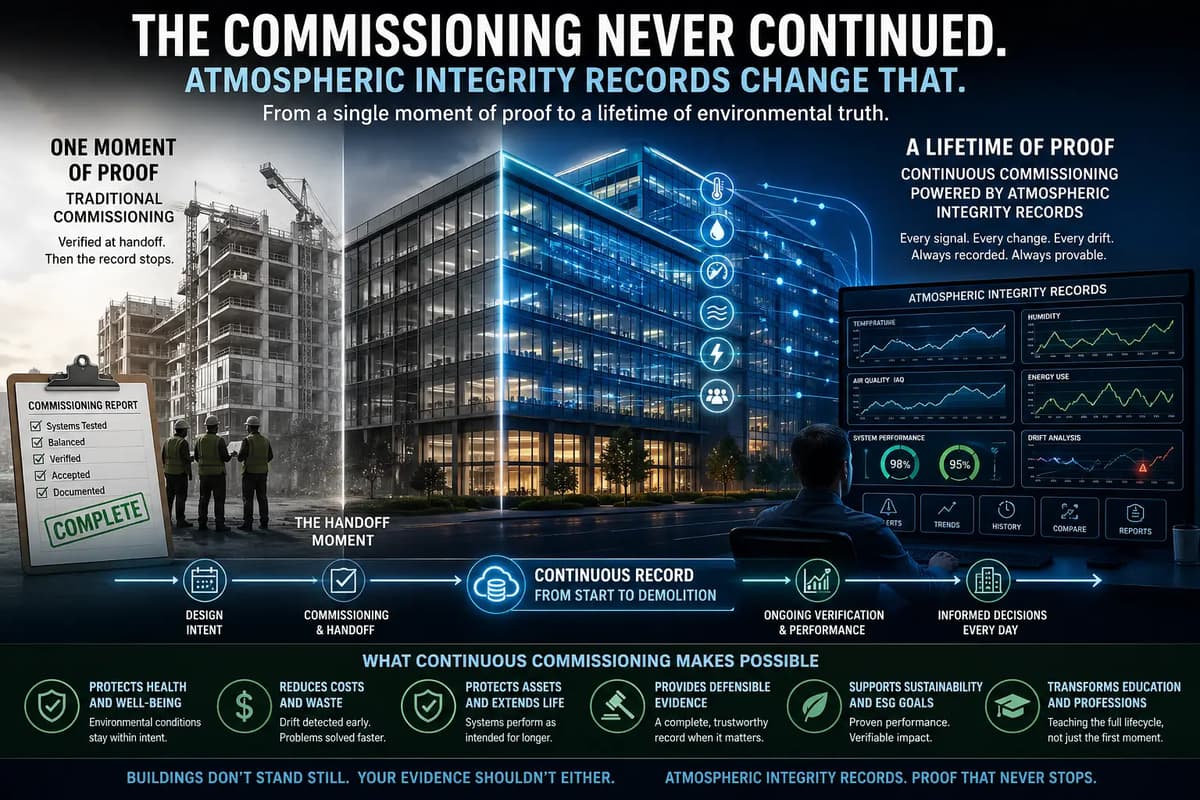
The Commissioning Never Continued
The article argues that traditional building commissioning stops at handoff, leaving a gap in performance verification over a building’s life. It introduces Atmospheric Integrity Records (AIR) as a governed, continuous environmental chronology that turns commissioning into a start‑to‑demolition evidence function....

AI’s Power: Databases as Memory
The article argues that pairing large language models with databases transforms AI from a generic knowledge engine into a specialized, reliable enterprise tool. Retrieval‑augmented generation (RAG) and vector search anchor AI answers in verified data, eliminating hallucinations. Databases provide long‑term,...
History Lesson: The Core Mission of oBIX
The Open Building Information Exchange (oBIX) emerged in the early 2000s as the first standardized bridge that moved building‑automation data from proprietary islands into the realm of IT. By wrapping sensor values in XML and exposing them via RESTful web...
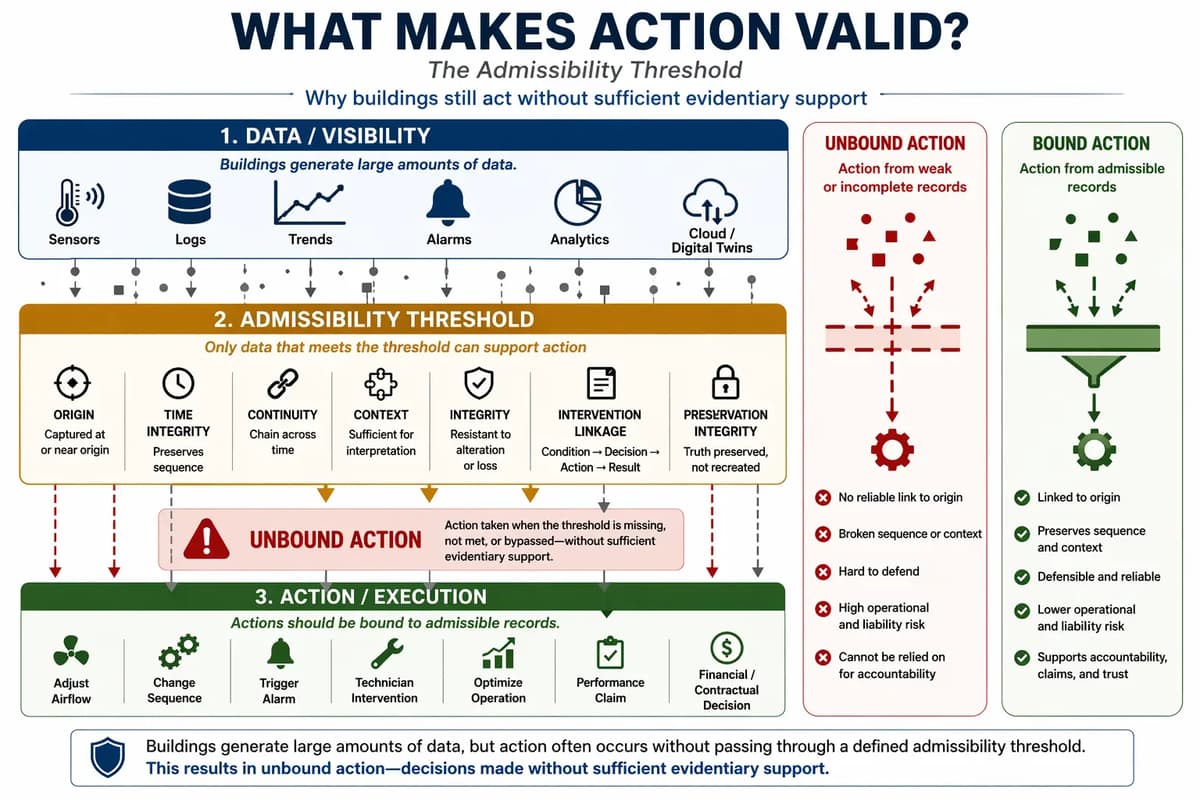
What Makes a Record Admissible Before a Building Can Act on It?
The building sector has amassed massive sensor data, yet it lacks a clear definition of when that data is reliable enough to drive actions. The article introduces the concept of "admissible" records—data that meets seven structural criteria, including origin capture,...

Connected and Secure: Building BAS Across Legacy, Hybrid, and Cloud Networks
At AHR Expo 2026, industry leaders warned that building automation systems (BAS) are rapidly shifting from legacy architectures to hybrid and cloud‑connected models, making cybersecurity a foundational requirement. The panel highlighted the convergence of IT and OT, the risks of...

AHR Expo 2026: Introduction to Building Automation Systems – Recap
The AHR Expo 2026 education session "Introduction to Building Automation Systems" featured Scott Cochrane and Stephanie Poole, who detailed BAS fundamentals from pneumatic controls to cloud‑native platforms. They highlighted that BAS governs roughly 80 percent of a building’s energy use and...

When the Building Knows More than the People Running It
The Monday Live session examined AI’s role at the purpose and operations layers of building management, emphasizing that executive questions about performance and space usage remain unchanged while AI shortens the lag between query and answer. Participants highlighted the need...

Neeve Announces Partnership with Optigo Networks, Bringing OT Packet Capture to the Neeve App Marketplace
Neeve has partnered with Optigo Networks to embed Optigo’s packet capture tool directly into the Neeve App Marketplace. The integration allows building automation and OT network teams to launch packet capture capabilities instantly within their existing Neeve environment, eliminating complex...

Why AI Needs to Stop Guessing and Start Reading the Knowledge Graphs
The industry’s AI‑first mantra is hitting a wall because building systems lack a shared, machine‑readable truth. In the PAE Living Building project, engineers cataloged 3,000 assets and generated a knowledge graph with 122,000 RDF relationships, exposing how equipment truly interconnects....

A Building Is Not Secure If It Cannot Prove What Happened
The article argues that modern building systems generate data but cannot prove what actually happened during an event. It highlights the gap between monitoring dashboards and admissible evidence, noting that current logs are often aggregated, overwritten, or incomplete. To meet...
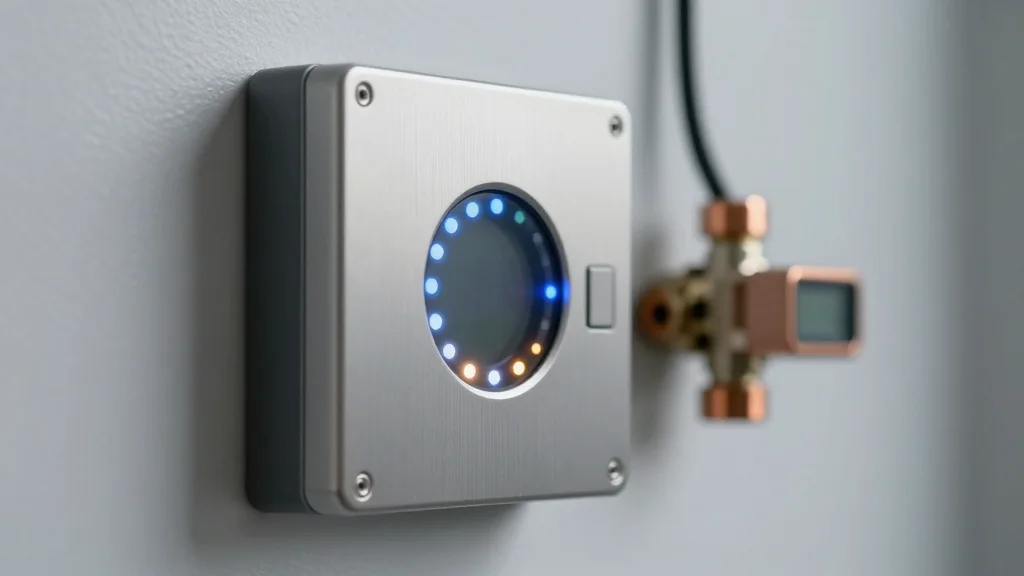
Unlocking the Potential of Control Points in Building Automation Systems (BAS): A Blend of Technology and Expertise
Control points are the core data and command nodes in building automation systems, linking sensors, actuators, and alarms to digital intelligence. Proper calibration of analog inputs, binary outputs, and alarm logic enables facilities to balance energy efficiency with occupant comfort,...

Ten Years of IoT in Building Automation: 2016 to 2026
Over the past decade, building automation has shifted from siloed, proprietary controllers to open, cloud‑connected IoT ecosystems. Falling sensor costs and protocols like MQTT and BACnet/IP enabled real‑time data collection, while the COVID‑19 pandemic accelerated remote monitoring and highlighted cybersecurity...

In Conversation with Rudolf Erasmus
Rudolf Erasmus, Hardware Manager at Reliable Controls, highlighted the company’s push into millimeter‑wave occupancy detection and single‑pair Ethernet for long‑range, high‑speed building automation. He emphasized the RC‑FLEX controller line’s ability to log every object, unlocking deeper analytics, early‑issue detection, and...

Allies, Not Angels — Choosing to Embrace AI on Your Own Terms
Artificial intelligence is fundamentally a responsive tool built to extend human intent, not an autonomous rival. The essay argues that viewing AI as an "augment" rather than an "argument" reshapes how professionals collaborate with the technology. Fixed‑mindset resistance, rooted in...
When Data Handling Alters Physical Interpretation: HVAC’s Missing Evidence Layer
A 2026 Energy and AI study shows that HVAC thermal‑comfort models produce wildly different variable importance ratios when missing data is handled differently, shifting the air‑temperature to mean‑radiant‑temperature (Ta:MRT) ratio from 1.9:1 to 4.46:1 – a 135% change. The researchers...

Convergence on AutomatedBuildings.com
AutomatedBuildings.com has chronicled four distinct eras of building‑automation convergence, from the early pneumatic‑to‑DDC transition in the 1970s‑80s to today’s AI‑driven semantic standards. The site marked the 1999‑2005 “Convergence 1.0” phase where IT and OT merged via open protocols such as BACnet...

CUBE Announces Strategic Partnership with Rizzo Controls: Revolutionizing BMS Service Operations
CUBE USA has entered a strategic partnership with Rizzo Controls to help building‑management‑system (BMS) service contractors unlock the value of their Niagara platforms. Rizzo will deliver implementation and training, enabling contractors to shift from reactive maintenance to structured, data‑driven workflows....

Beyond the Sequence: Architecting the Modern BAS Technician Mindset
Building automation systems are shifting from static, sequence‑based control to AI‑driven, data‑rich ecosystems, forcing technicians to adopt a mindset focused on verifiable performance and system forensics. The article proposes a four‑pillar framework—core technical knowledge, professional competencies, skill‑development pathways, and measurable...

The Meaning of Asset Intelligence in the Age of AI
The article introduces "Asset Intelligence" as a shift from raw building data to shared meaning, enabling questions like “Why is this room too hot?” to be answered accurately. It highlights the Semantic Bridge—a knowledge‑graph layer that links physical spaces, systems,...

When Air Quality Claims Collapse: The Moment Buildings Can No Longer Prove What They Say
The article warns that today’s building air‑quality systems can’t prove their performance when scrutiny arrives. While sensors and dashboards show acceptable conditions, they rarely provide a continuous, immutable record linking interventions to outcomes. Regulatory, legal and ESG demands now require...

Remote Access Configuration for Multiple Buildings
Contemporary Controls released an application note detailing how to configure its BASRTSX‑B and Skorpion IP routers for secure, scalable remote access across multi‑building BACnet networks. The routers’ Broadcast Distribution Table can store up to 50 BBMD peers, enabling BACnet/IP broadcast...

How Governed Connectivity Works
The article explains how the Interoperable Building Box (IBB) System uses the CNS/CP substrate to enforce governed connectivity across smart‑building components. CNS provides a DNS‑like naming system while Connection Profiles act as immutable contracts that define provider‑consumer roles, context, and...

QA Graphics Launches New eCommerce Platform
QA Graphics announced the launch of a new eCommerce platform, introducing two flagship products—QAGCharts and QAGMaps—designed for the Niagara building‑automation ecosystem. QAGCharts offers advanced data visualization at a one‑time price of $1,750 per user, while QAGMaps provides floor‑plan and geographic...

Beyond Systems: Why Electrical, Mechanical, Thermal, and Environmental Performance Must Converge
Building performance has long been assessed in isolated silos—electrical, mechanical, thermal, and environmental—each using its own metrics. The article argues that this fragmentation prevents a true understanding of what a building actually does over time, proposing a unified energy-to-environment conversion...

Are You Maximizing Technology to Improve Efficiency in Your Building?
Building automation systems generate massive data streams, yet many facilities lack tools to turn raw logs into actionable insight. Reliable Controls’ RC‑Reporter software lets owners visualize, automate, and share performance metrics without coding, freeing them from vendor lock‑in. The platform...

Governance and Standards: Building the Framework for Innovation
The Monday Live panel highlighted how governance and standards shape innovation in smarter buildings, using the century‑old NEMA 115 plug as a case study. It contrasted immutable hardware standards with evolving virtual standards like BACnet, stressing the need for interface‑focused...

Chiller Plant Efficiency Series Chiller Efficiency – Part 1
SIMA’s latest article clarifies the distinction between heat‑exchanger effectiveness and plant‑level efficiency for flooded evaporators and condensers. It shows that the log‑mean temperature difference (ΔT) accounts for roughly half of the heat‑transfer potential, while water‑flow turbulence contributes only 15‑20%. The...

Knowledge Graphs in the Modern Building
The Open‑FDD project is developing a free, open‑source knowledge graph for smart buildings that lives on‑premise rather than inside a proprietary vendor platform. By leveraging RDF‑based standards such as Brick, ASHRAE 223P and Haystack, it models every BACnet point and equipment...

From Sensors to Evidence: Why Automated Buildings Need Environmental Memory
Building automation has evolved from simple sensor networks to real‑time control platforms that optimize comfort and energy use. However, most systems are designed for immediate visibility rather than preserving a lasting, tamper‑proof record of environmental conditions. The article argues that...

We Now Have a “Thought Leadership Liaison”
AutomatedBuildings.com has created a new Thought Leadership Liaison role to bridge visionary concepts with on‑the‑ground execution in smart‑building technology. The position, filled by Kelly Sinclair, focuses on three pillars—translator, connector, and curator—to make AI and portfolio autonomy insights accessible to...

Pattern Recognition in Systems-of-Systems and the Perspectives That Help Us See It
AutomatedBuildings.com marks International Women’s Day by spotlighting the role of women in the building automation sector, emphasizing how diverse perspectives improve pattern recognition across complex systems‑of‑systems. The editorial underscores that value is created at the interfaces between hardware, software, engineering,...

AI + Buildings 2026: Redefining Autonomy From People to Portfolios
The third annual AI and Autonomous Buildings panel highlighted a shift from reactive HVAC controls to agent‑based intelligence that can negotiate power, predict maintenance, and balance cost, carbon, and comfort. Attendees saw digital twins scaling from single sites to entire...
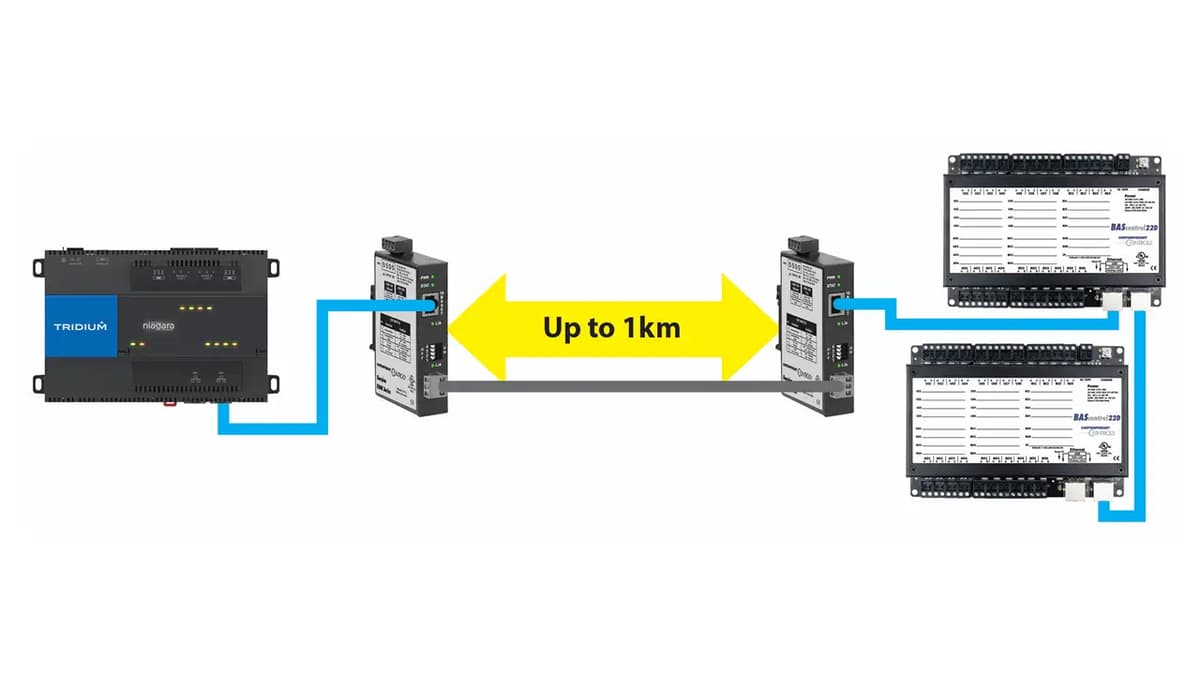
Understanding 10BASE-T1L
10BASE‑T1L, defined in IEEE 802.3cg, delivers 10 Mbps full‑duplex Ethernet over a single twisted‑pair for up to 1 km. The standard lets BACnet/IP run directly on the link, eliminating gateways and allowing seamless integration with IT networks. Existing two‑wire fieldbus runs can be...

Engineering Proof of Performance
The piece introduces boundary thermodynamics as a framework for evaluating building performance, arguing that interior conditions must be measured against documented exterior loads. It explains that HVAC components, envelopes, and IAQ systems only prove their effectiveness when load‑relative data—temperature, humidity,...

Beyond the Thermostat: Decoding the Science of Comfort with HVAC Fundamentals
The article demystifies HVAC fundamentals, explaining how centralized and distributed systems shape zone‑level comfort. It highlights ASHRAE Standard 55’s 80% occupant comfort goal and why designers settle for statistical rather than universal satisfaction. Variable Air Volume (VAV) systems, delivering 55°F...

Atmospheric Records as Infrastructure
Hospitals now host dense networks of temperature, humidity, CO₂, pressure and filtration sensors, delivering unprecedented operational visibility. While building management systems excel at real‑time control, they were never built to serve as immutable evidence. The industry faces a growing demand...

ThrowBack Thursday, a Brief History of Digital Twin Discourse (1999–2026)
The digital‑twin narrative in building automation has progressed from early virtual‑value concepts in 1999 to today’s composable, capability‑based models. Foundational work on data interoperability (XML/Web Services, Project Haystack) and the 2005 Honeywell‑Tridium acquisition set the stage for formal definitions in...
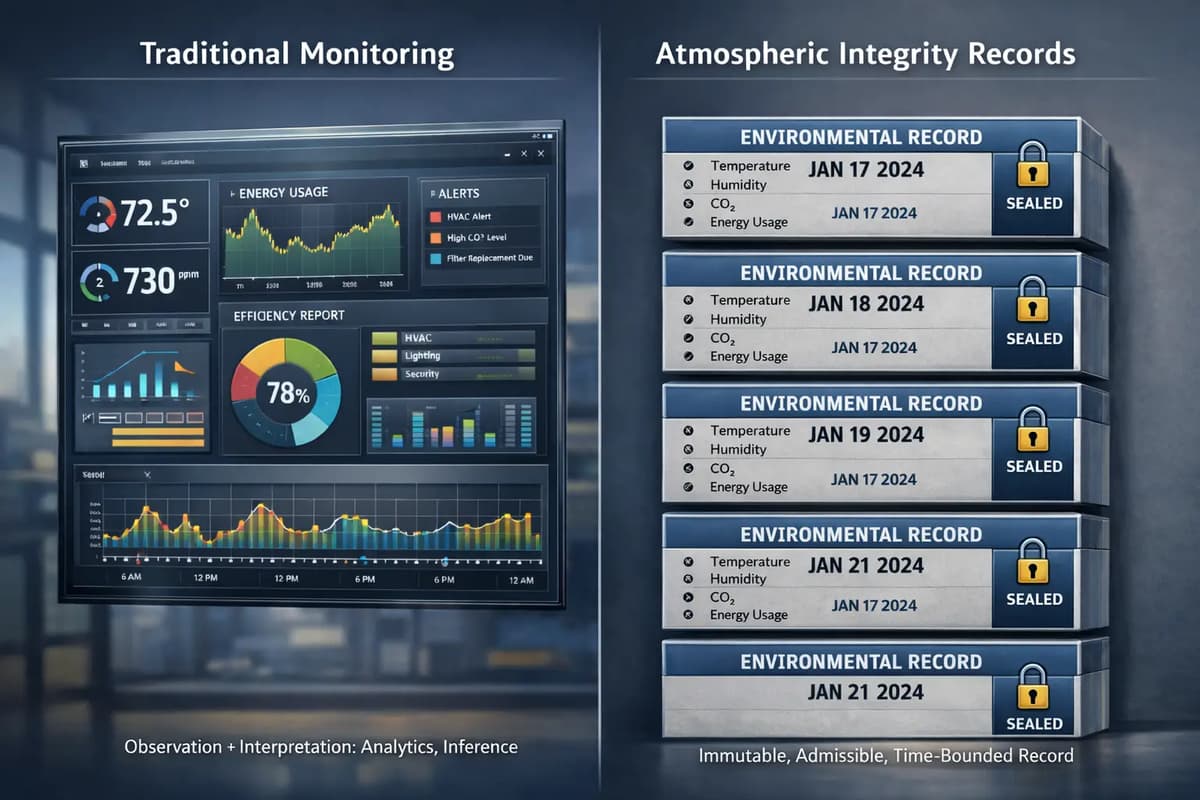
Atmospheric Integrity Records
The piece introduces Atmospheric Integrity Records (AIR), an append‑only, time‑bounded ledger that captures building atmospheric data separate from control and analytics layers, making it admissible evidence for regulators, insurers, utilities, and investors. It argues that current dashboards and optimization tools...

Beyond Capacity: Why AI Is Forcing a Building-Level Performance Reckoning
AI‑driven workloads have accelerated U.S. electricity demand, with data centers responsible for roughly 60 % of last year’s load increase and a 150 % rise over five years. This non‑linear growth exposes a hidden vulnerability at the building level, where inefficiencies in...

We Tried Using AI for Real Building Work. Here Is What Actually Happened.
At AHR Expo 2026, SES Consulting’s Brad White and Cochrane Supply’s Jacob Fenley tested generative AI on real building data. ChatGPT matched 80% of recommissioning measures but hallucinated equipment specs, while Gemini accurately extracted data from photos, PDFs, and handwritten...

AHR Expo 2026: Connections, Innovation, and the Evolving Role of Platforms
The AHR Expo 2026 in Las Vegas underscored a rapid shift in the HVAC and building‑automation sector toward fully connected, AI‑enhanced ecosystems. Thousands of manufacturers and tech startups showcased solutions that move beyond simple automation to cloud‑native, data‑driven intelligence. A...
Enduring ERU Control Logic: A Cross-Platform Architecture for Building Automation Excellence
Building automation professionals face recurring failures when Energy Recovery Unit (ERU) control logic is tied to proprietary tools, especially during platform migrations or retro‑commissioning. The article proposes a commissioning‑centric, cross‑platform architecture that abstracts control intent into five distinct layers, from...

Our Free Education Session From AHR Vegas Online
AutomatedBuildings.com hosted 16 free education sessions during the AHR Expo 2026 online, drawing more than 2,000 attendees. The sessions spanned HVAC automation, controls, and sustainability topics, and each was recorded for on‑demand viewing. A YouTube playlist now provides access to...

AHR Expo Reflections: Elevating the BAS Visual Layer for Real World Operators
At AHR Expo, industry leaders highlighted a persistent gap between building automation system (BAS) visual design and the needs of everyday operators. While user experience is a buzzword, many graphics are still engineered for technicians rather than the people who...

From Time-Based HVAC to Evidence-Based Reality
The article argues that traditional building automation systems (BAS) conflate measurement, control, and reporting, making performance data inferential rather than verifiable. It proposes adding an independent, time‑bounded evidence layer that records environmental conditions without influence from optimization logic. This governed...

Real Results: 3 Enterprise Projects Powered by Reliable Controls Solutions
Reliable Controls showcases three enterprise building‑automation projects that demonstrate scalability, sustainability, and long‑term compatibility. In Washington, D.C., the Constitution Square portfolio leveraged backward‑compatible controls across an 11‑year build without replacing legacy devices. In Australia’s Gold Coast, integration of a 312 kW...