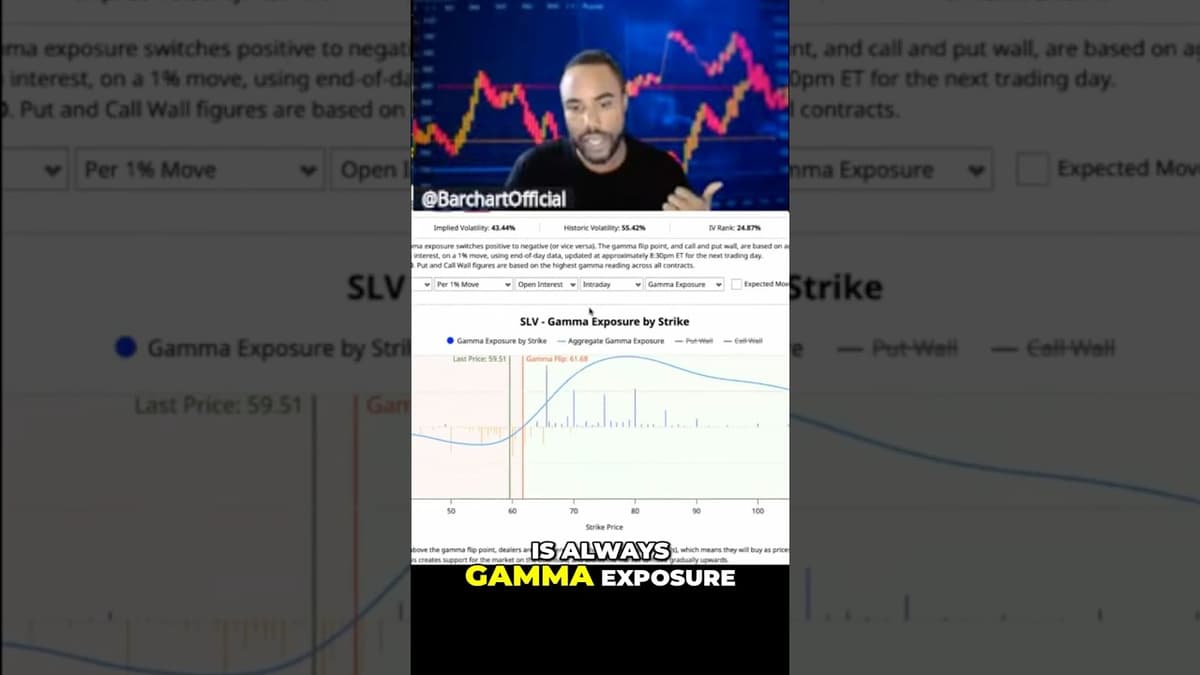
The Hidden Gamma Levels Trapping Silver Right Now🥈 #Silver #SLV #GammaExposure
The video walks viewers through a technical analysis of a silver exchange‑traded fund, focusing on options‑derived metrics such as the put‑call ratio and gamma exposure to gauge price limits. By selecting the ETF with high assets under management, the presenter checks the put‑call ratio, noting that open interest is falling while call positions are building, hinting at bullish bias despite a stagnant price. Key data points include a declining put‑call ratio, a price sitting below the 60‑point put wall, and a large negative‑gamma region that could accelerate further downside. The analyst explains that to reverse the trend, the ETF must first clear the 60‑61 put wall and achieve a gamma flip, turning negative gamma into positive. Specific examples illustrate the concept: the price at $59.51 sits under a 60‑point put wall, while a pronounced positive‑gamma spike at $65.50 acts like a magnetic pull, offering potential support. Repeated rejections at 60‑61 would signal continued weakness, whereas a move above $65 could establish a strong floor. The implication for traders is clear: as long as the market remains in negative gamma, silver is vulnerable to rapid declines. Monitoring gamma spikes and put‑call dynamics can help position trades, with a successful breach of the put wall and reclamation of positive gamma signaling a possible stabilization and upside trajectory.
Poor Man's Covered Call: Find Winning Trades Step-by-Step
The video delivers a concise guide to everyday productivity hacks that anyone can adopt immediately. It centers on three core habits: the two‑minute rule, notification batching, and staying hydrated, each framed as a simple lifestyle tweak. First, the two‑minute rule urges...
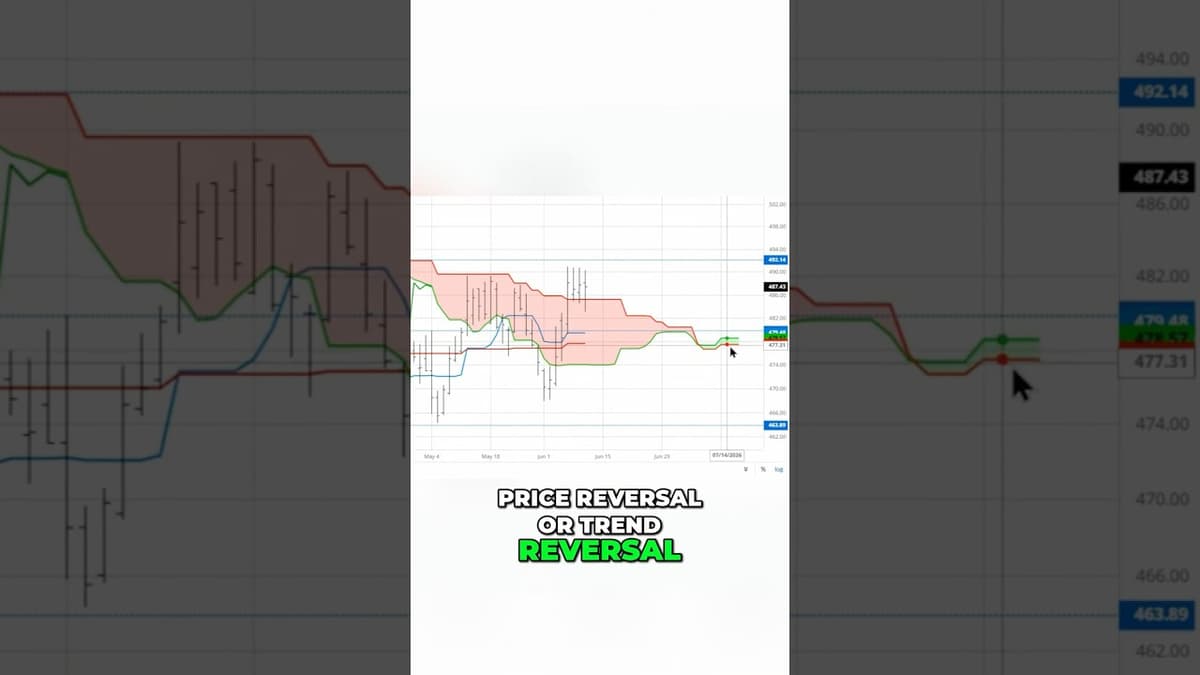
Berkshire Hathaway Just Flashed a Reversal Signal 👀 #BRKB #Ichimoku
The video examines Berkshire Hathaway’s chart using the Ichimoku cloud, noting the conglomerate ranks among the S&P 500’s top ten by market capitalization. Technical readout shows the baseline flat, price trapped inside a bearish cloud, and a shadow cloud acting as...
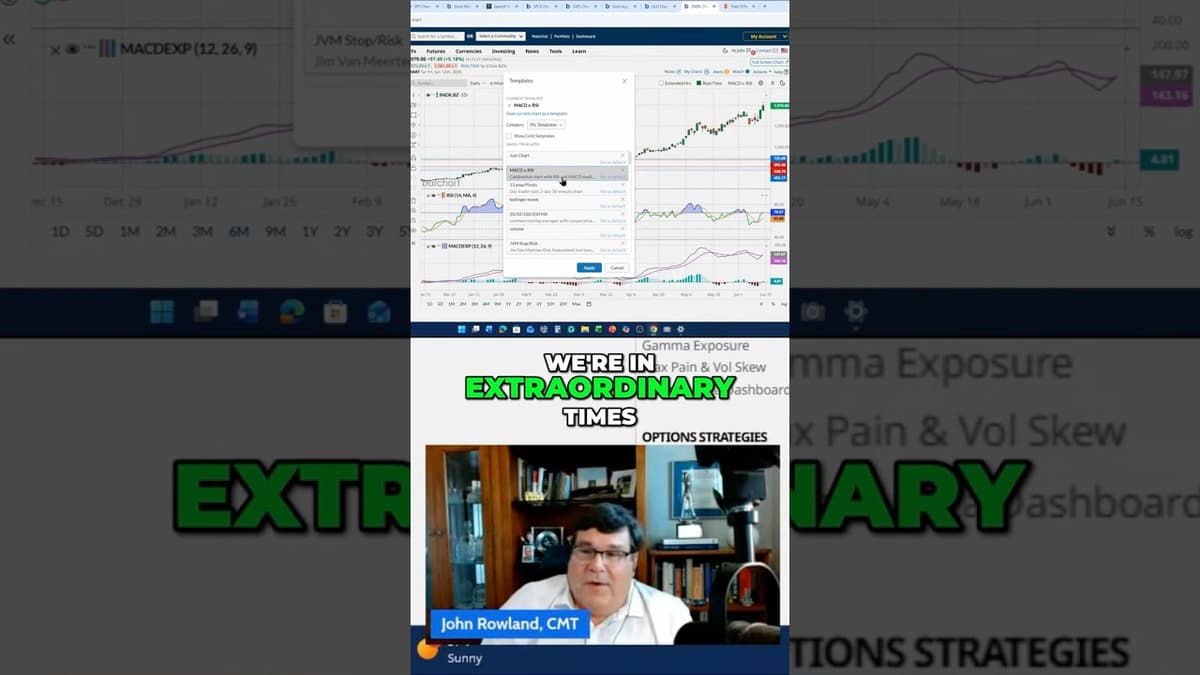
One of the Most Overbought Stocks in Market History 🌡️🚨 #RSI #Stocks
The video focuses on memory‑chip equities, zeroing in on SanDisk’s extreme relative‑strength‑index readings and the broader question of whether the sector’s rally can sustain its pace. The host points out that SanDisk’s monthly RSI surged to 99.14—a level rarely observed—while the...
Market Correction or Buying Opportunity? Here's the "Line in the Sand" 📉👀 #SPX #QQQ #Nasdaq
The video dissects whether the recent market pullback is a correction or a buying opportunity, focusing on the S&P 500, Nasdaq‑100 and QQQ indices through a blend of traditional and non‑traditional technical tools. Since the March 30 low, the Nasdaq has rallied...
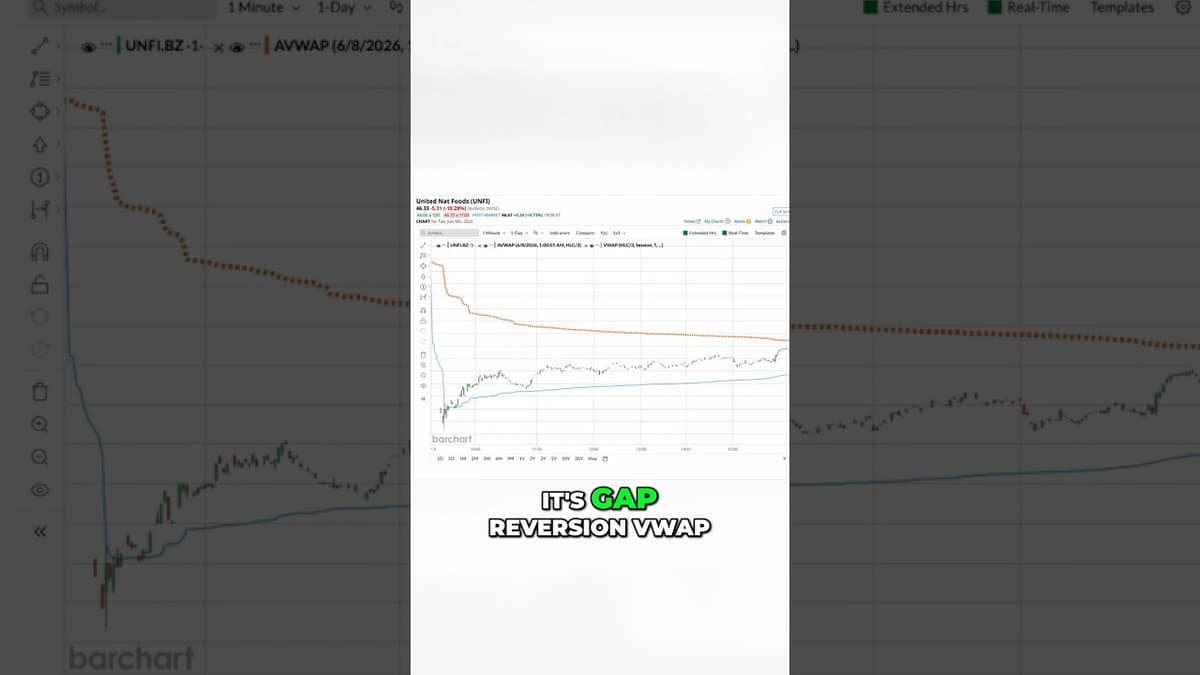
How to Trade Earnings Gap Downs Without Losing Your Shirt 🎯
The video teaches a systematic approach to trading earnings‑driven gap‑down stocks by exploiting VWAP‑to‑VWAP reversion. The presenter, a trader since 1996, argues that this method is the simplest and most reliable he’s used since adopting VWAP exclusively in 2012. The core...
Most Traders Use Ichimoku Cloud Wrong (Here's How It Really Works)
The webinar walks viewers through the Ichimoku Cloud, a Japanese technical‑analysis tool that many traders misapply. Host John Roland breaks down its five components—the Conversion Line, Baseline, Lagging Span, and the two Leading Spans that create the cloud—explaining how each...
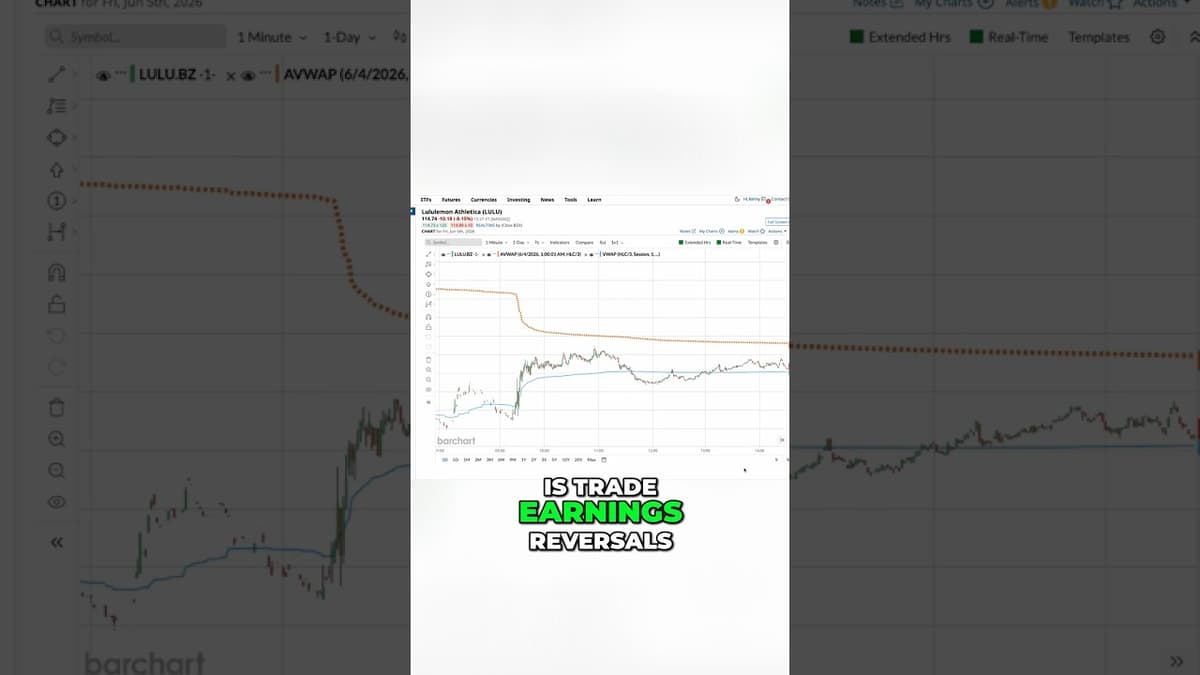
The Earnings Reversal Strategy Every Trader Should Know 📆
The video walks viewers through a repeatable earnings‑reversal trading method that hinges on VWAP and multi‑time‑frame VWAP analysis. Kenny Glick demonstrates how to capture short‑term price rebounds after a gap‑down earnings move, even when the broader market is declining. The core...
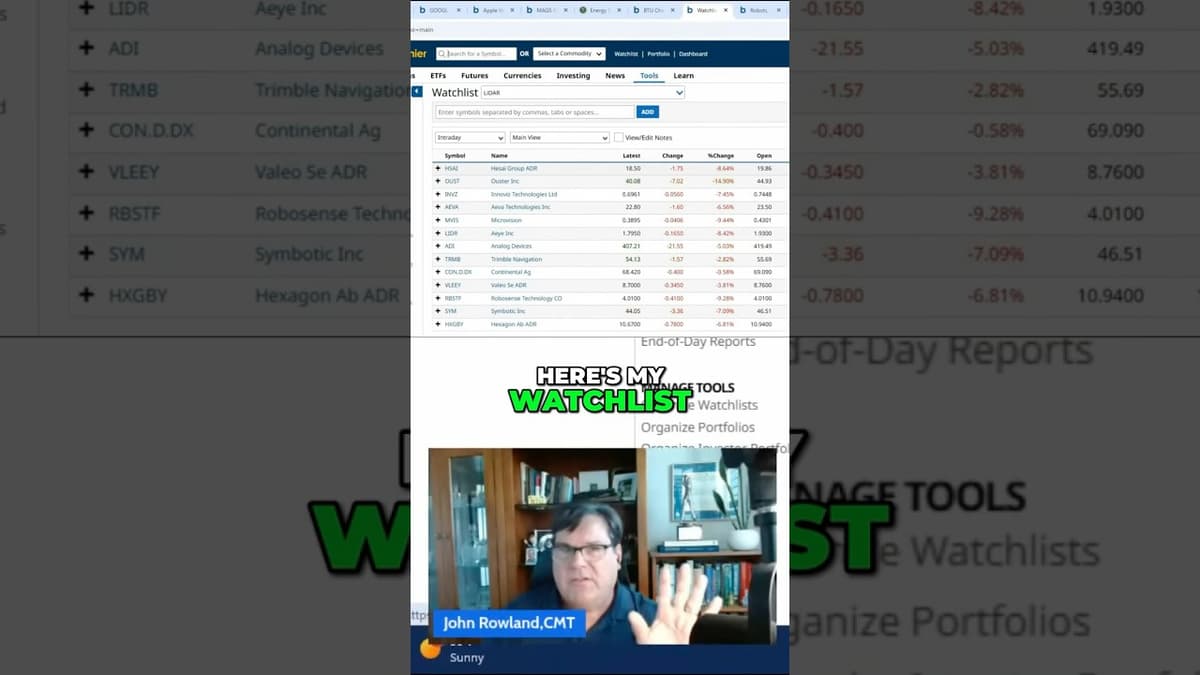
The "Eyes of AI" — The Next Massive Artificial Intelligence Wave 👁️🤖
The video introduces “eyes of AI” – lidar and related physical‑AI technologies – as the next massive wave in artificial intelligence, and the presenter walks viewers through a custom watch list to capture investment opportunities. He demonstrates how to locate the...
Poor Man’s Covered Call Explained: Powerful Income With Less Capital 📚
The video introduces the “poor man’s covered call,” a strategy that replicates a traditional covered‑call position without requiring the full purchase of 100 shares, using deep‑in‑the‑money LEAP options. It explains that traders buy a long‑dated, high‑delta LEAP to obtain stock‑like exposure...
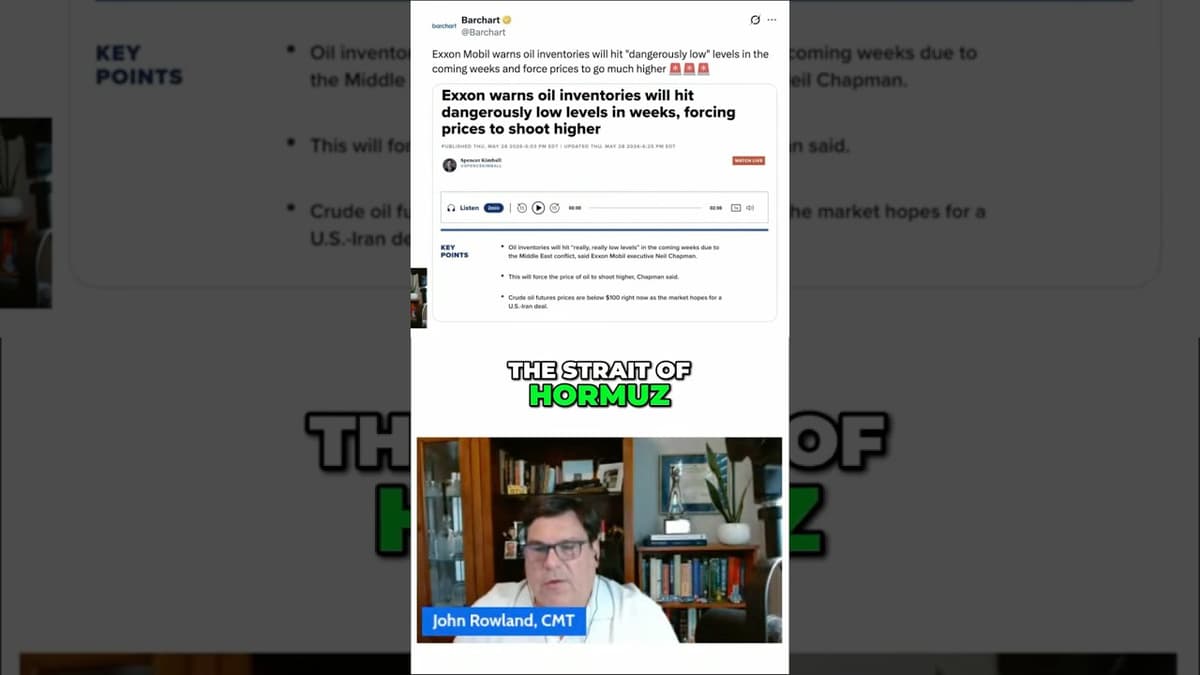
The Black Swan Threatening the Stock Market 🦢🚨
The video warns that a confluence of supply‑side shocks could become a black‑swan event for equities. Exxon Mobil’s latest alert about dangerously low oil inventories, coupled with the Dallas Fed president’s remarks on tightening fuel markets, frames the central...
Stop Trading Blind: How to Setup Anchored VWAP 🎯⚙️
The video walks viewers through setting up an anchored VWAP indicator and demonstrates how it can reveal short‑selling opportunities even in a relentless bull market. Glick anchors today’s VWAP to the prior‑day VWAP, using the gap between the two lines to...
S&P 500 to 8,000? The Black Swan Nobody Is Talking About 📈🪿
The discussion centers on whether the S&P 500 will breach the 8,000 mark, with analysts noting the index sits near 7,500—a 500‑point swing representing roughly a 6.5% move. The hosts reference recent chart analysis, emphasizing that while the market continues...
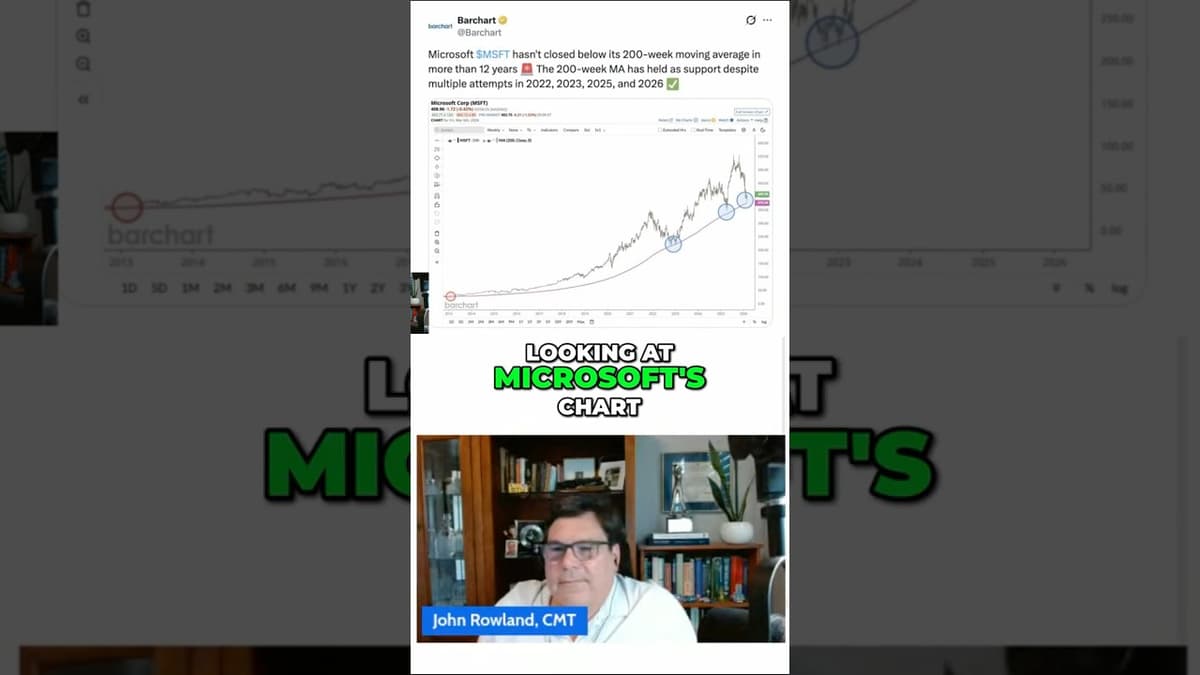
Why the Microsoft Earnings Gap Is Now in Play 🧲 #MSFT
The video focuses on Microsoft’s recent earnings‑related price gap and how technical indicators suggest the stock may be poised for a short‑term rally. The host highlights a 481‑point gap on the daily chart, a 200‑week moving average that remains supportive,...
Stop Selling Naked Puts. Use This Smarter Strategy Instead 🧠
The video explains why retail traders should replace naked‑put selling with the bull put spread, a credit‑spread that limits downside before the trade is placed and requires far less buying power. By selling an out‑of‑the‑money put and buying a lower‑strike...