
Diabetes Reversed by Stem Cell-Derived Islets, Illustrating Promise for New Therapy
Researchers at Karolinska Institutet and KTH have devised a streamlined protocol that converts eight human pluripotent stem cell lines into highly pure, glucose‑responsive pancreatic islet cells. The cells produce insulin in vitro and, when transplanted into the eyes of diabetic mice, restore normal blood‑glucose levels within three months and maintain control for six months. By shortening the progenitor stage and employing 3D suspension culture, the method eliminates non‑endocrine cells that could cause tumors. The breakthrough points toward patient‑specific cell therapies for type 1 diabetes.

Dual-Ligase Strategy Adds New Layer of Control to Targeted Protein Degradation
Researchers at CeMM, AITHYRA and the University of Dundee have identified a small‑molecule degrader that simultaneously engages two distinct E3 ligases to eliminate SMARCA2/4, key subunits of the BAF chromatin‑remodeling complex. The dual‑ligase mechanism acts as a molecular backup: degradation...

Peek Behind the Paper | AxioParse: Streamlining Axiom Microbiome Assay Data Processing and Dataset Generation
AxioParse is a new computational framework that streamlines processing of data from Applied Biosystems’ Axiom Microbiome Array. The pipeline automates raw output parsing, quality‑control checks, and generation of analysis‑ready microbial profiles, reducing manual steps and variability. Developed by Mathieu Garand...

A Light at the End of the Tunnel for Huntington’s Disease Treatment
Researchers at Florida Atlantic University have uncovered a cellular pathway that enables mutant huntingtin protein (mHTT) to travel between neurons via tunneling nanotubes (TNTs). Using LC‑MS/MS, they identified the intracellular pH sensor Slc4a7 as a critical membrane partner of the...

Webinar Q&A Follow Up: Immunoassay Signal Amplification: Bold New Solutions for Existing ELISAs
Cavidi’s principal scientist Peter Stenlund explained how the BOLD signal‑amplification platform boosts ELISA sensitivity by lowering the lower limit of quantification while modestly reducing the upper limit. The technology relies on click‑chemistry conjugation of stable DBCO‑modified oligos, offering precise stoichiometry...

Unlocking Decades of Hidden Data with One Whale Song
University of New South Wales researchers built a deep‑learning detector that identifies blue whale calls with 99.4% accuracy after being trained on a single recorded song. By augmenting that one sample into thousands of synthetic variants, the model can scan...

Anxiety May Be Regulated by Calcium Signaling in Brain Immune Cells
Researchers at the University of Utah have identified calcium signaling in a subset of brain immune cells, called Hoxb8 microglia, as a key driver of anxiety and obsessive‑compulsive‑like grooming in mice. Using genetic activation and miniature microscope imaging, they showed...

A Super-Resolution Understanding of Chromatin Dynamics in Living Cells
MIT researchers used the MINFLUX super‑resolution microscope to track chromatin movement across four orders of magnitude in time, from 200 microseconds to several hours. Their data reveal two distinct dynamic regimes: a tightly constrained mode limited to ~200 nanometers and a freer,...

Capturing True Single-Cell Resolution with Your Spatial Data
Spatial biology has transformed life‑science research, yet imaging and sequencing platforms still grapple with cell‑boundary segmentation and grid‑based spot limitations. Linda Orzolek of OMAPiX explains how Takara Bio’s Trekker technology delivers true single‑cell spatial resolution by isolating nuclei and pairing...

Can Mammals Regrow Lost Limbs? This New Treatment Could Be the First Step
Researchers at Texas A&M have demonstrated that a two‑step treatment using growth factors FGF2 and BMP2 can trigger partial digit regeneration in mice. The protocol first applies FGF2 to create a blastema‑like cell mass, then adds BMP2 to drive bone...

Space-Efficient Cryogenic Sample Storage
Azenta Life Sciences introduced the CryoArc™ Pico Automated Storage System, a compact LN‑2 cryogenic platform that maintains samples at –190 °C. Designed for biobanking, clinical research, and cell‑gene therapy labs, the system integrates barcode‑driven software for sample tracking, chain‑of‑custody, and CFR 21...
New Genetic Discovery Could Spell This Aggressive Cancer’s Downfall
UCLA researchers uncovered a genetic weakness in small cell neuroendocrine carcinoma (SCNC) by creating prostate‑derived organoid models and running genome‑wide CRISPR screens. The screens identified the transcription factor E2F3 as a synthetic‑lethal partner of RB loss, and inhibiting E2F3 halted...

EBook: The Roles of Endpoint, Real-Time and Digital PCR in Molecular Research
The new BioTechniques eBook outlines how endpoint PCR, quantitative real‑time PCR (qPCR) and digital PCR (dPCR) complement each other in modern molecular research. It explains that endpoint PCR remains a cost‑effective tool for qualitative detection, qPCR adds fast and reproducible...

The Biotech Bi-Weekly: A Virtual Biology Initiative, a New Discovery Grant and a Protein Supplier to Watch in Cancer Research...
The biotech bi‑weekly highlights a wave of new funding and tools, starting with Biohub’s $500 million five‑year Virtual Biology Initiative to generate global multimodal datasets for predictive biology. Zymo Research launched the Fecal Microbiome Discovery Grant to support early‑stage researchers, while...
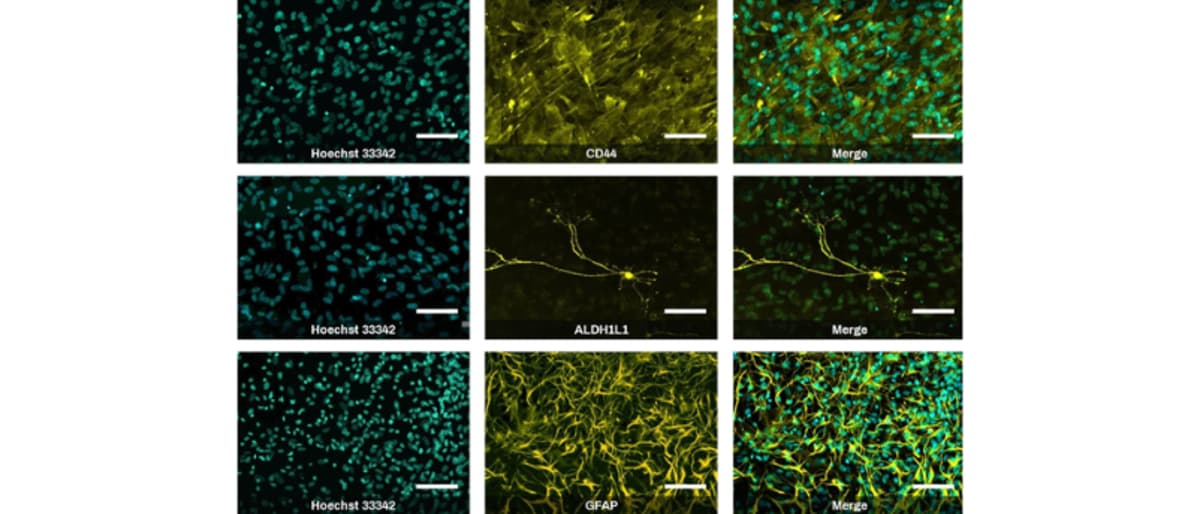
New iPSC Differentiation Kits for Neuroscience Research
AMSBIO introduced the Quick‑Glia™ product line, iPSC‑derived glial cell kits designed for neuroscience research. The kits convert human induced pluripotent stem cells into functional astrocytes or microglia in 1–2 weeks, delivering high‑purity, cryopreserved cells ready for disease modeling and drug...

New Bird Flu Vaccine Shows Promise Against Multiple H5N1 Strains
University of Nebraska–Lincoln researchers have unveiled a nanodisc‑based vaccine that protects mice and dairy calves from multiple H5N1 bird‑flu strains. The platform uses a prime‑boost regimen combining intramuscular and intranasal delivery to generate systemic and mucosal immunity. Preclinical trials showed...

Advancing Drug Discovery with Cell Line Development: Past, Present and Future
Cell line development underpins biologics manufacturing and drug discovery, from historic HeLa and CHO lines to modern CRISPR‑engineered clones. Recent advances in automation, artificial intelligence, and gene editing have accelerated clone selection, improved monoclonality verification, and increased protein yields. Tools...
New Genetically Engineered CHO Cell Line Boosts Protein Expression and Productivity
Sartorius has unveiled a genetically engineered Chinese hamster ovary (CHO) cell line that delivers up to twice the protein expression titers and three times the productivity of traditional wild‑type CHO hosts. The new line was validated across multiple therapeutic formats—including...

Cell Line Development: Pitfalls, Challenges and Solutions
Cell line development is critical for discovering targets and manufacturing biotherapeutics, yet achieving reliable monoclonality and early productivity assessment remains a bottleneck. Traditional approaches such as limiting dilution and FACS are labor‑intensive, often yield low‑viability clones, and delay project timelines....

Trees Can Glow – and They’ve Been Captured Doing It on Camera for First Time
Penn State atmospheric scientists have filmed the long‑theorized corona discharges that cause tree canopies to glow during thunderstorms. Using a custom Corona Observing Telescope System mounted on a converted van, the team captured 859 events on a sweetgum and 93...

“Cancer Isn’t Political, It’s Personal”: A Funding Update From the 2026 AACR Annual Meeting
At the 2026 American Association for Cancer Research (AACR) Annual Meeting in San Diego, scientists displayed “Thank you, Congress” signs after lawmakers blocked a proposed 40% cut to NIH funding. A policy town‑hall highlighted how the 2025 funding uncertainty delayed trials,...
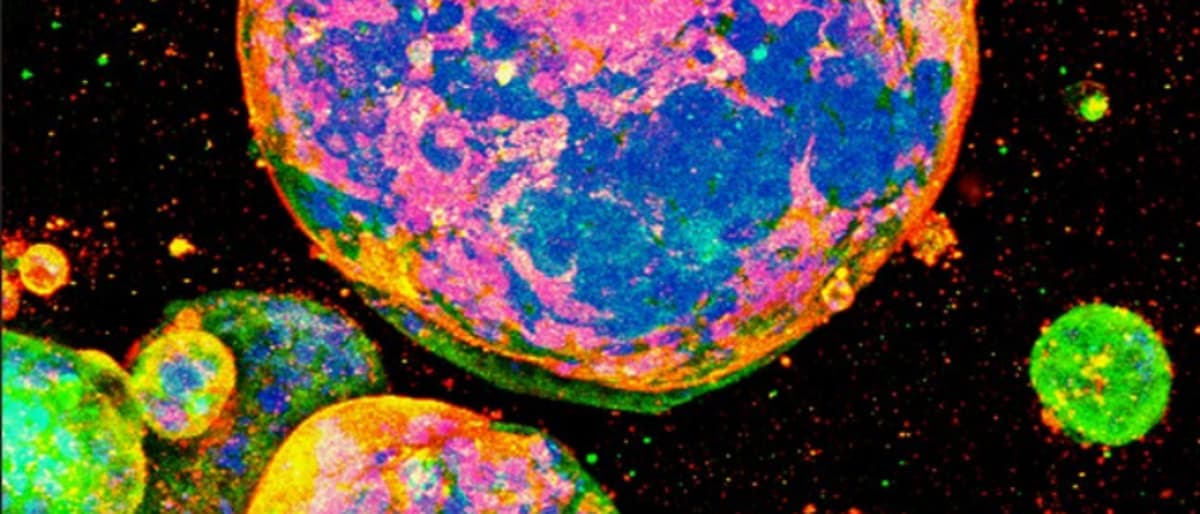
Fully Defined 3D Culture Substrate for Cancer Research
AMSBIO announced that its fully defined MatriMix 511 extracellular matrix enables patient‑derived colorectal cancer cells to form robust 3D organoids. In a Kyoto University study, the organoids preserved stage‑specific tumor biology and expressed metastatic markers, outperforming alternative matrices. MatriMix’s composition...

How Aging Reshapes the Mammalian Body: Atlas of 7 Million Cells Reveals All
Researchers at The Rockefeller University have created the most comprehensive single‑cell atlas of aging, profiling nearly 7 million cells from 21 mouse organs at 1, 5 and 21 months. The study identified over 1,800 cell subtypes, revealing that about a quarter...

New CellCelector CLD Takes You From Thousands of Candidates to the Top Clone, Faster
German biotech equipment maker Sartorius has launched the CellCelector CLD, an automated imaging and cell isolation platform that accelerates monoclonal cell line development. The system combines high‑speed scanning, advanced imaging and gentle clone retrieval to screen up to 885 nanowell...

The Biotech Bi-Weekly: Expanding the Reach of T-Cell Engagers in Solid Tumors, a Next-Generation Chemiluminescent Immunoassay Platform and AACR Exhibitor...
The biotech bi‑weekly highlights several product launches and site expansions unveiled at the AACR Annual Meeting. Deck Bio introduced a multi‑target T‑cell engager platform aimed at overcoming heterogeneity in solid‑tumor immunotherapy. Abcam released SimpleStep Ignite™, a chemiluminescent ELISA that delivers...

How Long-Read Sequencing Is Scaling Beyond the Specialist Lab
Advances in long‑read sequencing accuracy, throughput and cost are moving the technology from niche labs to large‑scale research. PacBio’s HiFi reads now deliver whole‑genome data at a few hundred dollars per sample, enabling thousands of genomes per instrument annually. The...

From Innovation to Adoption: Leadership Perspectives on What Makes Life Science Tools Succeed
Dale Gordon, chair of Abselion’s board, explains that life‑science tools only thrive when they solve a clear, high‑value customer problem, fit seamlessly into existing laboratory workflows, and deliver measurable economic and speed advantages. He stresses that operational robustness, data traceability,...

How to Make Cancer Therapies BETter: An Insight Into the Distinct Roles of BET Proteins
A new study from the Max Planck Institute reveals that BET proteins BRD2 and BRD4 play distinct, sequential roles in gene activation, explaining why broad‑spectrum BET inhibitors have shown limited clinical success. BRD4 drives the release of RNA polymerase II,...

Controlling Diabetes without Insulin Injections Thanks to New Implant
MIT researchers unveiled an implantable device that houses insulin‑producing islet cells, shielding them from immune attack and supplying oxygen via an on‑board generator. In mouse studies the encapsulated cells survived at least 90 days, continuously secreting enough insulin to maintain...

Snailing Colorectal Cancer Drug Delivery, Once and for All
University of Manchester researchers have secured roughly $1.27 million from UKRI to develop snail‑inspired soft‑robotic carriers for colorectal cancer drugs. The project aims to create centimeter‑scale, peptide‑based robots that travel through the gastrointestinal tract and release protein kinase inhibitors directly at...

Uncovering the Cellular Origins of Cancer and Neurodevelopmental Disease
Jasmine Plummer, founding director of St. Jude’s Center for Spatial Omics, outlines how her lab merges single‑cell transcriptomics, epigenomics and cutting‑edge imaging to map cellular origins of cancer and neurodevelopmental disease. The team created STAMP, a method that turns standard microscopes...

4D Atlas of Thousands of Genes Offers Unparalleled Insight Into Embryogenesis
A University of Basel team introduced weMERFISH, an imaging technique that captures activity of nearly 500 genes with subcellular resolution across an entire zebrafish embryo. Using this method they built a 4D atlas linking gene expression to cell migration, tissue...

Shining a Blue Light on an Overlooked Posttranslational Modification
Rice University chemist Zachary Ball unveiled a photochemical technique that selectively tags the often‑overlooked post‑translational modification pyroglutamate. By irradiating a protein mixture with 350‑400 nm blue light, a nickel‑based catalyst binds to the pyroglutamate ring and attaches a reporter tag. The method...

Accelerating Drug Discovery with “Paradigm Shifting” AI Model
A multi‑institution team led by Michigan State University unveiled GPS, a machine‑learning platform that predicts how a compound will alter gene expression from its chemical structure. Trained on millions of transcriptomic measurements across more than 70 cell lines, GPS screened...

The Biotech Bi-Weekly: Cell Barcoding, Compound Optimization and the Trillion Cell Atlas
The biotech sector is witnessing a wave of collaborations and product launches aimed at accelerating drug discovery and expanding genomic knowledge. Biotium introduced the ViaPlex™ 2‑Color Cell Barcoding Kit, enabling multiplex analysis of up to 15 cell populations in a...

Productivity Enhancing Bioreactor for Scalable Organoid Culture
AMSBIO introduced RPMotion, a spinning organoid bioreactor that accelerates and automates 3‑D cell culture for drug discovery, disease modeling and regenerative medicine. The system delivers up to five‑fold faster organoid expansion while cutting reagent costs by roughly 60% and labor...

Healing Wounded Skin without Scarring? Preclinical Research Shows Promise
Harvard researchers uncovered that post‑natal skin scarring is driven by fibroblast‑produced Cxcl12, which triggers excessive nerve growth that blocks full tissue regeneration. By deleting Cxcl12 or applying Botox to suppress local nerve signaling, mice healed wounds without scars, restoring all...

Integrating Computational and Experimental Techniques to Decipher Neuronal Heterogeneity
Andreas Pfenning’s lab at Carnegie Mellon is merging single‑nucleus RNA‑seq, ATAC‑seq and high‑resolution spatial transcriptomics to map neuronal and glial subtypes without the shape‑bias of traditional droplet methods. AI algorithms then design cell‑type‑specific enhancers, which are screened on the 10x...

How Anesthetics Destabilize the Brain: Scientists Stumble upon Common Mechanism
MIT researchers discovered that three widely used anesthetics—propofol, ketamine and dexmedetomidine—produce an identical destabilization of brain dynamics, measurable as a loss of dynamic stability. Using EEG‑based perturbation analysis, they showed that despite distinct molecular targets, each drug pushes the brain...
Development of an Ultra-Sensitive Human Cardiac Troponin I Sandwich ELISA
Exazym®'s BOLD amplification technology boosts the sensitivity of a human cardiac troponin I sandwich ELISA by 180‑fold, lowering the detection limit to 0.07 pg/mL. The webinar presented by Cavidi’s Peter Stenlund shows how the method integrates into standard ELISA workflows with...

World-First Living ‘Robots’ Develop Functional Nervous Systems
Researchers at the Wyss Institute have created the first living robots, called neurobots, that develop functional nervous systems from implanted neuronal precursor cells. The neurobots, built from frog embryonic cells, self‑organize neural networks that reshape their morphology, boost motility, and...

How GLP-1 Agonists Affect Gene Expression and Promote Pancreatic Health
Researchers at the Salk Institute identified the protein Med14 as the molecular bridge that links GLP‑1 agonist drugs to broad genomic responses that enhance pancreatic beta‑cell health. The team showed that phosphorylation of Med14 is essential for activating gene programs...

Abselion Appoints Dale Gordon as Chair
Abselion announced that Dale Gordon will serve as Chair of its Board of Directors, bringing over 30 years of life‑science executive experience. The appointment follows the recent launch of a U.S. subsidiary and aims to strengthen governance as the company...

The Journal at a Glance: Q1 2026 Highlights From Our Editor in Chief
BioTechniques’ Q1 2026 editorial roundup spotlights three impactful studies. An optimized Southern blot protocol from Merck enhances resolution of transgene insertions in high‑copy CHO cell lines, simplifying bioprocess validation. Researchers in Germany refined a DNA microarray to type 96 vancomycin‑resistant...

Plastic Waste Transformed Into Parkinson’s Drug in Bioengineering First
Researchers at the University of Edinburgh have engineered bacteria to transform PET plastic waste into levodopa, a primary treatment for Parkinson’s disease. By inserting a seven‑gene, four‑step biosynthetic pathway into Escherichia coli, the team converted both industrial PET feedstock and...

Europa Biosite Introduces Rapid RNA Production Technologies
Europa Biosite has formed a strategic distribution partnership with Quantoom Biosciences to bring Quantoom’s Ntensify® mano and micro RNA production technologies to European researchers. The deal also anticipates future distribution of Quantoom’s Ncapsulate® LNP formulation kits. By adding rapid, high‑quality...

Glioblastoma Hijacks Sugar Metabolism to Evade Immune Attack
Northwestern researchers discovered that microglia within glioblastoma uniquely express the fructose transporter GLUT5 and metabolize fructose to suppress immune activity. In mouse models, genetic deletion of GLUT5 halted tumor growth and provoked a strong CD8⁺ T‑cell response. The study, published...

First-of-Its-Kind Implant Could Transform Tissue Loss Treatment
Researchers at Technion’s Levenberg Laboratory have created a first‑of‑its‑kind three‑dimensional implant that merges muscle, fat, a hierarchical blood vessel network and, uniquely, a lymphatic system. The construct is printed with a custom extracellular‑matrix bio‑ink and matured in a flow‑controlled bioreactor....

Tracking Leishmaniasis with New PCR Test
A team at the Hebrew University of Jerusalem has unveiled a high‑resolution melting (HRM) PCR assay that simultaneously identifies sand‑fly species, detects Leishmania parasites, and determines the insect's blood‑meal source from a single specimen. The method was applied to nearly...

Seaweed Shield: Marine Molecules May Block Norovirus Infection
Researchers from Griffith University and biotech firm Marinova evaluated brown and green seaweed polysaccharides for their ability to block norovirus attachment. Fucoidan, a sulfated fiber from brown seaweed, demonstrated the strongest and most consistent inhibition of virus‑like particles binding to...