
How Does Marburg Virus Enter Cells so Efficiently?
University of Minnesota scientists pinpointed structural features of the Marburg virus entry protein that make it up to 300 times more efficient at infiltrating human cells than Ebola’s. By creating a tightly controlled assay, they showed the protein binds the shared human receptor in a unique orientation with higher affinity and undergoes shape changes that promote fusion. The team also identified a nanobody that can slip past the protein’s protective cap, bind the entry site, and block infection in laboratory models. These findings expose a clear therapeutic vulnerability in one of the deadliest filoviruses.

‘Magic Mushroom’ Derivative Could Heal without Hallucinations, Sparking Hope for New Therapies
Scientists at the University of Padova synthesized fluorinated psilocin derivatives, identifying compound 4e as a lead that retains serotonergic activity while markedly reducing hallucinogenic effects in mice. In vitro assays showed 4e is a selective partial agonist at 5‑HT2A and...

Europa Biosite Acquires Stratech Scientific, Expanding Their Product Offering and Strengthening UK Customer Reach
Europa Biosite, the pan‑European life‑science distributor, announced that its UK arm Cambridge Bioscience has acquired Stratech Scientific, a 43‑year‑old UK reagent distributor. The deal merges two complementary product portfolios, creating a larger catalogue and broader national coverage across academia, biotech...

How Does Cocaine Rewire the Brain?
Researchers at Michigan State University used mouse models and CRISPR technology to map how cocaine rewires the ventral hippocampus‑nucleus accumbens (vHPC‑NAc) circuit. They discovered that the transcription factor ΔFosB acts as a molecular switch, accumulating with repeated cocaine exposure and...

How Does the Body Detect Physical Force?
Scientists at Scripps Research used MINFLUX super‑resolution microscopy to reveal why the ion channel PIEZO2 is uniquely tuned for light touch. They discovered that PIEZO2 is intrinsically stiffer than its sibling PIEZO1 and is physically tethered to the actin cytoskeleton...

One-Time Pest Turned Eco-Warrior Degrades Polystyrene
Researchers from Harbin Institute of Technology and Stanford University found that the tropical cockroach Blaptica dubia can rapidly degrade polystyrene. In a 42‑day experiment, 50 roaches consumed about 6 mg of plastic per day, removing 54.9% of the material and achieving...

Researchers Take a Step Closer to Finding a Treatment for a Rare Genetic Neurodevelopmental Condition
Researchers at Texas Children’s Duncan Neurological Research Institute and Baylor College of Medicine demonstrated that skipping exon e2 of the MECP2 gene boosts MeCP2 protein production by 50‑60%, rescuing neuronal function in Rett syndrome mouse models and patient‑derived cells. The study...

First Evidence of Cancers’ Unique Nuclear Metabolic Fingerprints
Researchers identified more than 200 metabolic enzymes physically attached to chromatin, revealing a distinct "nuclear metabolic fingerprint" for each cell type and cancer. Approximately 7% of all chromatin‑bound proteins were metabolic, including unexpected oxidative‑phosphorylation components. The fingerprint varied by tumor...

Cancer-Eating Bacteria Engineered to Consume Tumors From the Inside Out
University of Waterloo researchers have engineered the anaerobic bacterium Clostridium sporogenes to consume solid tumors from the inside out. The spores infiltrate the oxygen‑free tumor core, proliferate and break down cancerous tissue. By inserting an oxygen‑resistant gene and a quorum‑sensing...

Next-Gen Malaria Vaccine Overcomes Major Hurdle
Researchers at WEHI and the Burnet Institute have mapped the human immune response to Plasmodium vivax, revealing how antibodies neutralize the parasite. The study, published in Immunity, shows that protective immunity depends on antibody function and simultaneous targeting of multiple...

Industry Leaders Announce World’s First Microphysiological Systems Industry Association
Eight leading European microphysiological systems companies have launched the Industry Alliance for Microphysiological Systems (IAMPS), the world’s first trade association dedicated to MPS technologies. IAMPS will represent organ‑on‑chip, organoid and related NAM developers, aiming to harmonize standards, promote data sharing,...

Cryo-EM Reveals New Aspects of CRISPR-Cas Biology
Researchers at Vilnius University used cryogenic electron microscopy to map eleven CRISPR‑Cas protein complexes, including three variants of a newly described Cas9‑Cas1‑Cas2‑Csn2 supercomplex. The study shows that Cas9, traditionally viewed only as a DNA‑cutting enzyme, also directs the selection and...
Transduction-Ready Viral Particles
AMSBIO (Oxford, UK) now provides ready‑to‑use lentiviral particles with titers exceeding 1×10⁷ IFU / mL, eliminating the need for in‑house virus production. The third‑generation self‑inactivating vectors are supplied in research‑grade and GMP‑grade formats, requiring only BSL‑2 containment. High‑titer, purified particles enable efficient...

Most Detailed Spatial Atlas yet for Mapping the Pancreatic Tumor Microenvironment
An international team led by the University of Birmingham, University Hospitals Birmingham NHS Foundation Trust and Bristol Myers Squibb has produced the most detailed spatial atlas of pancreatic ductal adenocarcinoma (PDAC) to date. Using spatial transcriptomics and spatial molecular imaging...
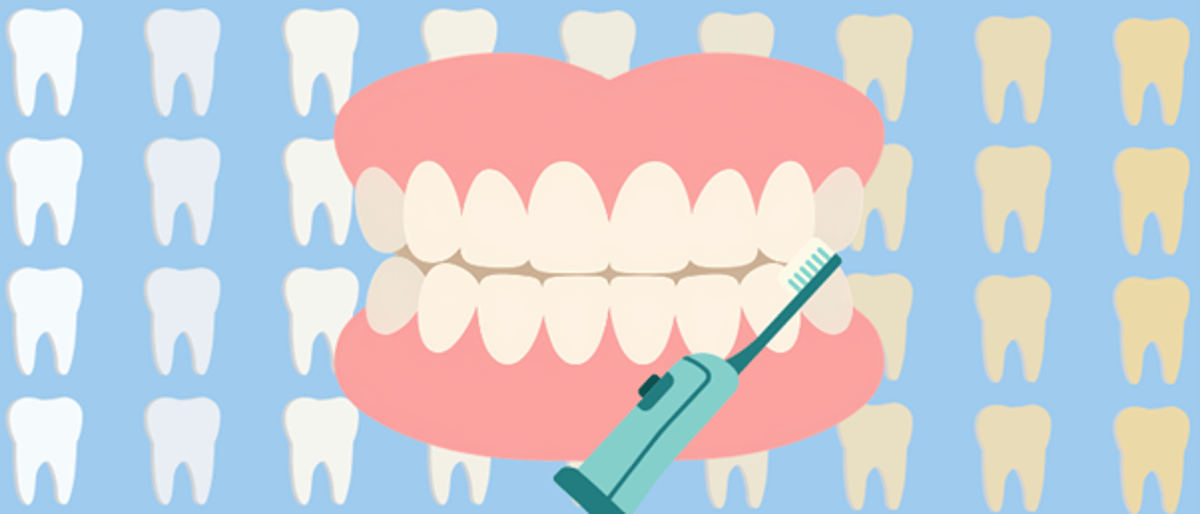
Tooth Whitening without Enamel Damage? Vibration-Activated Powder Protects Pearly Whites for Better Oral Health
Researchers at Shanghai Xuhui District Stomatological Hospital and the Chinese Academy of Sciences have engineered a vibration‑activated teeth‑whitening powder (BSCT) that works with electric toothbrushes. The ceramic powder uses piezoelectric catalysis to generate reactive oxygen species for stain removal while...

Camel Antimicrobials Could Get Us over the Hump of Antibiotic Resistance
Researchers at Sultan Qaboos University have isolated three antimicrobial peptides from dromedary camels, with CdPG-3 and CdCATH showing potent activity against methicillin‑resistant Staphylococcus aureus and multidrug‑resistant Escherichia coli. The peptides kill bacteria by disrupting their membranes while exhibiting low toxicity...

Collaboration at Its Core: Launching Spain’s First Fully Integrated Spatial Omics Platform
IRB Barcelona has unveiled Spain’s first fully integrated spatial omics platform, uniting spatial transcriptomics, proteomics, histopathology, advanced microscopy and bioinformatics under one workflow. The facility draws on five core units to deliver an end‑to‑end pipeline from sample preparation through computational...

Antioxidant Nanoparticles May Protect Male Fertility During Chemotherapy
A preclinical study published in Reproductive and Developmental Medicine found that combining melatonin with zinc oxide nanoparticles mitigates cyclophosphamide‑induced reproductive toxicity in male rats. The antioxidant duo restored testosterone and luteinizing hormone levels, lowered oxidative stress markers, and preserved spermatogenic...

UV Red Flag: Color-Changing ‘Living’ Material Warns of Harmful Radiation
Researchers at the Technical University of Munich have created a bio‑hybrid coating that visibly signals UV‑A exposure by turning from green to red. The sensor embeds dry Escherichia coli cells loaded with the photoconvertible protein mEosFP, which undergoes an irreversible...

How Does Cholera Colonize the Gut? Unmasking Virulence Activation with Cryo-EM
Cryogenic electron microscopy enabled researchers to solve five structures of Vibrio cholerae transcription activation complexes, revealing how the bacterium initiates virulence in the human gut. The study shows ToxR and TcpP transcription factors bind the RNA polymerase α‑C‑terminal domain via...

Global Genomics: Representative Research Is Key to Unlocking the Full Potential of Precision Medicine
Professor Segun Fatumo highlights the stark under‑representation of African genomes in global research, where over 86% of GWAS participants are of European ancestry despite Africa housing the greatest genetic diversity. He explains how this gap limits the accuracy of polygenic...

The Biotech Bi-Weekly: A 48-Channel SPR Platform, Robust RNA-Seq Libraries and Microgravitational Discoveries
Carterra unveiled Vega, the industry’s first 48‑channel high‑throughput SPR platform, delivering roughly 12‑fold higher screening capacity for small‑ and large‑molecule drug candidates. Covaris introduced the truCOVER® Total RNA Library Prep Kit, enabling robust RNA‑seq libraries from as little as 10 ng...

Free Access to Single-Cell Long-Read mRNA Sequencing Tech with New Grant
ArgenTag, now a PacBio Compatible Partner, has launched a grant that provides free access to its Single‑Cell RNA Library Kit for Long‑Read Sequencing. The kit uses a gravity‑based microfluidic chip to isolate individual cells, capture full‑length mRNA, and prepare barcoded...