
New York Transit Expands AI-Powered Technology Trials
New York’s major transit agencies have selected 18 startups for the latest Transit Tech Lab cycle, expanding AI‑driven pilots across the MTA, Port Authority, NJ Transit and related entities. The eight‑week proof‑of‑concepts focus on predictive maintenance, digital twins, inspection automation and back‑office workflow simplification. Since the Lab’s launch in 2018, over 1,000 firms have applied, 81 technologies have been tested and 22 solutions have been commercially scaled. Agencies stress human oversight and data security as they integrate these tools into aging infrastructure.

US Bill to Expand Shared Micromobility Funding
Representative Val Hoyle introduced the Shared Micromobility Investment Act, a federal bill that would explicitly make bike‑share and e‑scooter projects eligible for three major transportation grant programs—BUILD, the Surface Transportation Block Grant, and the Carbon Reduction program. The legislation aims...

Seattle Approves Copilot for City Staff
Seattle Mayor Katie Wilson announced that city staff will now have access to Microsoft Copilot Chat for everyday tasks, while unapproved generative‑AI tools are blocked under a new AI governance framework. A dedicated City AI Officer will oversee ethical adoption,...

Newcastle Wi-Fi Moves From Launch to Everyday City Service
Newcastle City Council has expanded its city‑wide public Wi‑Fi, launched in September 2025, to become a core municipal service. The network now covers council buildings, libraries, leisure centres and more than 1,000 local businesses, allowing seamless sign‑on across the city....

Cincinnati Sees Revenue Rise After Removing Parking Gates
Cincinnati’s Department of Public Services replaced traditional gated parking with a data‑driven, gateless model across several municipal lots. By keeping rates, hours and capacity constant, the city isolated the impact of the change and saw the pilot lot’s revenue more...

How Cities Are Using Data to Analyse the Impact of Mega-Events
Cities preparing for the 2026 FIFA World Cup are moving from traditional forecasts to real‑time payments data to quantify economic impact. Visa’s anonymized transaction feeds let officials see where visitors spend, how demand shifts across neighborhoods, and which sectors benefit...

Google Earth Adds Global Cycling Data Layer
Google Earth has introduced a new "cycling trip percentage" data layer that visualizes the share of bike trips within roughly 20‑square‑kilometre grid cells worldwide. The layer, built from aggregated Google Maps trend data for December 2025, is now publicly accessible through...

Most Cities See Safety Gains From Lower Speeds
A new Eurocities survey of 38 cities across 19 European nations finds that lowering speed limits yields substantial safety and livability gains. Seventy‑five percent of respondents reported fewer road deaths and injuries, while 91 percent noted improvements such as lower...

New System Gives Brighton Real-Time Control of Highways
Brighton & Hove City Council has rolled out a unified asset management platform that consolidates highways, street lighting, signage, rights‑of‑way and electric‑vehicle charging infrastructure. The system replaces a legacy, manual process with mobile tools that let inspectors and contractors capture...

Micromobility Faces Mounting Insurance Pressures
Insurance costs are becoming a major bottleneck for micromobility operators worldwide. Premiums have jumped from roughly five cents per ride in 2019 to about ten cents for large fleets and up to thirty cents for smaller players, eroding margins. Insurers...

How Bogota Is Using Shared Data to Link Housing, Mobility and Climate
Bogotá’s "Revitaliza tu Barrio" programme is merging housing, mobility and climate resilience into a single territorial strategy, leveraging a shared spatial data platform called IDECA. The initiative has already reached over one million people in 75 neighbourhoods, delivering 289,000 m² of...

Why Cities Are Entering a New Phase of Innovation Maturity
City leaders gathered in Dublin to acknowledge that urban innovation is moving beyond isolated pilots toward a mature, impact‑driven approach. The discussion highlighted three pillars—foundational data and governance layers, the shift from testing to scaling, and a culture that empowers...

Procurement Reform Underpins Stockholm Bus Rollout
Stockholm aims to raise its electric bus share from 20% to roughly 30% by the end of 2026 and target a fully electric fleet by 2035, building on a decade‑long renewable‑fuel foundation. The transition is underpinned by Sweden’s ten‑year public‑transport...
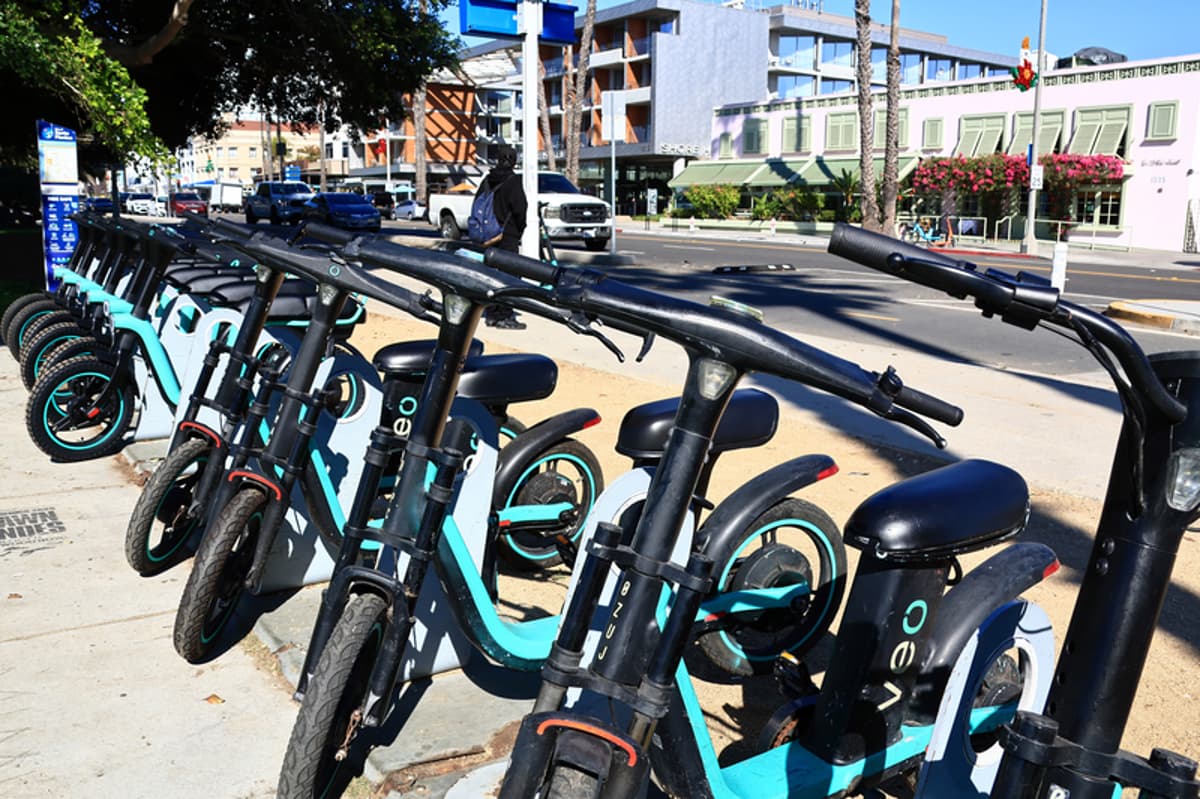
Micromobility Use Rises as Fuel Costs Reshape Short Trips
Rising gasoline prices are prompting U.S. urban commuters to substitute short car trips with shared micromobility options, according to a new Veo rider survey of over 2,000 respondents. Among participants who own or have access to a vehicle, many reported...

New York Unveils New In-House MTA App
The Metropolitan Transportation Authority launched a newly redesigned mobile app for subway and bus riders, built entirely by MTA staff. The in‑house platform emphasizes faster performance, more accurate real‑time arrival information, and a streamlined interface for low‑connectivity underground stations. New...