
Hands Off, Hard Hats On: Autonomous Construction Technology Takes Over
Autonomous construction equipment from Komatsu, Caterpillar and other OEMs dominated this year’s CONEXPO‑CON/AGG, showcasing AI‑driven excavators, haul trucks and loaders that can operate with minimal human oversight. Declining sensor costs, edge‑computing advances and a record $2.6 billion of venture capital in 2025 are accelerating the rollout of fully autonomous fleets on job sites. Manufacturers are also offering rapid up‑fit kits that convert existing machines, while industry leaders stress the technology’s potential to improve safety, productivity and address the chronic skilled‑labor shortage. Early adopters are expected to gain a decisive competitive edge as projects become faster, cheaper and less error‑prone.

Hidden Risks Behind Today’s Stadium Construction Boom
The NFL and other public entities are launching a $10 billion stadium construction surge, reviving a market that has been dormant for over a decade. Modern projects face a "stacked risk" environment where supply‑chain fragility, tight labor markets, stringent regulations, and...

The Skilled Labor Shortage Is Hiding Project Costs
The skilled‑labor shortage forces construction firms to run lean, exposing hidden productivity losses tied to fragmented information. Inefficient data flows cause rework, delayed decisions and costly audit efforts, eroding margins. Implementing a “single view of the truth” that links drawings,...

New Names and Faces: May 2026
In May 2026 the construction sector saw a wave of senior leadership changes. Coastal Construction Group installed founders’ sons Tom C. and Sean Murphy as co‑CEOs while Thomas P. Murphy Jr. stays on as chairman. Balfour Beatty promoted Dave Campbell...

Why 2026 Is a Year for Operational Discipline in Construction
The construction sector enters 2026 with growth plateaued and margins squeezed, turning operational discipline into a competitive advantage. Firms that tighten pricing, improve forecasting, and enforce rigorous job controls will better weather cost volatility and financing uncertainty. Private‑equity activity continues...

Construction Futures: May 2026 Economic Roundup
Construction confidence and backlog reached a ten‑month high in April, driven largely by large contractors, while hiring rose 2% year‑over‑year as data‑center projects fuel demand for specialty trades. Input prices, however, surged 7% YoY, outpacing the 4.8% rise of the...

Net-Zero Construction in the Classroom: The Nationwide Push for High-Performance Schools
U.S. school districts are accelerating net‑zero construction as policy mandates, rising utility costs, and community demand converge. Projects blend geothermal loops, solar power‑purchase agreements, and centralized monitoring to cut energy use while serving as real‑world learning labs. Training for facilities...

Contractor Backlog and Confidence Rise Again in April, Buoyed by Data Centers
The Associated Builders and Contractors (ABC) reported its Construction Backlog Indicator rose to 8.8 months in April, a modest 0.2‑month gain from March and a slight increase over April 2025. Backlog growth was concentrated among firms with annual revenues above...

Modular Construction Brings Ample Advantages—And Unique Risks
Modular construction is rapidly expanding, with the U.S. market projected to reach $25.4 billion by 2029, outpacing the broader construction sector by 1.3%. The method offers efficiencies such as reduced labor dependence, tighter quality control, and faster schedules, appealing amid skilled‑worker...

Trimble Launches New Survey at Annual Dimensions Conference
Trimble unveiled its first‑ever Dimensions survey at the 2025 Trimble Dimensions conference, revealing how construction technology is increasingly intertwined with a tightening labor market. The study shows that while more than 80% of contractors are optimistic about AI, only about...
New Law Prompts ABC Minnesota/North Dakota to Design New Telecommunications Safety Training Program
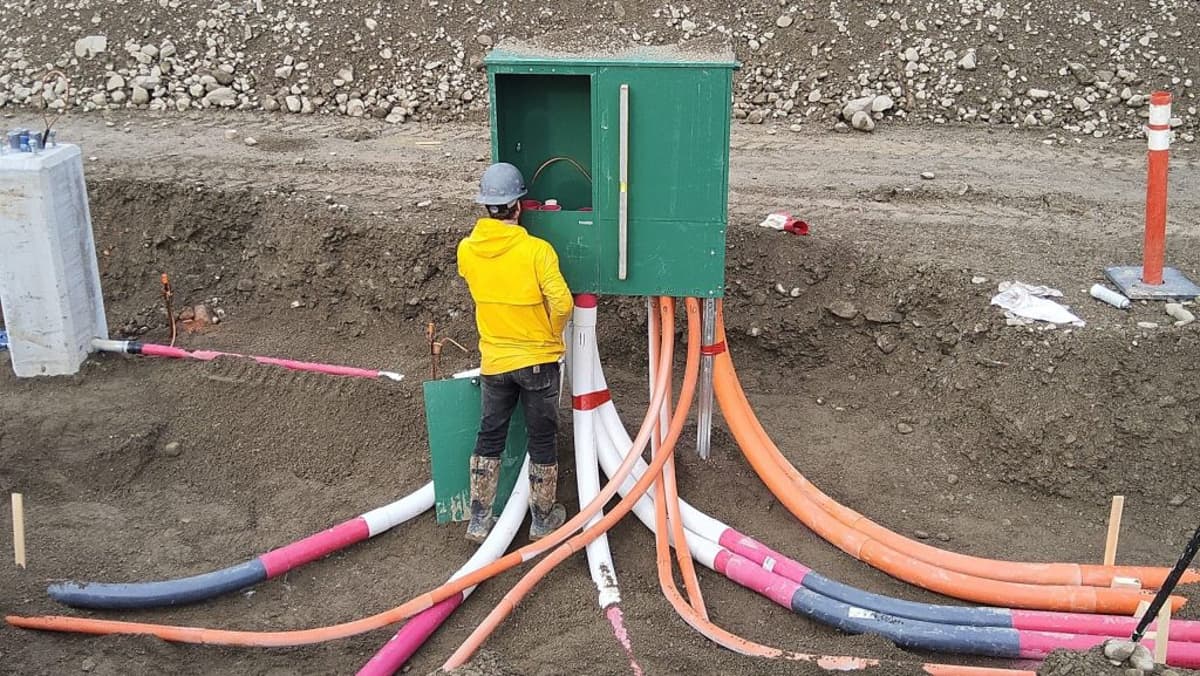
A new Minnesota law effective Jan. 1, 2026 requires underground telecom installers to complete a 40‑hour safety certification when working within ten feet of existing utilities or using directional drilling. ABC Minnesota/North Dakota, in partnership with NCCER and the Minnesota Cable...

Nonresidential Construction Spending Down Again in March
National nonresidential construction spending slipped 0.2% in March, reaching $1.244 trillion on a seasonally adjusted annualized basis. The decline affected 9 of 16 subcategories, with both public and private sectors posting identical month‑over‑month drops. Private‑sector spending is now more than 2%...

Construction Hiring Still Exceptionally Slow in March
The construction sector reported 224,000 job openings on March 31, according to ABC's analysis of the BLS JOLTS data. Openings increased by 23,000 from February but remain 54,000 below the same month last year, reflecting a persistently sluggish hiring environment....

The Newest Member of Your Facilities Team? Your Building.
Artificial intelligence is turning buildings into proactive members of facilities teams by interpreting sensor data in real time. Seventy‑five percent of facilities managers say AI will boost efficiency, and early pilots are already delivering measurable savings, such as Standard Chartered’s...

Which Construction Technology Investments Actually Move the Needle on Profitability?
Construction firms must separate profit‑driving technologies from hype to avoid wasted spend. Proven tools—Building Information Modeling, reality‑capture combined with machine learning, and centralized project‑management software—deliver measurable ROI by cutting rework, downtime, and administrative errors. Overhyped solutions such as the metaverse,...