
Limitations of Liability Provisions in Construction Contracts: A Means to Manage Risk and Limit Financial Exposure
Construction contractors are increasingly inserting limitation of liability (LOL) clauses into their contracts to cap financial exposure. The article outlines which risks—delay damages, defective work, third‑party injury, pollution, cyber, and intellectual‑property claims—can be limited, and stresses the need to carve out exclusions for liquidated damages and insurer obligations. It also advises on negotiating caps, recommending dollar amounts tied to insurance limits rather than ambiguous language. Properly drafted LOLs help balance owner demands with contractor risk management.

Five Ways to Integrate Mental Health Into Construction Safety Protocols
Construction firms have dramatically lowered physical injuries by embedding safety into systematic processes, yet mental health remains largely excluded. The article argues that mental‑health issues directly impair attention, judgment and risk tolerance, creating hidden safety hazards on job sites. It...

Safeguarding Your Privileged Construction Information With a Clawback Agreement
Construction contractors facing litigation risk waiving attorney‑client privilege when privileged documents are inadvertently disclosed during discovery. Federal Rule of Evidence 502(b) offers limited protection, but its vague standards make reliance risky. A court‑ordered clawback agreement can supersede FRE 502, defining...

Fabrication Shops Should Be Operating Like High-Performance Manufacturers
The construction sector is accelerating the move toward strategic prefabrication, especially within MEP contracting, as firms seek to tame project complexity, tighter timelines, and a chronic labor shortage. Large contractors have built modern fabrication facilities that mimic high‑performance manufacturing plants,...

DEWALT Unveils New Drilling Robot Designed for Data Centers
Stanley Black & Decker’s DEWALT division unveiled a drilling robot at World of Concrete that can autonomously bore holes for data‑center slabs with 99.97% accuracy. In pilot tests the robot drilled 100,000 holes, achieving a small‑hole cycle of 80 seconds...

Construction Futures: April 2026 Economic Roundup
In March 2026, construction materials prices surged 4.8% year‑over‑year, the steepest rise since January 2023, driven by higher energy costs and tariffs on iron and steel. The sector added 26,000 jobs that month, averaging 19,300 new positions per month in...

New Names and Faces: April 2026
April 2026 saw a wave of senior leadership changes across the U.S. construction sector. Facility Solutions Group promoted long‑time veteran Jason Zipprian to CEO, while Skanska USA Building transitioned its general counsel role to Stefani Bonato. Sims Crane & Equipment...

Communication Gaps Can Cost Construction Firms in the Data Center Boom
The data‑center construction boom is driving billions of dollars of new projects, but the sector’s tight schedules and zero‑tolerance for error make communication a make‑or‑break factor. Misrouted ducts, outdated drawings, or delayed approvals can trigger costly rework, liquidated damages, and...

2026 Top Business Risks for Construction and Engineering Companies
The 2026 Allianz Risk Barometer, based on 3,338 risk professionals, places natural catastrophes as the leading threat for construction and engineering firms, with insured losses projected at $107 billion. Climate change climbs to the second spot, highlighting how extreme weather and...

New Survey Reveals Three Trends Reshaping MEP Contracting
Stratus surveyed 144 MEP executives for its 2025 State of MEP report, uncovering three pivotal trends. Large multi‑trade firms (>$250 M revenue or 500+ staff) posted median revenue growth of 14.5%, far outpacing the 4.5% industry average, thanks to advanced BIM,...

Self-Healing Concrete Redefines Durability and Sustainability in Modern Construction
Self‑healing concrete, highlighted by Drexel University’s BioFiber, uses bacteria‑laden hydrogel fibers to seal cracks autonomously. The technology precipitates calcium carbonate within hours, boosting tensile strength and extending structural lifespans. By reducing routine repairs, it promises lower maintenance budgets and a...

Number of Women in the Construction Workforce Is on the Rise
The construction sector’s chronic labor shortage is coinciding with a decade‑long surge in female participation. U.S. Bureau of Labor Statistics data show the number of women in construction rose from 939,000 in 2016 to 1.36 million in 2025, a 45% increase,...

Fleet Safety as a Business Strategy for Construction Companies
Construction firms face high roadway risk, with vehicle crashes ranking second among causes of worker deaths—75 fatalities in 2020. Multimillion‑dollar jury verdicts and soaring insurance costs make fleet safety a financial imperative. Implementing a written safety policy, driver screening, telematics,...

The Role of Ergonomics in Preventing Soft Tissue Injuries for Construction Pros Behind the Desk
Construction firms are extending safety protocols from the jobsite to the office, recognizing that estimators, designers and managers face a growing risk of soft‑tissue injuries caused by poor ergonomics. The article outlines how repetitive mouse clicks, static postures and inadequate...

How to Guard Your Construction Workforce Against Falls
Construction falls remain the leading cause of on‑site deaths, accounting for roughly 40% of fatalities in 2024, according to the U.S. Department of Labor. To curb these losses, firms are integrating advanced technologies—drones for remote inspections, wearables that track worker...

How Construction’s Risks, Opportunities and Insurance Options Shape up for 2026
In 2026 construction firms grapple with volatile material costs—up 34% since 2020—and a chronic labor shortage that now affects roughly one‑third of companies, while rising rates for commercial auto and excess/umbrella liability add margin pressure. Stabilizing interest rates, a surge...

Oil Prices Contribute to March Surge in Construction Materials Prices
Construction input prices rose 2.2% in March, pushing the year‑over‑year index 4.8% higher—the steepest annual gain since January 2023. Non‑residential inputs climbed 2.3% month‑over‑month and are 5.4% above last year. The surge is tied to a 20.2% jump in crude...

Full Project Transparency: Why 360° Documentation Is Becoming Essential on Modern Construction Sites
Construction disputes in North America now average over $60 million and take more than a year to settle, while teams waste up to 13% of their time on rework. Traditional photo logs are fragmented, lack context, and are hard to retrieve,...

‘We Need to Lower Interest Rates’: Anirban Basu on 2026 Q1 Construction Economy
Chief economist Anirban Basu of Associated Builders and Contractors delivered the Q1 2026 construction outlook, noting a mixed picture. Supply‑chain disruptions have intensified, yet backlog rose five percentage points and profit margins are projected to improve modestly. A persistent labor...

Balancing the Right to Repair With Evidence Preservation in Construction Defect Litigation
Construction defect disputes force owners to juggle immediate safety actions with the legal duty to preserve evidence. When a defect threatens occupants, owners must secure expert inspections, document conditions, and notify potentially responsible parties. Simultaneously, they must establish a transparent...

New Survey Reveals Overwhelmingly Optimistic Results on the Use of AI in Construction
A CMiC‑Dodge survey of more than 6,000 construction firms found that 87% of contractors believe artificial intelligence will have a meaningful impact on the industry. Respondents expect AI to cut time on repetitive tasks (85%), improve decision‑making (over 70%) and...

Performance Appraisals & Phrases For Dummies
Ken Lloyd’s new book, “Performance Appraisals & Phrases For Dummies,” delivers a hands‑on guide for managers seeking modern appraisal techniques. It highlights continuous feedback, collaborative goal‑setting, and frequent check‑ins as core practices. The volume includes more than 3,300 ready‑to‑use phrases...

Selective Growth: FMI’s 2026 North American Engineering & Construction Outlook
FMI projects North American construction spending to inch up 1% in 2026, reaching roughly $2.2 trillion after a modest dip in 2025. Growth will be uneven, with public‑infrastructure and government‑backed projects providing the bulk of the upside while private‑sector segments such...

Building the Future: Construction at the Center of Technological Innovation at CES 2026
CES 2026 placed construction technology front‑and‑center, highlighting autonomous equipment, AI assistants, and electrified fleets. Caterpillar announced five Level‑4 autonomous vehicles and a voice‑controlled AI assistant for field operations. Startups showcased AI‑driven reporting, underground detection, and spatial‑computing wearables, while major OEMs...

Steel Cooling: Steel Costs Steadily Decline After Pandemic Price Shock
Steel prices have continued a steady decline, with the national average for structural steel falling to roughly $2,344 per ton in January 2026. That represents a 5.38% drop from the previous quarter and a 7.18% decrease year‑over‑year, extending a correction...

Construction Employment Rebounds by 26,000 in March
The U.S. construction sector added 26,000 jobs in March, lifting year‑over‑year employment by 57,000 positions, a 0.7% increase. Nonresidential construction drove the bulk of the gain, contributing 12,200 jobs across building, specialty trade, and heavy civil categories. The industry’s unemployment...

Power, People, Parts: Supply and Demand on Data Center Jobsites
Data center construction is hitting a perfect storm of delays, with more than half of 2025 projects slipping three months or longer. The primary culprits are power availability, skilled‑labor shortages, and procurement bottlenecks for critical components. Developers are moving to...

Fatalities Edge Down: New Data Reveals a Promising Decline
Construction fatalities in the United States slipped to just over 1,000 in 2024, marking a modest decline from the previous year but remaining one of the highest industry totals. Falls continued to account for roughly one‑third of deaths, while transportation...

Five Lessons From Launching a New Construction Office Location Across State Lines
Launching a construction office in a new state forces leaders to earn trust locally, not rely on headquarters reputation. The first weeks demand clear schedules, rapid follow‑through, and personal touches that signal reliability to clients and partners. Distance amplifies the...

‘Start Yesterday’: Time Sensitive Succession Planning in Construction
Construction firms are urged to begin succession planning up to ten years before a transition, as delays can erode value and options. Experts stress that audited financial statements spanning five to ten years, a strong balance sheet, and consistent cash...
New Names and Faces: March 2026
Construction firms announced a wave of senior appointments in March 2026, highlighting regional expansion and technology focus. Wells promoted Nate Roscovius to director of project management for its Midwest operations, while Swinerton elevated Jay Quackenbush to vice‑president of its Northeast...

Prove It: What Surety Underwriters Seek in Contractors
Surety underwriters are tightening criteria as U.S. contractors chase larger megaprojects and face rising labor and material costs. They focus on three pillars—capital, capacity, and character—requiring strong profitability, liquid balance sheets, and disciplined growth. Digital tools are helping evaluate smaller...

Labor Shortages in Construction: Managing Legal and Operational Risks
Construction firms are grappling with a workforce deficit that topped half a million workers in 2024, intensifying operational pressures and legal exposure. Overtime and wage‑hour violations rose 12% last year, with penalties exceeding $10,000 per infraction, while misclassification and immigration...

Powering Up: How Sentry Equipment Has Lasted 100 Years in Manufacturing and What It Has Planned for 100 More
Sentry Equipment, a century‑old, employee‑owned manufacturer, celebrated 40 years as an ESOP while expanding beyond traditional power‑generation equipment. The company has diversified into water and wastewater infrastructure, acquiring Rebuild‑it Services to rebuild aging treatment assets. Internally, Sentry invested in fiber‑optic...

The Role of Ergonomics in Preventing Soft Tissue Injuries Caused by Heavy Equipment Handling
Construction firms face rising soft‑tissue injuries from heavy‑equipment handling, driven by whole‑body vibration, awkward postures, and repetitive motions. Integrating ergonomic principles—adjustable seats, low‑force controls, panoramic visibility, and climate‑controlled cabs—can dramatically lower injury risk. The article outlines specific design features that...

Frontline Leadership Under Pressure: Strengthening Supervisor Support to Improve Safety and Performance
A national survey of over 600 U.S. construction supervisors reveals mounting pressure to meet tight schedules while maintaining safety, with 45% admitting they prioritize deadlines over safety. Many supervisors lack clear protocols, and 67% have made safety decisions without company...

ABC Supports Trump Administration’s Critical Improvements to Apprenticeship Programs
The U.S. Department of Labor’s Employment and Training Administration issued four new guidance documents aimed at improving registered apprenticeship programs (RAPs). Associated Builders and Contractors (ABC) welcomed the changes, citing greater flexibility for sponsors, reduced regulatory burdens, and alignment with...

Old Military Parachutes Repurposed in Wyoming Monastery Project
repurposedMATERIALS operates a nationwide marketplace that diverts surplus industrial assets—including ballistic glass, expired gas pipe and retired military parachutes—into new, functional applications. The company’s model emphasizes repurposing items intact, avoiding energy‑intensive recycling and cutting disposal costs. Recent case studies show...

More Construction Companies Are Building a Technology-Focused C-Suite
Construction firms are adding tech-focused C‑suite roles as AI, robotics become mainstream. Barge Design Solutions appointed Laine Hiera as its first Chief Design Solutions Officer, a role designed to embed digital capability across operations. Hiera describes the position as evolving...

Navigating the Challenges of a 2026 Surety Market: The Importance of Financial Management for Contractors
Contractors face a tightening 2026 surety market as underwriting standards grow stricter, prompting a renewed focus on disciplined financial management. The article outlines how preserving project profitability, rigorous cash‑flow forecasting, prudent debt mitigation, and retained‑earnings targets can safeguard bonding capacity....

Construction Loses 11,000 Jobs in February
The construction sector shed 11,000 jobs in February, according to ABC’s analysis of BLS data. Despite the monthly decline, employment is up 42,000 jobs year‑over‑year, a modest 0.5% gain. Nonresidential construction fell 3,800 positions, driven by a 6,500‑job loss in...
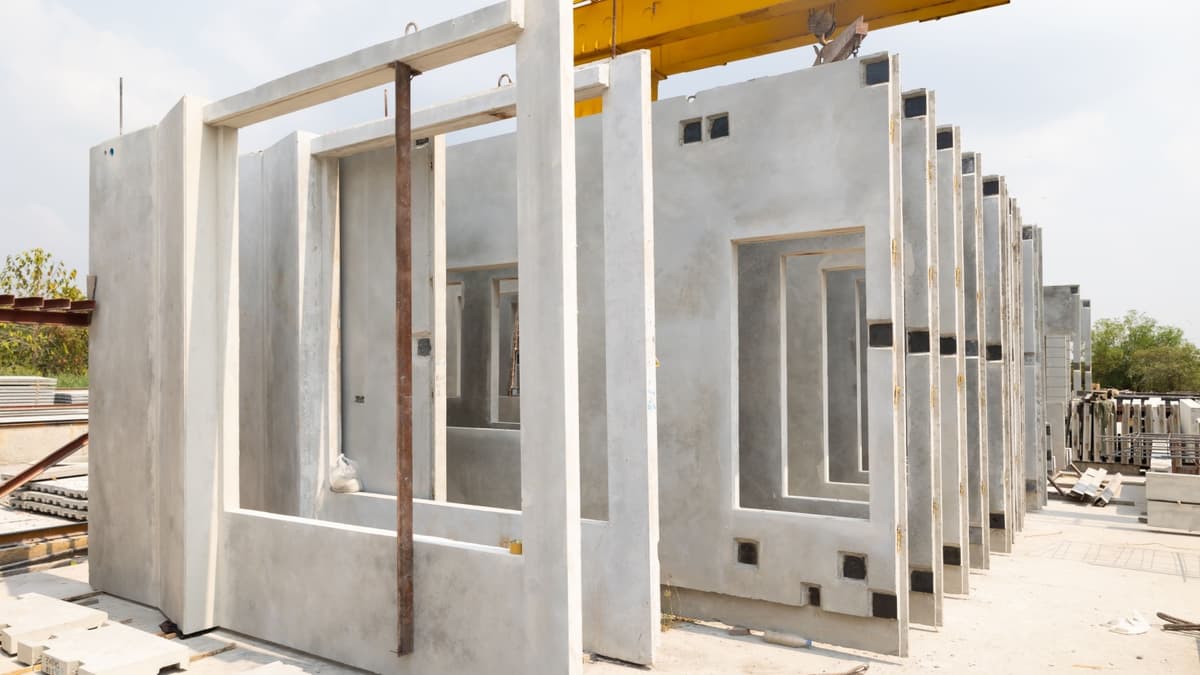
Modular Construction’s Big Boom: New Risks Outpacing Standard Contracts in Industrial Projects
Modular construction is set to surpass $200 billion globally by 2030, reshaping industrial building practices with faster schedules and reduced waste. While residential projects have already embraced the method, large‑scale industrial applications such as airport terminals are exposing new liability, logistics,...