
How UK Data Centers Can Navigate Privacy and Cybersecurity Pressures
UK data centres are now classified as essential services under the updated NIS framework and fall within the scope of the Cyber Resilience Bill, which introduces turnover‑based fines and mandatory 24‑hour breach reporting. Operators must satisfy overlapping obligations under UK GDPR, the Data Protection Act, PECR and adopt NCSC‑backed Cyber Essentials controls. A new “data‑protection test” and the UK‑US “Data Bridge” scheme shape cross‑border transfers, while rigorous documentation and contractual clauses become vital to avoid regulatory and litigation risk.

Hyperscale Growth Shifts Inland as AI Drives Power Demand
AI‑driven workloads are reshaping U.S. hyperscale data‑center growth, moving new builds inland where power is abundant. Texas and the Midwest, which already host about a third of existing capacity, are projected to capture over half of the upcoming development pipeline....

AMD: Memory, Not Compute, Is the Next Bottleneck in AI Data Centers
AMD’s latest blog highlights memory—not compute—as the emerging bottleneck in AI data centers, emphasizing that data movement now drives performance and power limits. The company promotes LPDDR5X, a low‑voltage mobile memory now adapted for servers, claiming superior performance‑per‑watt compared with...

Smartphones as Micro Data Centers: A Creative Edge Solution?
Researchers propose linking ordinary smartphones into a pooled cluster that functions as a miniature data center, aggregating CPU, memory and storage. The concept targets edge workloads, especially AI inference, by leveraging the locational flexibility and low cost of repurposed devices....

The Rise of Data Centers Brings Environmental Permitting Challenges and Litigation Risk
Data centers are booming as generative AI drives an estimated $7 trillion in global capital spending by 2030. The Trump administration’s Executive Order 14318 and related federal permits aim to accelerate construction, but state and local governments are pushing back over...

AI’s Next Bottleneck: Capital Crunch and Bridge Loans
AI infrastructure builders are turning to short‑term bridge loans as traditional financing stalls, with Forum Markets pledging up to $50 million for Nvidia GPU purchases. The loans, lasting 60‑120 days, aim for mid‑teen annualized returns and include a pre‑arranged takeout from...

Chevron-Microsoft Talks Hint at the Future of AI Power Infrastructure
Chevron, Microsoft and investment firm Engine No. 1 have entered an exclusivity agreement to explore a multibillion‑dollar natural‑gas power plant in West Texas. The proposed facility, estimated at $7 billion, would deliver roughly 2,500 MW—enough to power a large AI‑focused data‑center campus. While...

TikTok Doubles Down on Finland With Second €1B Data Center
TikTok announced a €1 billion ($1.16 billion) investment to build a new data center in Lahti, Finland, marking its second major facility in the country after a similar spend in Kouvola. The Lahti site will start with 50 MW of power capacity and...

Anthropic Secures Multi-Gigawatt TPU Deal With Google, Broadcom
Anthropic has signed a multi‑gigawatt agreement with Google and Broadcom to secure next‑generation TPU capacity, with roughly 3.5 GW slated for deployment beginning in 2027. The deal expands Anthropic’s previously announced $50 billion domestic compute investment and reflects a shift toward utility‑style...

Intel, SambaNova Bet on Split Inference as Agentic AI Strains GPUs
Intel and SambaNova announced a heterogeneous inference architecture designed for agentic AI workloads, dividing tasks among GPUs for prompt prefill, SambaNova’s reconfigurable dataflow units (RDUs) for token decode, and Intel Xeon 6 CPUs for orchestration. The three‑tier model aims to alleviate...

Intel Joins Musk’s Terafab as AI Compute Race Expands to Space
Intel announced its participation in Elon Musk’s Terafab initiative, a joint effort with Tesla, SpaceX and xAI to build massive AI chip capacity. The project targets producing one terawatt of compute per year, leveraging Intel’s design, fabrication and advanced packaging...

Nutanix Targets Neocloud AI Economics With Platform Push
Nutanix announced a major upgrade to its Nutanix Cloud Platform, branding it for the "agentic AI era" where autonomous workloads generate unpredictable demand. The rollout adds bare‑metal Kubernetes (NKP Metal), multi‑tenant AI tooling via SP Central, and deeper integrations with NetApp, Cisco...

Cold-Climate Data Centers: The Next Hot Thing in Data Center Growth
Cold‑climate data centers exploit naturally low ambient temperatures to provide free cooling, dramatically lowering power and water consumption. Operators such as atNorth, Facebook, and Google have already deployed facilities in Iceland, Sweden, and Finland, demonstrating cost and sustainability gains. The...

IBM, Arm Target Enterprise AI With Mixed-Architecture Approach
IBM and Arm announced a partnership to run Arm‑native applications on IBM Z mainframes and LinuxOne servers through a shared software layer and virtualization. The solution lets enterprises deploy AI workloads across both architectures without rewriting code, preserving the uptime,...

Neocloud Storm Gathers as Data Center Deals Stall Over Credit Risk
Neocloud providers are finding that aggressive pricing, long‑term terms and prepaid fees no longer secure colocation capacity. Providers now demand investment‑grade credit and solid utilization visibility, turning lease underwriting into a project‑finance exercise. Even premium rates of $155‑$160 per kW...

Is Multi-Line Insurance a Better Fit for Data Centers?
Data centers confront property, cyber and liability risks, prompting insurers to offer multi‑line bundles that combine these exposures into a single contract. Recent launches by Aon, FM Global and ATA illustrate growing capacity for such packages. Multi‑line policies can lower...

Knocking on Quantum’s Door: QuiX Claims Photonic Error Reduction Breakthrough
QuiX Quantum announced the first below‑threshold error mitigation on a photonic quantum computer, using a 20‑mode processor and a photon‑distillation gate. The technique achieved a 2.2× reduction in photon‑indistinguishability error and a net 1.2× overall system‑error decrease. Collaborators include NASA’s...

New Data Center Developments: April 2026
Data center capital spending is surging worldwide, with the six largest U.S. hyperscalers projected to invest about $700 billion in 2026, a six‑fold increase from 2022. Major projects include Meta’s $10 billion, 1 GW El Paso facility slated for 2028, a 900 MW AI center...

Gridlocked: How Power Constraints Are Shaping the Future of Data Centers
Power availability, not land or capital, is now the primary constraint on U.S. data‑center expansion. The Department of Energy estimates that half of the 100 GW of new peak capacity needed by 2030 will be driven by data centers, while developers...

Leadership Updates: Key Data Center & Cloud Appointments (Q2 2026)
The data center and cloud sectors are undergoing a wave of senior‑level appointments as operators scale to meet surging hyperscale, AI and sustainability demands. Stream Data Centers promoted Michael Lahoud to CEO, while Prime Data hired power veteran John Bates...

North American Data Center Growth Shifts Toward Execution, Not Expansion
The North American data center market is moving from pure scale‑driven expansion to a phase where execution risk and delivery pathways dominate. Metro Atlanta has emerged as the fastest‑growing U.S. market, while Virginia’s once‑dominant hub is fragmenting under regulatory and...

Inside the Push to Bring DC Power to Data Centers
The Current/OS Foundation and the Open Direct Current Alliance have signed an MoU to coordinate technical work on DC power distribution for data centers. Their collaboration aims to create unified standards, leveraging IEC circuit‑breaker rules and upcoming NFPA code updates,...

Is Microfluidics Ready to Cool the Next Generation of Data Centers?
Data centers face localized hot spots that conventional air cooling cannot efficiently address, prompting interest in microfluidic cooling that routes liquid through microscopic channels etched into silicon. Demonstrations show temperature reductions of up to 80% compared with air, promising higher...

Rebellions Raises $400M to Scale AI Inference, Targets US Expansion
South‑Korea‑based AI hardware startup Rebellions announced a $400 million pre‑IPO round, bringing its total funding to $850 million and valuing the company at roughly $2.34 billion. The financing underlines a market pivot from model training to AI inference, where power efficiency and cost...

Veritone Leans Into Oracle Cloud to Scale AI Data Pipelines
Veritone announced a multi‑year agreement to migrate its core AI workloads, including aiWARE, Data Refinery, and Data Marketplace, to Oracle Cloud Infrastructure. The move aims to boost performance, security, and global scalability as the company tackles massive unstructured data volumes....

Europe’s Digital Networks Act: A Foundation for the AI-Driven Economy
The European Commission introduced the Digital Networks Act (DNA) in January 2026 to replace the 2018 Electronic Communications Code and modernize EU telecom rules. The legislation targets accelerated deployment of 5G/6G, fiber, and secure, resilient infrastructure to meet soaring AI‑driven...

Equinix Targets Talent Gap as AI Infrastructure Demand Surges
Equinix announced a global expansion of its workforce‑development initiatives to address the growing talent shortage in data‑center operations as AI demand accelerates. The company is scaling its Pathways to Tech program, launching a Data Center Technician Training Coalition in Brazil,...

Vertiv Targets AI Cooling Bottleneck with ThermoKey Deal
Vertiv announced it will acquire Italy‑based heat‑exchanger specialist ThermoKey, extending its reach across the entire thermal chain of AI‑intensive data centers. The deal targets the emerging bottleneck of facility‑level heat rejection as power densities rise, shifting focus from chip‑level cooling...

Australia Puts AI Data Centers on Notice With New Approval Rules
Australia has introduced a national framework that ties AI data‑center approvals to renewable‑energy investment, grid upgrades, water stewardship and local economic impact. The policy shifts from a market‑driven, speed‑focused model to one where compliance with national priorities determines access to...

How Stadium Data Centers Power Fans, Operations, and Broadcast
Stadiums hosting the 2026 FIFA World Cup are deploying dual data‑center architectures—one for everyday IT services and another for high‑bandwidth media production. Cisco’s IP Fabric for Media and HPE’s Mist AI platform enable ultra‑low‑latency 100 Gbps video streams and AI‑driven network...

Super Micro Indictment Highlights AI Infrastructure Supply Chain Risks
A federal indictment alleges Super Micro executives facilitated moving Nvidia AI chips to China, prompting co‑founder Yih‑Shyan Liaw's resignation. The case highlights the clash between soaring AI hardware demand, tightening export controls, and supply‑chain integrity. Analysts warn that reliance on...

Nokia Sets Early Wi-Fi 9 Vision Around AI, Real-Time Connectivity Demands
Nokia has announced an early vision for Wi‑Fi 9 that shifts the focus from peak‑throughput to deterministic, low‑latency performance required by AI‑driven and immersive applications. The company targets sub‑10 ms bounded latency, multi‑gigabit delivery under load, and energy‑per‑bit efficiency, positioning Wi‑Fi 9 as...

A Buyer’s Guide to Data Center Colocation Space
The guide breaks down colocation fundamentals, from renting rack space and power to the responsibilities of hardware setup and management. It explains pricing models—monthly, pay‑as‑you‑go, or long‑term contracts—and how space is measured in rack units, with half‑ or full‑rack options...

Ampere Expands European Cloud Footprint Amid Sovereign Cloud Demand
Ampere Computing is rolling out its Arm‑based AmpereOne and AmpereOne M processors across Europe, adding new cloud instances on hyperscale provider Oracle and regional players such as Scaleway, Glesys, CloudSigma, C41.ch and Hetzner. The expansion targets AI inference workloads, power‑limited environments...

Germany’s Data Center Market Expands Amid Power, Regulatory Pressures
Germany’s data‑center market is entering a rapid expansion phase as AI, 5G and cloud workloads drive demand across the country. Frankfurt remains the dominant hub with about 745 MW of live IT load and 542 MW under construction, while Berlin is emerging...

Hyperscaler Capex Snowballs Toward $700B as Firms Stage AI Builds
Moody’s forecasts that the six largest U.S. hyperscalers will spend about $700 billion on capital expenditures in 2026, roughly six times the 2022 level. The spending surge is driven by exploding demand for AI compute capacity to train models and support...

Meta, Nebius Sign $27B Deal to Power Nvidia Vera Rubin Deployments
Meta and Nebius Group have inked a five‑year infrastructure supply agreement valued at up to $27 billion. Nebius will deliver roughly $12 billion of dedicated AI compute built on Nvidia’s upcoming Vera Rubin platform, with new clusters slated for early 2027. Meta...

Preparing Enterprise Data Centers for AI Adoption
A 2025 McKinsey forecast puts AI‑related IT infrastructure spending at nearly $7 trillion through 2030, with $3 trillion earmarked for data‑center capacity. Enterprises must juggle this surge with traditional workloads, requiring distinct strategies for power‑intensive AI training and latency‑critical AI inference. Training...

CoreWeave’s Flexible AI Cloud Pricing Model Signals Strategic Shift
CoreWeave unveiled a flexible AI‑cloud pricing suite that adds “Flex Reservations” and “Spot” instances to its existing reserved and on‑demand options. The new tiers let customers pay a reduced holding fee for guaranteed capacity ceilings and use‑based rates only when...

Building the Foundations of AI Cities: Lessons in Infrastructure, Energy, and Efficiency
AI’s exponential compute needs are outpacing traditional data‑center infrastructure, especially in legacy hubs like Northern Virginia. Operators are now targeting locations where clean power, talent, and renewable resources converge, birthing “AI cities” that embed digital infrastructure into urban planning. Rio...
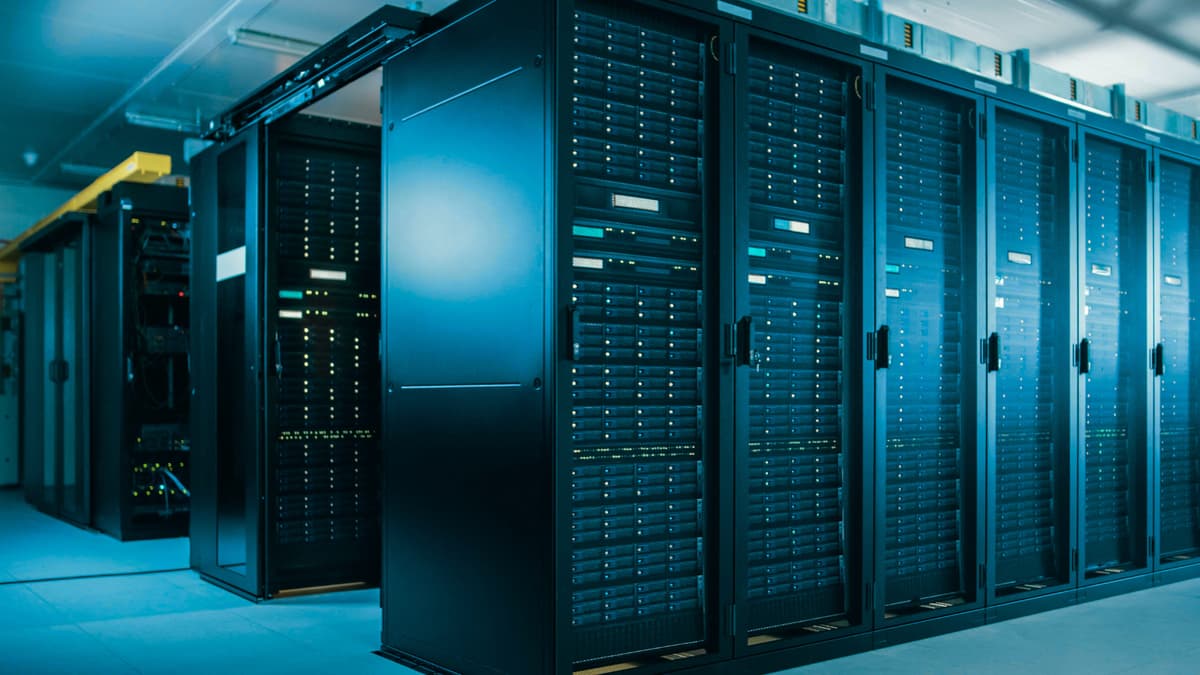
RDHx: A Simple, Affordable Path to Lower Data Center Energy Use
Rear‑door heat exchangers (RDHx) replace traditional rack doors with liquid‑cooled coils, capturing server exhaust at the source. By moving heat to a closed‑loop liquid circuit, RDHx reduces reliance on room‑level mechanical cooling and can enable higher supply‑air temperatures. The technology...
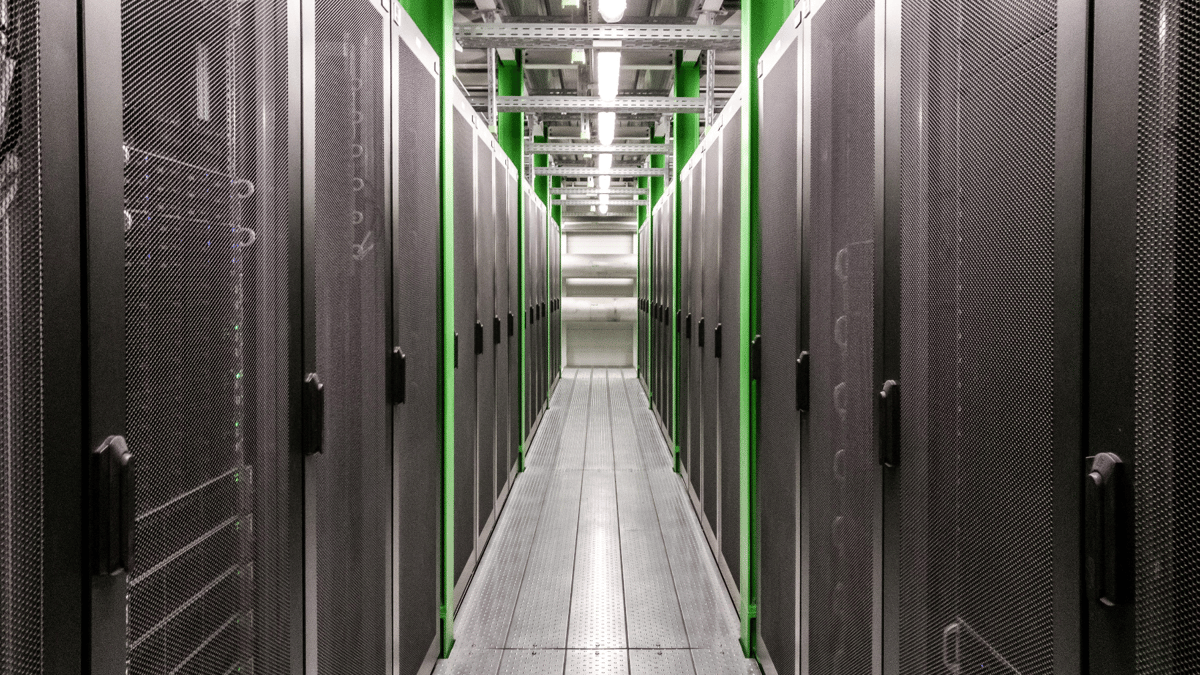
How Data Centers Rewrite the Playbook for Building Protection
Data center construction is shifting toward vertical, multi‑story facilities, driving stricter fire‑protection, corrosion control, and flooring requirements. Builders are increasingly using modular, factory‑applied protective coatings to ensure consistent performance and accelerate schedules, especially in rural sites with harsh environmental exposure....

AI ‘Virtual Residents’ Offer Early Read on Data Center Sentiment
University of California, Riverside researchers deployed large‑language‑model agents as “virtual residents” to capture community sentiment on data‑center proposals early in the planning cycle. The AI agents consistently highlighted water consumption, utility costs and electricity demand as primary concerns, while identifying...

Retrofits Vs. Rebuilds: Approaches to Adapting Legacy Data Centers for AI
The surge in AI workloads is prompting data‑center operators to consider retrofitting legacy facilities rather than constructing purpose‑built AI campuses. Retrofitting can accelerate deployment, lower capital outlay, and improve sustainability, but it hinges on upgrading power delivery, cooling capacity, rack...
Retrofits Vs. Rebuilds: Approaches to Adapting Legacy Data Centers for AI
The AI boom is driving demand for massive compute capacity, prompting operators to consider both new purpose‑built AI data centers and upgrades to existing facilities. Retrofitting legacy data centers can be faster, cheaper, and more sustainable, but only if power,...
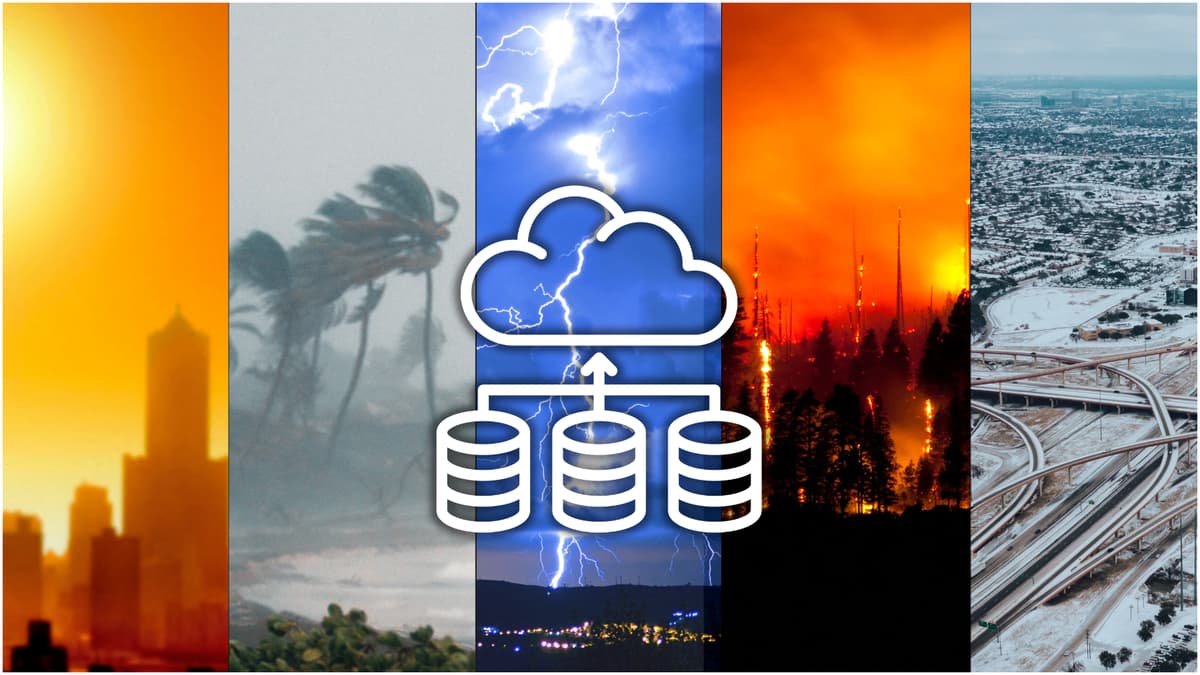
How Data Centers Are Adapting to Extreme Weather
U.S. data‑center operators are confronting a surge in extreme weather events, from floods and wildfires to record heat and cold spells. Scenario analyses from S&P Global and the World Economic Forum estimate climate‑driven costs could equal 9.5% of total data‑center...

Urban Vs. Rural: Why Data Centers Are Built Where They Are
Data center development in the United States is moving beyond the traditional urban corridors of Northern Virginia, Silicon Valley, and Chicago. Expanding power capacity, new long‑haul fiber routes, and aggressive state incentives are making rural states such as Pennsylvania, Louisiana,...

UAE Data Centers: Powering the Middle East’s AI and Cloud Revolution
The United Arab Emirates is rapidly emerging as a pivotal data‑center hub for the Middle East and Africa, with live capacity surpassing 376 MW in 2025. Hyperscale players such as Microsoft, G42, and OpenAI are expanding AI‑focused facilities, targeting an additional...

Google Teams Up with CTC Global for Grid Intelligence
Google Cloud and Alphabet’s moonshot project Tapestry have deepened their partnership with CTC Global to launch GridVista, an observability platform that embeds optical‑fiber sensors in transmission conductors. The system delivers real‑time strain, temperature and vibration data, feeding it into Google...

Edge Data Centers Vs. Edge Devices: When to Use Each
Edge computing can be delivered via purpose‑built edge data centers or through distributed edge devices such as gateways, sensors, and consumer hardware. Data centers provide consolidated compute, storage, and robust security for high‑throughput, latency‑sensitive workloads, while devices excel at mobile,...